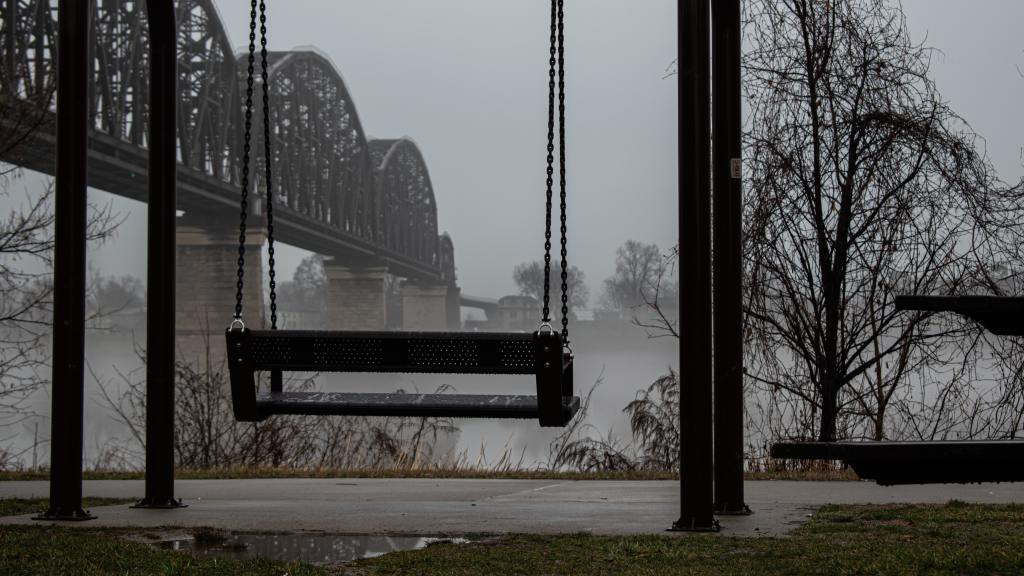
Of Memories in Motion

Elsewhere – and, come to think of it, (sort of) elsewhere – I’ve mentioned Martha Nussbaum’s exploration of memory.

For her part, what she’s suggesting connects our emotions, which help us respond to the world, with our memories, which arise as a flood of perceptions that she calls emotional habits. Essentially, in our day-to-day living, the purpose of our emotions is to help us make sense of it all by recalling previous times when we felt such-and-such a way; the purpose of our memories is to supply those emotions with substance – and not with just any old substance but with invested value. If Nussbaum is on to something, then this is why we’re moved to say about [ your life here ] that “we care.”

Nussbaum refers to neuroscientist, Joseph LeDoux, who suggests that memories are not individual items but composite outcomes of our physiological network – in one sense, like how a check-up isn’t just your doctor and a stethoscope but all their years and training, and this upon centuries of practice, which now includes you, the patient; in another sense, like how a bridge isn’t just an edifice of concrete, cable, and steel but an intentional span engineered to overcome the gulf that precluded any link between two separated sides.

Iconic

One idea suggested by memory is that, with something going on inside everybody, we can still only respond from our current perspective. That means some parts of our lives will remain unseen from others and maybe even subconsciously from ourselves – we can never really completely know what’s happening with anybody. Occasionally, I’ve seen people apparently lose sight of this and press ahead with someone else, despite what seemed to be signals to hold up – yet as this is merely something I remember seeing from my perspective, here’s me doing it, myself, right now! A lot of our shared living is guesswork, and if it seems like I’ve suddenly departed from the topic of memory, I wonder if it’s fair to say I’m still in the ballpark.

In the ballpark, I guess, if just a little off-base…

Memories remind us of when we were other places, doing things, which all contributes to describing who we are now although, of course, not completely since nobody remembers everything, much less remembers anything perfectly. Maybe let’s say what gets remembered is what we take to be most important, which could be rather selective and self-serving, as we might decide to ‘remember’ only what helps us out the most. That’s a pretty blanket statement, though, and I can’t blame your eye-roll just now. As to what we do remember, we can decide whether a memory is something from the past to which we’re attached, or something in the past from which to distance ourselves. But either way, the past is always there, all of it, and that’s affecting all of us.

As to memories being fallible, this takes me back to guesswork, of a kind, as we try to recall exactly this-or-that detail. But since we can only remember from our current perspective, there’s a great deal of our lives that goes never seen by others, and even grows fuzzy and inexact to us – like I said, we can never really completely know what’s happening with anybody, selves included. If each person’s memories can only acknowledge their own cross-sections of the past, and this but partially, then over time I imagine this would cause a bit of collective amnesia, eventually having a kind of atomizing effect as certain details were highlighted while others were finally lost forever.

Certainly our culture seems to embrace the individual, has done ever since the Enlightenment sort of introduced the world to itself, as it were. What crawled from those Platonic caves of religious obeisance and feudal sovereignty eventually separated into an oddly homogeneous heterogeneity of individualism, which today we venerate with slogans like “Liberty, Happiness, and that other one – slips my mind. If we’ve actually been killing off cultural memory and swapping in some individuated substitute… well, in that case, I’d say cultural memory is becoming a rather haphazard assemblage of whatever coincides between us. Which, hey, might work for a while, but… life-by-coincidence I just feel like can’t be good.

That brings something else to mind… for all our enlightenment, we seem awfully susceptible to uncertainty. Weren’t we a lot longer chained up to those cave walls… yet now it’s like we can’t even remember what certainty is. Maybe our uncertainty – what the kids these days call narratives – whether spun by someone or spun by us, whether in our favour or in our face, maybe our uncertainty lies in its doctor’s motives. And of course, the better the storytelling, and the sharper the hook, the more we’ll feel we can relate – which is something else I mentioned of Martha Nussbaum although, this time, I’d say let’s take heed as a cautionary word. Yes, the more precise the object, the sharper that vision, and the more certainty we’re likely to feel, but no trust will exceed the worthiness, the value, of its object. Stick to the healthy objects, I guess is what I’m saying, objects not just inherently potent but of the greatest worthiness… your most highly treasured value.

In that sense, memories – remember this was all about memories? – in that sense, memories implicate, or are they implicated by, our present circumstances and our future objectives. As we presently look back to our memories, our memories are prompting our attention forward, into the future. We don’t remember anything perfectly, but we also don’t forget everything utterly. I’m not necessarily saying we spin solely what we remember; rather, I’m saying let’s not spin solely to remember. Just like words matter because, once spoken, their consequences flow, our memories matter too, for the same dynamic reason. They need to be as genuine as we can recall them. “And then,” Nussbaum concludes, perhaps with a touch of whimsy, “it remains to be seen what the world will let us do about them” (p. 135). Whether their flow will be placid, mundane, inconsequential, or anything beyond is beside the point that their flow is indisputably certain. What is past is having a very real effect right now and will thus see its effect realised in what is yet to come, come what may.

“Okay,” you say, “but what happened to that imaginary bridge – what was it, spanning the gulf between here and memory, or something? I mean, here you are, now, going on about time and spin and worth? Has this post lost its way? Another batch of mixed metaphors?”

Is that really even a “bridge”… ?

Fair. OK, well, besides piecemeal memories inciting ad hoc futures for atomized individual persons, what all this seems to implicate, for me, is the sincerity of relationships, of care. Our continued honest attempts to communicate with each other are like an antidote, and in their absence we risk sullying or undoing whatever may have been true of us beforehand. Of course, though – and here I go again! – that last sentence was written through an altruistic lens, not really allowing for someone with, say, more practical motives. Meanwhile, as to any less-than-honest attempts at communication, well, they’re obviously no antidote at all but really pollutants. As only real engineers build bridges, so only real physicians administer antidotes, and only real spin doctors spin.

… OK, this one counts

One last thing… I think maybe what’s most potent about our memories – in their pointing us toward objects ahead – is the nature of their absence, like travelling into the city and saying, “Look where there used to be trees.” As we take hold of a memory and turn it over in our fingers… with the curiosity that brought it back, we acknowledge a kind of respectful past-that-was as we find it within us-as-is. There’s a bit of healthy mutuality in that, for without that memory, we could only make less of ourselves while, without us, the memory wouldn’t be recalled at all. I suppose that’s all a bit banal, but still… it seems important, a kind of respectfulness that authorizes both the memory and ourselves at once, however inexact our memories may actually be.

But we need to be careful. Any respectful authorization of memory and ourselves at once is us doing both, which is tantamount to saying “I am history,” as in “Whatever I declare now is now what happened then,” which of course would be delusional. And not in the sense of claiming to be God, who controlled it all back then as now but, rather, in the sense of looking inward to ourselves, like a doctor prescribing an antidote without remembering what it was for.

Someone very practical once told me there are plenty of good memories to be made and happy events to experience wherever one resides. Practical health in this object, practical wisdom, a beautiful radiance such as might alight you from the bridge deck with delight since now you want to see where it’s landed you, over here on the other side. As I recall, my reply was something along the lines to say, yes, that’s definitely true although it ain’t where you’re at so much as it’s who you’re with.

In the gulf beneath, a mighty flood rolls on, and you still hold your dearest treasures to heart. And from the shore you understand a wee bit better why somebody decided to build that bridge.

Photo by Kyle Fiori on Unsplash

A Kind of Certainty: V. Fleeting Uncertainty

Click here to read Pt IV. A Kind of Faith


A Kind of Certainty

V. Fleeting Uncertainty

Like a vast sea of experience is all that we know and learn and encounter every single day. We are but tiny ships bobbing and rolling upon its waves, its currents steering us here and there. How on earth do we discern and decide what we value, what we believe, in order to collaborate with others in meaningful curricular relationships? (One almost prefers they might be waylaid by pirates, or something.) For me, one way to decide is to consider our shared motives, then find incentives to collaborate from there. Notwithstanding the degree to which people are educated, or by whom, everybody has motives.

But we do not all necessarily have a particular destination or a future port-of-call. So the aim for curriculum appears to be that of shaping motives to coincide with the current state of affairs such that, in a broad sense, people can (a) function – a measure of the self-ful[1] – and then (b) contribute – a measure of the selfless. Upon this vast sea, we are not so much bound for any one destination as we are bound to assist each other, each underway to wherever best suits our particular circumstances at that time – yours for you, and mine for me – and let the tangents direct us as they will.

Education, I have come to learn, is learning to have more than a destination or purpose of my own. It is to convoy with others and have faith that they do the same for others and for me, and putting in to decidedly worthwhile ports-of-call on the way. On the way, we chart our courses, but as similar as the ocean might look any given moment, wave after rolling wave, no two moments are ever exactly alike. To that degree, everyone must chart on their own. How intentionally we aid each other, how much or how little we trust, how sincerely we navigate, it is our shared curricula that will determine how effectively we undertake any particular decision we are ever likely to face, alongside whomever we find ourselves. The more we convoy in earnest, the safer we will be. With that kind of support, what is it that would sink us?

One final cautionary note: if and when some finally do make landfall somewhere, with certainty to their decision, we must acknowledge that their perspective will shift dramatically from those others who remain, however more or less certain to remain, out at sea. Not everyone wants to remain out at sea, and such variances our curricula are obliged to accommodate, if not fully comprehend or appreciate. There on that solid shore might be a tighter homogeneous culture that yields a more one-sided – or dogmatic? prejudiced? – communal certainty all its own. On that shore we might find a trade-off that sets the communal trustworthiness of the bobbing convoy against the stable individual footing of landfall. Yet somehow we all must sustain what we share, no matter the differences that may arise between sailor and landlubber – and why?

Because what remains the same amongst us – indeed, that which makes us who and what we are – is what we have in common. Common to all of us is being alive, being a person, being a human being, someone deserving of a basic respect for human dignity. Each of us, all of us, every one of us. We are all people. In this regard, really all that differs between us is where we are, and when. For people to think in any way differently than this about other people is narrow, delusional, perhaps cruel, and flat-out wrong. That may hardly feel a satisfactory closing, maybe even anti-climactic, but who ever said learning was meant to be entertainment?[2] Learning’s the thing wherein we catch the conscience of each other.

Click here for the Bibliography

Click here to read Pt I. An Uncertain Faith


Endnotes

[1] Forgive the invention, “self-ful.” I hesitated to use “selfish,” which tends to connote self-seeking and self-aggrandizing behaviour (in that colloquial sense of “No, you can’t have any of my ice cream”), and taking inspiration from the Bard, I just made up a word of my own. Likewise, I do not use “selfless” in some altruistic way so much as simply to counter “self-ful”; as a pair, I intend them to signify simply the notion of there being, for each of us, an intrinsic “me” and plenty of extrinsic “not me’s.” Further, with my students, I would liken self-fulness to each one’s academic efforts and scholarship, and selflessness to voluntary service and community stewardship of whatever kind. The longer-term idea was teaching students to balance these as required by kairos, by circumstance – an appropriate time for each, and the wisdom to know the difference.

[2] Or maybe, just maybe, there’s a curricular role for those gnarly amphibious surfers, after all.

Hawai'i Summer 2008
Teacher at work: catch a wave to catch the conscience?

A Kind of Certainty: III. A Scripture of Truth

Click here to read Pt II. Curriculum, or What You Will


A Kind of Certainty

III. A Scripture of Truth

Motive is the key, I would suggest to students: to know motive is to know the truth. And I offered this suggestion knowing full-well the timeworn joke about the actor who asks, “What’s my motivation?” Whats the Motivation Just as we can never cover it all and must go with whatever we decide to include, we also cannot (nor should not) try to present it all, ask it all, or attempt it all in one go. Yes, the odd non sequitur can break the monotony – everyone needs a laugh, now and then. But as with all clever comedy, timing is everything, and curriculum is about more than good humour and bad logic. In that regard, given what has already been said about spotting pertinence, curriculum is about motives: to include, or not to include.

And we must try to comprehend this decision from more than one perspective; each in their own way, both teacher and student ponder what to include and what to disregard during any given lesson: “Teachers are problem-posing, not just in the obvious sense that they require students to doubt whether they know something… [but] implicitly [asking] them to question their understanding of what counts as knowledge” (Beckett, 2013, p. 54-55). People generally will not doubt themselves without good reason, or else with a lot of faith in whoever is asking. Challenged to reconstruct or reorganise an experience (Dewey, 1916), more than likely we will want to know why. Curriculum addresses ‘why’.

Why! take Hamlet, for instance… deigning to know a little something about role-playing, he offers some curricular particulars while lecturing the Players ahead of the Mousetrap performance, although really this is to say Shakespeare offered them. Writers famously cringe as rehearsing actors and directors dismember their carefully worked dialogue – or is that another hackneyed joke? In any case, Shakespeare opens Act 3 with some forty lines of advice from Hamlet to the Players, whose replies are little beyond short and polite (although ‘why’ has evidently been left for you and your theatre company to ascertain). These follow some forty lines in Act 2 during an exchange between Hamlet and Rosencrantz about theatre companies, all of which could simply be played as a dose of comic relief amidst the far “weightier matters” of the play (Guyton, 2013). Tried another way, Hamlet’s lines about acting embody the very perplexity of his prolonged tumult: he takes for granted that his listener will attempt to reconcile what he says with whatever uncertainty they might have. What better job description, a “teacher”? Otherwise, why even bother to open his mouth?

What need to teach when we trust that we are all alike, that all around is 100% certain? As it pertains to telling the Players about acting, Hamlet wants no assurance that his audience must bridge some gap of certainty over his trustworthiness, not so far as he is concerned.[1] Indeed, common to live productions that I have watched, he is as relaxed and certain in offering his advice as the Players are in hearing it, like preaching to the choir.[2] Their relationship, apparently going back some time, suggests mutual respect and a shared faith not merely to listen but to understand in listening. It suggests a kind of shared attunement, something mutual, like a kind of curriculum founded upon trust. For all we might want to trust those around us, for all we might want some certainty that we are respected by others – or, perhaps more so, that we are believed – what a torment life would be if our every utterance were considered a lie. Then the only certainty would be the assurance that no one ever believed you, and if that still counts for something, it is dreadfully cold comfort.[3]

We citizens of 21st century post-modernist [ your label here ] North America may not have descended nearly so low although Klein (2014) does presciently discuss politics, the national discourse, and an observed decline in public intellectualism (Byers, 2014; Coates, 2014; Herman, 2017; Mishra & Gregory, 2015). Where Klein encompasses individuals and the processes, systems, and institutions that they innervate while going about their daily lives, he describes Dewey’s “conjoint communicated experience” (Dewey, 1916, p. 101) and implicates “an extraordinarily complicated conversation” (Pinar, Reynolds, Slattery & Taubman, 2006, p. 848), one that occurs everyday and includes everybody.

But since we are forbidden to compel but only persuade the beliefs of free thinkers, we realise that all our perceived uncertainty can only be bridged by a kind of faith: we depend either upon others to see things as we do, or else we depend upon our rhetorical skill to persuade them toward our way. Or we live tense lives full of disagreement and antipathy. ’Swounds, but life would be a lot more stable and certain if we all just believed the same things!

Hamlet craves certainty, to the point where the dilemma of his doubt halts him so dead in his tracks that he is prompted to question existence itself. Where it comes to enacting vengeance – but, really, where it comes to everything we witness in the play – Hamlet – and, really, every character[4] – craves certainty and assurance while suffering from uncertainty and reluctance, which means, of course, that he craves and suffers from both ends. Indeed, a piece of him is certain. But comprising “one part wisdom and ever three parts coward” (4.4.42-43), he wages an unequal battle against himself. He wanders from room to room searching to free himself from his purgatorial tesseract, challenged not simply by one retrograde faith but by several, the consequence of conveying curriculum from Wittenberg back to Elsinore where, previously, he had received, to say the least, an impressionable upbringing. The upshot, given the conflicting decisions he faces, is that Hamlet would rather renounce any mutual faith of any sort and rely upon a certainty all his own: himself.

Yet he even doubts his ability to self-persuade, just as he holds no faith in anyone whose judgment he fears. As a result, he is rightly miserable and lives an exaggerated moment-to-moment existence, “…enraptured with, submerged in, the present, no longer a moment in but a suspension of time, absorbed by – fused with – the images in front of [his] face, oblivious to what might be beyond [him]” (Pinar, 2017, p. 12). Pinar describes a kairos moment of chronos time, as if Cecelia, while watching The Purple Rose of Cairo (Greenhut & Allen, 1985), could press ‘Pause’. He may not have been Woody Allen’s modernist contemporary, but Shakespeare still appeared to possess enough prescience to machinate a rather, shall we say, enlightened viewpoint; many consider The Tragedy of Hamlet, Prince of Denmark to be the Magnum Opus of English literature, not just Shakespeare. Evidently, he knew exactly how to craft such a rich and roundly individuated protagonist, one certain enough to persist for over 400 years. Certainty the Bard found within himself, and this he bestowed (albeit perversely) upon Prince Hamlet, who “[knows] not seems” (1.2.76). Faith he found within himself, too, but that he saved for his audience, trusting them, freeing them, to spot it as the time was right, rendering what they will get unto those who will get it.

By the same token, may the rest get whatever they will get. As far as curriculum is concerned, one size has never fit all, nor should it ever be so.

Click here for the Bibliography

Click here to read Pt IV. A Kind of Faith


Endnotes

[1] I always suspected a handful of my students were just humoring me – have I mentioned they were brilliant?

[2] Sometimes, these lines have even been cut, to help shorten the play from its typical four-hour length.

[3] Elsinore seems just such a place. But they are wise who “… give it welcome” (1.5.165) since at least, then, you can get on with functioning, knowing where you stand relative to all the other prevaricating liars and weasels who inhabit the place alongside you.

[4] Every character, that is, with the possible exceptions of the Gravedigger, who apparently is most cheerful and self-assured, and Fortinbras, who suffers perhaps not pains of doubt so much as loss, and then always with something up his sleeve. I might also include Horatio in this reflection, but I fear, then, the need for an endnote to the endnotes, to do him any justice.