The Conceit of A.I.


From a technological perspective, I can offer a lay opinion of A.I. But check out some more technical opinions than mine, too:

MIT: The Seven Deadly Sins

Edge: The Myth of AI

The Guardian: The Discourse is Unhinged

NYT: John Markoff

Futurism: You Have No Idea…

IEET: Is AI a Myth?

Open Mind: Provably Beneficial Artificial Intelligence

Medium: A Critical Reading List

AdWeek: Burger King


The Conceit of A.I.

Time and energy… the one infinite, the other hardly so. The one an abstraction, the other all too real. And while time ticks ceaselessly onward, energy forever needs replenishing. We assign arbitrary limits to time, by calendar, by clock, and as the saying goes, there’s only so much time in a day. Energy, too, we can measure, yet often we equate both time and energy monetarily, if not by actual dollars and cents: we can pay attention, spend a day at the beach, save energy – the less you burn, the more you earn! And certainly, as with money, most people would agree that we just never seem to have enough time or energy.

Another way to frame time and energy is as an investment. We might invest our time and energy learning to be literate, or proficient with various tools, or with some device that requires skilful application. Everything, from a keyboard or a forklift or a tennis racquet to a paring knife or an elevator or a golf club to a cell phone or a self-serve kiosk or the new TV remote, everything takes some knowledge and practice. By that measure, there are all kinds of literacies – we might even say, one of every kind. But no matter what it is, or how long it takes to master, or why we’d even bother, we shall reap what we sow, which is an investment analogy I bet nobody expected.

Technology returns efficiency. In fact, like nothing else, it excels at creating surplus time and energy, enabling us to devote ourselves to other things and improve whichever so-called literacies we choose. The corollary, of course, is that some literacies fade as technology advances. Does this matter, with so many diverse interests and only so much time and energy to invest? How many of us even try everything we encounter, much less master it? Besides, for every technological advancement we face, a whole new batch of things must now be learned. So, for all that technological advancement aids our learning and creates surplus time and energy, we as learners remain the central determinant as to how to use our time and energy.

Enter the classroom what’s lately been called Artificial Intelligence (A.I.). Of course, A.I. has received plenty of enthusiasm, attention, concern, and critique as a developing technological tool, for learning as well as plenty other endeavours and industries. A lengthy consideration from The New York Times offers a useful, broad overview of A.I.: a kind of sophisticated computer programming that collates, provides, and predicts information in real time. Silicon Valley designers aim to have A.I. work at least somewhat independently of its users, so they have stepped away from older, familiar input-output modes, what’s called symbolic A.I., a “top down” approach that demands tediously lengthy entry of preparatory rules and data. Instead, they are engineering “from the ground up,” building inside the computer a neural network that mimics a brain – albeit, a very small one, rivalling a mouse – that can teach itself via trial-and-error to detect and assess patterns found in the data that its computer receives. At these highest echelons, the advancement of A.I. is awe-inspiring.

Now for the polemic.

In the year 2018, in the field of education, in which I’m trained and most familiar, nothing about A.I. is nearly so clear. Typically, I’ve found classroom A.I. described cursorily, by function or task:

  • A.I. facilitates individualized learning
  • A.I. furnishes helpful feedback
  • A.I. monitors student progress
  • A.I. highlights possible areas of concern
  • A.I. lightens the marking load

On it goes… A.I., the panacea. Okay, then, so in a classroom, how should we picture what is meant by “A.I.”?
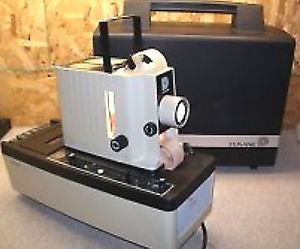
Mr. Dukane
“Anybody remember Mr. Dukane?”

Specific examples of classroom A.I. are hard to come by, beyond top ten lists and other generalized descriptions. I remember those library film-strip projectors we used in Grade 1, with the tape decks attached. Pressing “Play,” “Stop,” and “Eject” was easy enough for my six year-old fingers, thanks to engineers who designed the machines and producers who made the film strips, even if the odd time the librarian had to load them for us.

(At home, in a similar vein, how many parents ruefully if necessarily consider the T.V. a “babysitter” although, granted, these days it’s probably an iPad. But personification does not make for intelligence… does it? Didn’t we all understand that Max Headroom was just a cartoon?)

There’s a trivia game app with the hand-held clickers, and there’s an on-line plagiarism detector – both, apparently, are A.I. For years, I had a Smart Board although I think that kind of branding is just so much capitalism and harshly cynical. Next to the Smart Board was a whiteboard, and I used to wonder if, someday, they’d develop some windshield wiper thing to clean it. I even wondered if someday I wouldn’t use it anymore. For the record, I like whiteboards. I use them, happily, all the time.

Look, I can appreciate this “ground-up” concept as it applies to e-machines. (I taught English for sixteen years, so metaphor’s my thing.) But intelligence? Anyway, there seems no clear definition of classroom A.I., and far from seeming intelligent to me, none of what’s out there even seems particularly dim-witted so much as pre-programmed. As far as I can tell, so-called classroom A.I. is stuff that’s been with us all along, no different these days than any tool we already know and use. So how is “classroom A.I.” A.I. of any kind, symbolic or otherwise?

"... so whose the Sub?"
“Hey, so who’s the Sub today?”

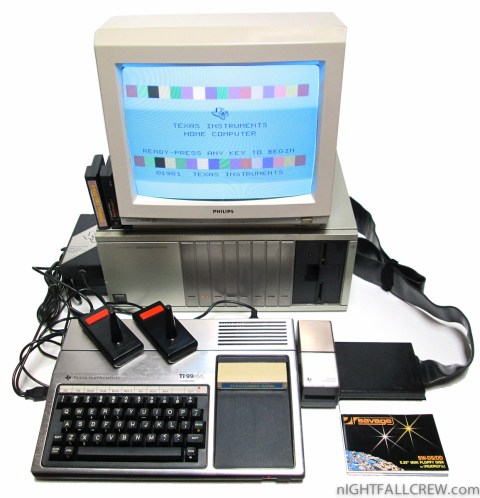
Symbolic A.I., at least the basis of it, seems not too dissimilar to what I remember about computers and even some video arcade favourites from back in the day. Granted, integrated circuits and micro-processers are a tad smaller and faster these days compared to, say, 1982 (… technology benefitting from its own surplus?) Perhaps more germane to this issue is the learning curve, the literacy, demanded of something “intelligent.” Apparently, a robot vacuum learns the room that it cleans, which as I gather is the “ground-up” kind of A.I. Now, for all the respect and awe I can muster for a vacuum cleaner – and setting all “ground-up” puns aside – I still expect slightly less from this robot than passing the written analysis section of the final exam. (I taught English for sixteen years, so written analysis is my thing.) It seems to me that a given tool can be no more effective than its engineering and usage, and for that, isn’t A.I.’s “intelligence” more indicative of its creator’s ingenuity or its user’s aptitude than of itself or its pre-programmed attributes?

Press Any Key to Begin

By the same token, could proponents of classroom A.I. maybe just ease off a bit from their retcon appropriation of language? I appreciate getting caught up in the excitement, the hype – I mean, it’s 21st century mania out there, candy floss and roller coasters – but that doesn’t mean you can just go about proclaiming things as “A.I.” or, worse, proclaiming A.I. to be some burgeoning technological wonder of classrooms nationwide when… it’s really not. Current classroom A.I. is simply every device that has always already existed in classrooms for decades – that could include living breathing teachers, if the list of functions above is any guide. Okay then, hey! just for fun: if classroom tools can include teachers who live and breathe, by the same turn let’s be more inclusive and call A.I. a “substitute teacher.”

Another similarly common tendency I’ve noted in descriptions of classroom A.I. is to use words like “data,” “algorithm,” and “training” as anthropomorphic proxy for experience, decision-making, and judgment, i.e. for learning. Such connotations are applied as simply as we might borrow a shirt from our sibling’s closet, as liberally as we might shake salt on fries, and they appeal to the like-minded, who share the same excitement. To my mind, judicious intelligence is never so cavalier, and it doesn’t take much horse-sense to know that too much salt is bad for you, or that your sibling might be pissed off after they find their shirt missing. As for actually manufacturing some kind of machine-based intelligence, well… it sure is easy to name something “Artificial Intelligence,” much less bestow “intelligence” by simply declaring it! The kind of help I had back in the day, as I see it, was something I just now decided to call “S.I.”: sentient intelligence.

Facetiousness aside, I grant probably every teacher has spent some time flying on auto-pilot. I’ve definitely had days that left me feeling like an android. And fair enough: something new shakes things up and may require some basic literacy. There’s no proper use of any tool, device, or interface without some learned practical foundation: pencil and paper, protractor, chalk slates, the abacus. How about books, or by ultimate extension, written language, itself? These are all teaching tools, and each has a learning curve. So is A.I. a tool, a device, an interface? All of the above? I draw the line where it comes to classroom tools that don’t coach the basketball team or have kids of their own to pick up by 5pm: the moniker “A.I.” seems more than a bit generous.

And hey, one more thing, on that note: wouldn’t a truer account of A.I., the tool, honour its overt yet seemingly ignored tag, “artificial”? R2D2 and C-3PO may be the droids we’re looking for, but they’re still just science fiction.

Fantastic tales aside, technological advancements in what is called the field of A.I. have and will continue to yield useful, efficient innovation. And now I mean real Silicon Valley A.I., not retcon classroom A.I. But even so, to what ends? What specifically is this-or-that A.I. for? In a word: why? We’re headed down an ontological road, and even though people can’t agree on whether we can truly consider our self, we’re proceeding with A.I. in the eventual belief that it can. “It will,” some say. Not likely, I suspect. Not ever. But even if I’m wrong, why would anyone hope that A.I. could think for itself? Why?
Artificial Intelligence
10. Be “A.I.”    20. Go to 10     Run

Hasn’t Heidegger presented us with enough of a challenge, as it is? Speaking of time and energy, let’s talk opportunity costs. Far greater minds than mine have lamented our ominous embrace with technology. Isn’t the time and energy spent on A.I. – every second, every joule of it – a slap-in-the-face of our young people and the investment that could have been made in them? It’s ironic that we teach them to develop the very technology that will eventually wash them away.

Except that it won’t. I may be out on a limb to say so, but I suspect we will sooner fall prey to the Twitterverse and screen-worship than A.I. will fulfil some sentient Rise of the Machines. The Borg make good villains, and even as I watch a lobby full of Senior Band students in Italy, staring at their iPhones, and fear assimilation and, yes, worry for humanity… even then I reconsider because the Borg are still just a metaphor (… sixteen years, remember?) As a teacher I am more driven to reach my students with my own message than I am to snatch that blasted iPhone from their hands, much as I might like to.

On the other hand, faced with a dystopian onslaught of Replicants, Westworld Gunslingers, and Decepticons, would we not find ourselves merely quivering under the bed, frantically reading up on Isaac Asimov while awaiting the arrival of Iron Man? Even Luke Skywalker proved susceptible to the Dark Side’s tempting allure of Mechanized Humanity; what possible response could we expect from a mere IB cohort of inquiry-based Grade 12 critical thinkers and problem-solvers?

The Borg
“Resistance is futile.”

At the very least, any interruption of learners by teachers with some classroom tool ought to be…

  1. preceded by a primer on its literacy,
    • i.e. explaining how to use that particular tool in…
  2. a meaningful context or future setting,
    • i.e. explaining why to use that particular tool, before anybody…
  3. begins rehearsing and/or mastering that particular tool,
    • i.e. successfully executing whatever it does

If technology helps create surplus time and energy, then how and why and what had better be considered because we only have so much time and energy at our disposal. The what, the how, and the why are hardly new concepts, but they aren’t always fully considered or appreciated either. They are, however, a means of helpful focusing that few lessons should be without.

As a teacher, sure, I tend to think about the future. But that means spending time and paying attention to what we’re up to, here and now, in the present. To that end, I have an interest in protecting words like “learning” and “intelligence” from ambiguity and overuse. For all the 21st century hearts thumping over the Cinderella-transformation of ENIAC programmable computation to A.I., and the I.o.T., and whatever lies beyond… for all that, our meagre acknowledgement of the ugly step-sister, artificiality, is foreboding. Mimicry is inauthentic, but neither is it without consequence. Let’s take care that the tools we create as means don’t replace the ends we originally had in mind because if any one human trait can match the trumpeting of technology’s sky-high potential – for me at least, not sure for you – I’d say its hubris.

Another fantastic tale comes to mind: Frankenstein’s monster. Technological advancement can be as wonderful as it is horrifying – probably usually somewhere in between. However it’s characterised or defined, though, by those who create it, it will be realised in the end by those who use it, if not those who face it. For most people, the concept of cell phones in 1982 was hardly imagined. Four decades later, faces down and thumbs rapid-fire, the ubiquity of cell phones is hardly noticed.

A Kind of Certainty: V. Fleeting Uncertainty

Click here to read Pt IV. A Kind of Faith


A Kind of Certainty

V. Fleeting Uncertainty

Like a vast sea of experience is all that we know and learn and encounter every single day. We are but tiny ships bobbing and rolling upon its waves, its currents steering us here and there. How on earth do we discern and decide what we value, what we believe, in order to collaborate with others in meaningful curricular relationships? (One almost prefers they might be waylaid by pirates, or something.) For me, one way to decide is to consider our shared motives, then find incentives to collaborate from there. Notwithstanding the degree to which people are educated, or by whom, everybody has motives.

But we do not all necessarily have a particular destination or a future port-of-call. So the aim for curriculum appears to be that of shaping motives to coincide with the current state of affairs such that, in a broad sense, people can (a) function – a measure of the self-ful[1] – and then (b) contribute – a measure of the selfless. Upon this vast sea, we are not so much bound for any one destination as we are bound to assist each other, each underway to wherever best suits our particular circumstances at that time – yours for you, and mine for me – and let the tangents direct us as they will.

Education, I have come to learn, is learning to have more than a destination or purpose of my own. It is to convoy with others and have faith that they do the same for others and for me, and putting in to decidedly worthwhile ports-of-call on the way. On the way, we chart our courses, but as similar as the ocean might look any given moment, wave after rolling wave, no two moments are ever exactly alike. To that degree, everyone must chart on their own. How intentionally we aid each other, how much or how little we trust, how sincerely we navigate, it is our shared curricula that will determine how effectively we undertake any particular decision we are ever likely to face, alongside whomever we find ourselves. The more we convoy in earnest, the safer we will be. With that kind of support, what is it that would sink us?

One final cautionary note: if and when some finally do make landfall somewhere, with certainty to their decision, we must acknowledge that their perspective will shift dramatically from those others who remain, however more or less certain to remain, out at sea. Not everyone wants to remain out at sea, and such variances our curricula are obliged to accommodate, if not fully comprehend or appreciate. There on that solid shore might be a tighter homogeneous culture that yields a more one-sided – or dogmatic? prejudiced? – communal certainty all its own. On that shore we might find a trade-off that sets the communal trustworthiness of the bobbing convoy against the stable individual footing of landfall. Yet somehow we all must sustain what we share, no matter the differences that may arise between sailor and landlubber – and why?

Because what remains the same amongst us – indeed, that which makes us who and what we are – is what we have in common. Common to all of us is being alive, being a person, being a human being, someone deserving of a basic respect for human dignity. Each of us, all of us, every one of us. We are all people. In this regard, really all that differs between us is where we are, and when. For people to think in any way differently than this about other people is narrow, delusional, perhaps cruel, and flat-out wrong. That may hardly feel a satisfactory closing, maybe even anti-climactic, but who ever said learning was meant to be entertainment?[2] Learning’s the thing wherein we catch the conscience of each other.

Click here for the Bibliography

Click here to read Pt I. An Uncertain Faith


Endnotes

[1] Forgive the invention, “self-ful.” I hesitated to use “selfish,” which tends to connote self-seeking and self-aggrandizing behaviour (in that colloquial sense of “No, you can’t have any of my ice cream”), and taking inspiration from the Bard, I just made up a word of my own. Likewise, I do not use “selfless” in some altruistic way so much as simply to counter “self-ful”; as a pair, I intend them to signify simply the notion of there being, for each of us, an intrinsic “me” and plenty of extrinsic “not me’s.” Further, with my students, I would liken self-fulness to each one’s academic efforts and scholarship, and selflessness to voluntary service and community stewardship of whatever kind. The longer-term idea was teaching students to balance these as required by kairos, by circumstance – an appropriate time for each, and the wisdom to know the difference.

[2] Or maybe, just maybe, there’s a curricular role for those gnarly amphibious surfers, after all.

Hawai'i Summer 2008
Teacher at work: catch a wave to catch the conscience?

From The New York Times – “Free Speech and the Necessity of Discomfort” and further Reflections on Journalism

Click here to read a reflective series on free speech.

A needfully challenging appeal to raise the level of discourse, and an appropriate inclusion to The Rhetorical WHY, from an Opinion piece in The New York Times (Feb 22, 2018) by Op-Ed columnist, Bret Stephens:

“This is the text of a lecture delivered at the University of Michigan on Tuesday [Feb 20, 2018]. The speech was sponsored by Wallace House.

“I’d like to express my appreciation for Lynette Clemetson and her team at Knight-Wallace for hosting me in Ann Arbor today. It’s a great honor. I think of Knight-Wallace as a citadel of American journalism. And, Lord knows, we need a few citadels, because journalism today is a profession under several sieges.…” [continue reading]

'Oddly enough, I feel offended...'
All That’s Fit to Print, Wiley Miller

Some thoughts of my own on the significance of a free press to our lives…

Next, I offer a series of responses I made to remarks by Hannah Arendt, published October 26, 1978 in The New York Review of Books, itself a report of her interview with Roger Errera). I encountered them in a Facebook post from The Bureau of Investigative Journalism.


Arendt: “… how can you have an opinion if you are not informed?”

Everybody has opinions – our five senses give us opinions.

In order to be “informed,” we need discernment enough to detect accurate information…

Arendt: “If everybody always lies to you, the consequence is not that you believe the lies, but rather that nobody believes anything any longer.”

For me, continual lies ultimately yield zero trust, but again, how would I know who’s even lying, but for my own discernment and experience?

At the least, if I were aware that all around were lies, that much I’d know is true. It’s not that “nobody believes anything any longer,” so much as it’s “everybody goes about searching out truth on their own.” The downside is when those individual searches for truth become disrespectful, as we’ve seen lately, or worse, chaotic.

Nevertheless, investigate! Accept responsibility to inform yourself. Accept or believe all with a grain of salt until such time as you can prove to your own satisfaction who and what are trustworthy. And, at that point, be tolerant, if not respectful, of others – this applies to everybody, all sides, liberals and conservatives and all points between. Taking the high road is not to be done with pride or smug assurance. It’s easy to nod and say, “I already do while others do not,” but even so, reflect upon yourself with each conversation, each debate, each exchange.

Open-minded and open-hearted – both are virtues, but they don’t have to be the same thing.

Arendt: “If everybody always lies to you, the consequence is not that you believe the lies, but rather that nobody believes anything any longer.”

On its face, this statement could only be accurate if you had some clairvoyance or a crystal ball.

By “everybody” doing their own investigation and accepting responsibility to inform themselves, I mean everybody. We’re able to trust news & media sources to the extent that they have lived up to their responsibility… to the extent we’re aware that they have. I support proper, professional investigative journalism and public intellectualism, both of which I gather to be in decline.


'Well, apparently you haven't heard. . . personal opinions are the new facts.'
The New Facts, Chris Wildt

Finally, I offer two sets of remarks about journalism by two long-retired anchor-journalists of PBS fame, partners Robert MacNeil and Jim Lehrer. The first is transcribed from an exchange between them during a tribute to MacNeil upon his retirement in October 1995. The second – comprising two parts – is Lehrer’s closing words upon the “retirement” of his name from the title of the PBS NewsHour, on December 04, 2009. Following that, I’ve included a thoughtful follow-up by the PBS Ombudsman, Michael Getler, published the next week on December 11.

MacNeil’s remarks upon his retirement (October 20, 1995)…


MacNeil: You know, I’m constantly asked, and I know you are in interviews, and there have been a lot of them just now – I’m constantly asked, “But isn’t your program a little boring to some people?” and I find that amazing, because, well, sure, it probably is, but they’re people who don’t watch. The people who watch it all the time don’t find it boring, or they wouldn’t watch.

Lehrer: That’s right.

MacNeil: And it’s the strange idea that’s come out of this medium, because it’s become so much a captive of its tool – as its use as a sales tool that it’s driven increasingly, I think, by a tyranny of the popular. I mean, after all, you and I’ve said this to each other lots of times – might as well share it with the audience: what is the role of an editor? The role of an editor is to make– is to make judgments somewhere between what he thinks is important or what they think is important and what they think is interesting and entertaining.


Jim Lehrer’s guidelines of journalism (December 04, 2009)…


Lehrer: People often ask me if there are guidelines in our practice of what I like to call MacNeil/Lehrer journalism. Well, yes, there are. And here they are:

* Do nothing I cannot defend.

* Cover, write and present every story with the care I would want if the story were about me.

* Assume there is at least one other side or version to every story.

* Assume the viewer is as smart and as caring and as good a person as I am.

* Assume the same about all people on whom I report.

* Assume personal lives are a private matter, until a legitimate turn in the story absolutely mandates otherwise.

* Carefully separate opinion and analysis from straight news stories, and clearly label everything.

* Do not use anonymous sources or blind quotes, except on rare and monumental occasions.

* No one should ever be allowed to attack another anonymously.

* And, finally, I am not in the entertainment business.

Here is how I closed a speech about our changes to our PBS stations family last spring:

‘We really are the fortunate ones in the current tumultuous world of journalism right now. When we wake up in the morning, we only have to decide what the news is and how we are going to cover it. We never have to decide who we are and why we are there.’


I am struck by the continuity of their respective final comments, about entertainment – each, in his own way, seeks to distance journalism from vagary, each thereby implying that we are susceptible to emotional or whimsical tendencies, which evidently seem capable of overtaking our focus to learn; otherwise, why mention the point at all?


  • Watch Lehrer’s remarks here, in a functional if awkward series of video archives of that 2009 broadcast.
  • In May 2011, upon Lehrer’s retirement, MacNeil returned to offer his own reflections upon his friend and colleague that include some further worthwhile commentary upon contemporary TV journalism
  • Watch them during a more recent (October 25, 2016) retrospective interview from 92nd Street Y, a Jewish cultural and community centre in Manhattan.

I recall “Lehrer’s Rules,” as they were called, making a small stir – some of it more substantive, meaningful, and some the critical “woe-is-Us” lament at the passing of favourite things. In amongst it all, as I mentioned, were the following comments from PBS Ombudsman, Michael Getler, which I include here, at length, on account of PBS webpages’ tendency to disappear.

In fact, a number of the PBS pages where I found these articles are no longer active – where possible, I have checked, updated, and even added weblinks. But I believe Getler’s comments, like the rest, are worth preserving, on account of their potential to provoke us to think and learn more about a free press and its relation to ourselves.


“Lehrer’s Rules” by Michael Getler (December 11, 2009)

A couple of people wrote to me in the aftermath of that Dec. 4 sign-off to say how much they liked Lehrer’s guidelines and asked how they could get a copy. That’s why they are reproduced above. A subscriber to the widely-read Romenesko media news site also posted them there on Dec. 6 and they also were posted on the campus site of the Society of Professional Journalists (SPJ). “Whether you agree with all of Lehrer’s guidelines, or not,” that posting read, “he has surely earned our attention.”

That’s certainly true in my case. I’ve also been a devoted watcher of the NewsHour in all of its evolutions during most of the past 30-plus years, long before I took on this job four years ago. Although segments of the program have been the subject of critical ombudsman columns on a number of occasions, I’ve also said many times that it remains the best and most informative hour of news anywhere on television, and it has never been more important. I follow the news closely but almost always learn something from this broadcast every night.

Boring, at Times, But a Luxury Always

Sometimes, of course, it can seem boring. Sometimes the devotion to balanced he said/she said panel discussions can leave you frustrated and angry and no smarter than you were 15 minutes earlier. Sometimes the interviewing is less challenging than one might hope. But the luxury of an uninterrupted hour of serious, straight-forward news and analysis is just that these days, a luxury. And, in today’s world of media where fact and fiction, news and opinion, too often seem hopelessly blurred, it is good to have Lehrer – clearly a person of trust – still at work.

I had the sense when he added his guidelines to that closing segment last Friday that the 75-year-old Lehrer was trying to re-plant the flag of traditional, verifiable journalism that he has carried so well all these years so that it grows well beyond his tenure – whatever that turns out to be – and spreads to all the new platforms and audiences that the contemporary media world now encompasses.

Oddly, I did not get any e-mail from viewers commenting on the new NewsHour format, other than one critical message that said “do not post.” Maybe that’s a good sign since people usually write to me to complain.

Make no mistake, the now defunct NewsHour with Jim Lehrer is still quite recognizable within the new PBS NewsHour. So those who wrote earlier and said they didn’t want any change won’t be terribly disappointed. I, personally, found the first few days of the new format and approach to be a distinct improvement. The program seemed to have more zip and energy, faster paced, with good interviews and without the always predictable language that introduced the show in the past. It presented its news judgments more quickly, benefitted from the early introduction of other top staff members as co-anchors, and from the introduction of a promising “new guy,” Hari Sreenivasan, a former CBS and ABC correspondent who presents a headline summary from the newsroom and is the liaison to an expanded NewsHour Web operation.

Now, just to keep this a respectable ombudsman’s column, let me add a few quibbles when it comes to Lehrer’s rules, as posted above.

First, one of the interesting things about American journalism is that there are no agreed-upon national standards, no journalistic equivalent of the Hippocratic Oath for physicians. There are, of course, many universal values and practices that vast numbers of journalists have voluntarily adhered to generally for many years, best exemplified by SPJ’s Code of Ethics. But the fact is that all major news organizations – from the Associated Press to the New York Times to PBS and CBS – have their own guidelines and standards that they try and live by. And they all have their differences.

Naturally, a Few Quibbles

Lehrer’s guidelines embody lots of the good, praiseworthy stuff, and we come out of the same journalistic generation and traditions. But I think on a couple of points they are actually too nice, too lofty, cruising somewhere above some of the grittier realities of journalism.

For example, “Assume the viewer is as smart and as caring and as good a person as I am. Assume the same about all people on whom I report.” Really? Bernard Madoff? Osama bin Laden?

Then there is: “Assume personal lives are a private matter, until a legitimate turn in the story absolutely mandates otherwise.” I would argue, and have, that the NewsHour withheld from its viewers at the time a legitimate turn in a major story – reported by all other major news organizations – last year when it declined to inform them that a former senator and former candidate for the vice-presidency, John Edwards, issued a public statement and went on ABC Television to acknowledge that he had had an extra-marital affair with a woman who had been hired by his political action committee to make films for his campaign. That’s news.

Finally, there is, “Do not use anonymous sources or blind quotes, except on rare and monumental occasions.” I agree about the blind quotes when they are used to attack someone personally. But anonymous sources have often proved to be absolutely crucial to the public’s right to know what’s really going on in scores of major stories as they have unfolded from Watergate to secret CIA prisons overseas.

The most accurate and important pre-war stories challenging the Bush administration’s on-the-record but bogus case for Iraqi weapons of mass destruction were based on anonymous sources. Many of those stories, in part because they were based on anonymous sources, got buried or underplayed by newspapers at the time. Many of them never got reported at all on television, including the NewsHour. But there are times when there are mitigating circumstances – like internal threats within an administration or maybe jail time for leakers – when some sources must remain anonymous and when editors need to trust their reporters. And often you don’t know if the occasion is “rare and monumental” until it is too late. Pre-war Iraq, again, being Exhibit A.


Freedom of the Press_ Matteo Bertelli
Freedom of the Press, Matteo Bertelli

Some other links…

World Association of Newspapers and News Publishers

World Press Freedom Index

Ryerson School of Journalism

Edelman Trust Barometer

Freedom House