True North Strong… but Free?

post-modern
post-national
non-patriotic
These are all descriptors I’ve encountered for Canada, from one source or another. I can make of each one something contextual. Yet as each suggests a departure or break from something previous, that’s really just a subtle way of saying, “Here’s what we aren’t.”
Yet describing something with negative terminology is ultimately meaningless because it can end up becoming silly; for instance, “I am not a giant Godzilla-like dragon that breaths fire and enjoys sipping my iced coffee on Tuesdays.” We could literally imagine anything that isn’t the case and say as much, and we’re no further ahead knowing what actually is the case.
So when I see descriptors like these – for Canada but really for anything – I’m unclear and confused about what to think. It’s a concern for me, the citizen, because who I am and what I value have direct effect on you and everyone else, and me in return all over again.
In the vaunted year 2015, according to Canada’s newly elected PM, Trudeau the Lesser, “There is no core identity, no mainstream in Canada.” True leadership, spoken with not a jot of intended irony.
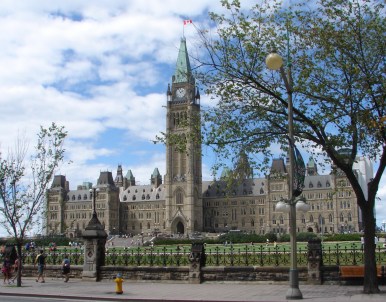
Ignoring the post-modern fallacy, i.e. nothing is true other than the statement that confirms nothing is true, this absence-reliant description of Canadian identity caresses its negative terminology. It’s an on-ramp to the freeway of silliness upon which no Godzillas sip their Tuesday coffee.
And where the link above was an American take on our Prime Minister’s interpretation of whom he leads, others have taken noted concern of his statement, too, among them some Canadians whom he leads…
- Douglas Todd, “The dangers of Trudeau’s ‘postnational’ Canada” (The Vancouver Sun)
- Candice Malcolm, “Trudeau says Canada has no ‘core identity’” (The Toronto Star)
- Donna Kennedy-Glans and Don Hill, “Trudeau’s neglect of the nation has led us to this place” (CBC News)
On the other hand, and perhaps in response (?), the Government of Canada is now apparently reversing course, telling Canadians and would-be Canadians something awfully more specific about Canadian identity:
- Global Affairs Canada: Cultural Information (now defunct, go figure)
- Bobby Hristova, “‘Beer and hockey:’ The government’s step-by-step guide to Canadian culture” (The National Post)
I admit, once more, to losing track as a “Canadian,” although at least this time the terminology is positive: “We are indeed ‘this’ and ‘that.’”
Some pretty specific stuff in the now-defunct Global Affairs guide – shame you missed it. For example…
“When lining up in a public place, the bank for instance, Canadians require at least 14 inches of space…”
Right down to the inch? Granted, I’m not the most social-media savvy citizen you could find, but I think a colloquial Canadian response to this – at least on-line – might be “WTF!!!”
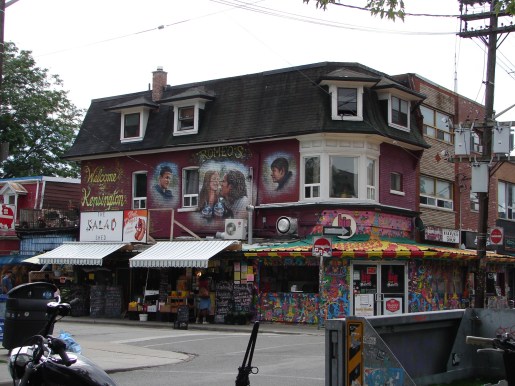
Still, please don’t let me speak on your behalf. That said, that guide seemed to have been compiled by one person in an interview format with a second person because it was written with a first-person perspective: uniquely Canadian, you might say.
Now, if your rejoinder is to excuse that guide as merely a helpful list of suggestions for what is “Canadian,” then allow me to counter with the challenge to separate, in its suggestions, what are quintessential as compared to what are stereotypical descriptions. After all, what Canadian does NOT love beer and hockey and The Hip, just as they detest the gesturing of hands and public displays of affection?
*HINT: you’ll note how I’ve been using negative terminology…

We’re approaching another freeway on-ramp, this one a sloped and slippery freeway that circles and loops and arrives at no particular destination because at its terminus interminably works a construction crew, who build it out just a little further than before, apparently with no idea who they are, or what they do, or – perhaps worst of all – why they might want to reflect, with no small concern, upon the work they consider to be of national significance.
Seriously, am I the only one who’s concerned by this?