The Latest Visual WHY

Click here to read the latest Visual Why

Liubov Popova, “Space-Force Construction” (1921). Oil on plywood, 64 x 60 cm. State Tretyakov Gallery Moscow, gift of George Costakis.

The story behind Eddie Van Halen’s signature guitar art is pretty well known and well documented, as far as when and how and perhaps why he did it. So when I saw this 100 year-old painting, “Space-Force Construction,” by Russian constructivist Liubov Popova, it stopped me short. And I just wondered. Maybe you’re a little taken aback, too.

Seeing this painting lead me to Tate and this article, “Aleksandr Rodchenko’s Lines of Force,” by Brandon Taylor, and I wondered a little more, then added all that wondering to the Visual WHY – you’ll need to scroll down to the Van Halen piece because I still haven’t figured out WP anchor links.


The word “text” derives from Latin, texere, meaning to weave or fit together. For me, text connotes far more than just the printed word – photography, movies, music, sculpture, architecture, the list goes on. The Visual WHY offers a specific look at paintings, texts with no less substance and arguably far more aesthetic. But underpinning the textuality of art altogether is its human endeavour. And beyond weaving something together for the sake of weaving, a weaver – an artist, a person – has a further end: communication.

Artists across all media are people with influences and motives for expressing themselves. Conjointly, texts of all kinds are also plenty human: provocative and reflective. Whether rich and symbolic for a global audience, or doodled sketches for your own amusement, art is text, and text has purpose. As we try to understand it more thoroughly, we can’t help but raise the level of discourse. Who knows, someday maybe art will save the world…

For those who’ve been wondering about the painting featured on this site’s front page, the latest Visual WHY may help explain that, too.

Enacting ‘The WHY’

Featured Image by geralt on Pixabay

Click here to read Decisions, Decisions

To borrow an earlier phrase, teaching is not a matter of act but a matter of character. Someone may already agree with this before understanding what I mean.

That previous post considered the pondering of decisions with phronesis, practical wisdom – an acuity of discernment and a benevolence in the weighing of options, something we might generalise more simply as savvy good will. Where ‘savvy’ is internal, note with care that ‘good will’ is inclusive, which is to say external – others as well as you.

And if that’s somehow alarming, because not everyone is your friend, then note with added relief that practical wisdom is something we can exercise in concert with healthy scepticism. I say we can because, of course, not everybody does. On the other hand, the reverse is equally true: we can exercise our scepticism without practical wisdom. In any case, we implicate education – things people profess to know – and also teaching.

So then… a matter of character, specifically of teachers. Practical wisdom informing decisions is a nuanced thing: why to act, why under the present circumstances to pick ‘this’ decision over ‘that’ one, the kind of nuance that we often call ‘the Why’. Of course, every question asked, “Why… ?” is answerable as some sought-after outcome, the corollary “Because… ,” and ‘why’ might be offered in different ways at different times. Where there may be some clever reason to withhold ‘the why’ and keep people wondering, surely any such decision would be good will at its savvy best, lasting only as long as necessary.

But this continual reasoned weighing of possible outcomes is, in very large part, the daily work of teaching. Justifying each decision is arguably the greatest professional responsibility teachers face. So where some chosen course is the outcome of practical wisdom, then maybe let’s consider this to be meaningful teaching.

The continual reasoned weighing of possible outcomes is, in very large part, the daily work of teaching.

Something curious here… where ‘course’ often means Social Studies or Math, as we commonly say “course,” in this case it means something like a path, that decision weighed to follow ‘this’ way over ‘that’ as we aim for some objective or goal, i.e. taking some chosen course.

Note further that “curriculum” derives from currere, which likewise suggests a flow or path to be run, as we might say “a race course” or a river that “runs its course.” Curriculum is coming from somewhere, and heading somewhere, and in between these, it is dynamic and influential upon encountering whatever’s already there. Add one bonus mark if you’re now also noticing a temporal past-present-future quality, but for me, the relationship most central to curriculum, far less abstract than tangible and personal, is the one between teacher and student. They’re not only the ones who face each decisional fork-in-the-course, whether ‘this’ way or ‘that’, they’re also the ones who finally take action as well.

More colloquially, you may have heard curriculum described as what teachers teach, ‘the What’. If so, then you may also have heard curriculum paired up with pedagogy, ‘the How’, but these simplifications really do little to convey their complexities, much less their concerted interconnectivity, much less their significance within the holistic scope of school and education, where a lot is going on all at once. Overall, of curriculum and pedagogy, I might say it this way… the better we know someone, the more meaningful our interactions become, and I wonder if curriculum and pedagogy, as two concepts, are better considered as one.

For now, though, for space and sanity, I’m satisfied to describe curriculum as relational – ‘what we do with someone else’ – which has a lot to do with abiding respect and time spent together – and pedagogy as purposeful – ‘what we do for someone else’ – which has mainly to do with motives and objectives. On behalf of others as well as themselves, teachers must know with whom, for whom, and up against whom they might be taking action as well as what such action might look like when they take it and, finally, who will likely be paying the cost.

On that note, I haven’t even addressed power and authority, which of course are central considerations to this broader relational concept – that last emphasis being my way to ask whether the common phrase ‘of course’ means anything more for you now than it did before. Of course it does, I’m sure.

So… a matter of character? practical wisdom? …remind me again how we arrived here? One last thing I should probably mention: that previous post was an obliquely political critique since, for all their connection to policy and legislation, the branches of politics just hang so low that, honestly, who can resist but be tempted. But true to healthy scepticism, any take on practical wisdom can probably do better than those posturing purveyors of politics, and me being a teacher, and there being nothing whatsoever political about school and education… well, therein the physician must minister to himself, I guess, and besides, you could always go start a blog of your own.

Seriously, which seems harder to sustain: being persuasive or being in control?

They’re obviously not, but say these were really the only two choices: which work would you rather be doing? How would you prefer to spend your efforts? Because wouldn’t that tell us something more about you.

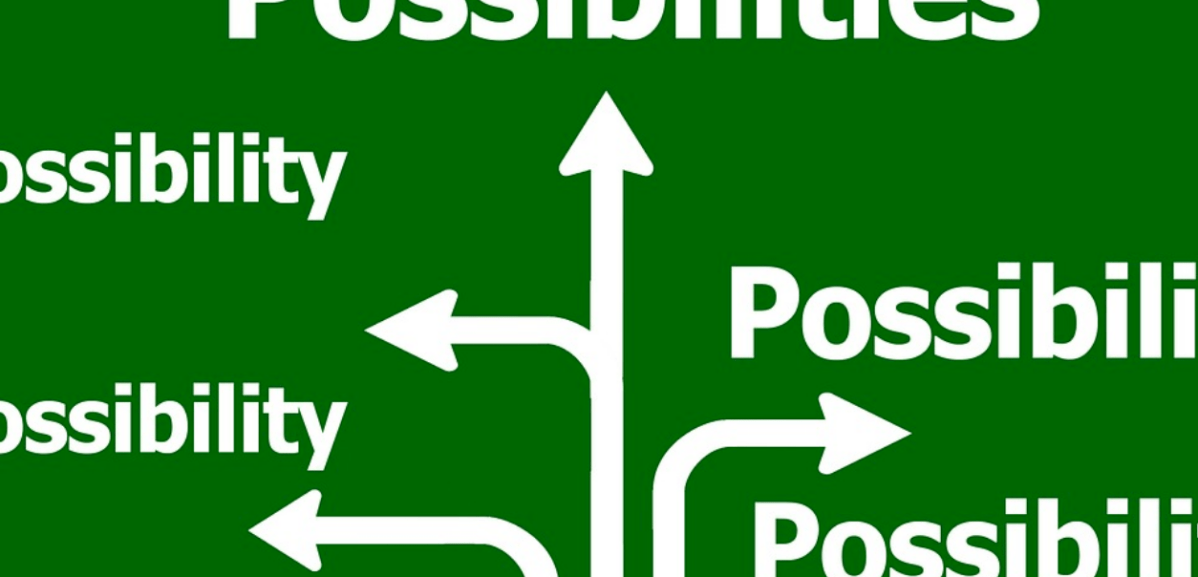
Decisions, Decisions

Featured Image by WikiImages from Pixabay

Where margins are thought of as something like the political left or right, I wonder whether Aristotle would have us default to a more centred position. I can hear him now… the centre as a virtuous place to dwell, and then the margins, which gradually tend to widen toward greater vice, be it a deficiency of too little or an excess of too much.

In fairness, I suspect he’d also grant that pushing and pulling from the margins is what steers the middle course, as in the margins are essential – albeit marshalled by the strictures of “a certain principled inflexibility” by which a centred majority maintains its stability. As such, any move out from centre would seem to oblige careful consideration of multiple perspectives and possible outcomes on behalf of everybody by which, really, I mean everybody.

But, as more people come to critique the milquetoast middle – do-nothings whose tolerance is negligence by omission – so also more people tend to vacate the central fringe. The margins populate and steer more massive moves – more volatile moves – in what must come to resemble the anomie of culture war.

At this point, I am assuming readers cast the stage with a host of their favourite players… and yes, well, need I say more.

From the centre, Aristotle would suggest – and, indeed, from any established centre – what can help a decision to vacate the middle for a margin is phronesis, our practical wisdom, which resides within us as a simultaneous dynamic: an acuity of discernment and a benevolence in the weighing of options. Phronesis is exercised in a process he called praxis, a committed act of ‘doing’ informed by reflective ‘thinking’. In an instance of vacating the centre, practical wisdom – yours, mine, anybody’s – could help determine at the given moment which margin to favour for some particular reason.

And, as I said, if we’re right to inform any such decision by accounting for more than one perspective, then our so-called ‘best’ decisions would seem to be our most informed decisions, irrespective of an eventual outcome… albeit with a certain flexibility of principle to be weighed by pragmatics – it’s ‘practical’ wisdom, remember? We’re not wisdom machines.

You wouldn’t believe how many spheres on Google seem to be there thanks to math.

So here let’s grant margins beyond the fatuous dichotomy of political left and right. In fact, let’s think of anyone’s position as centred to every direction in a sphere of infinite margins, where any one direction is uniquely no other, no matter how slightly another tangent may point: for some, this is nuance; for others, pedantic babbling and, for those, I have but two words: perspicacious circumspection. Ah-ha yes, well… for someone located in their centre, listening seems virtuous, too.

All this is not a matter of act but a matter of character. Practical wisdom informing decisions is a nuanced thing: why to act, why under the present circumstances to choose ‘this’ margin and not ‘that’ one. This kind of nuance we often call ‘the Why’, and it’s distinctly different from some marginal course change that evacuates the centre – the latter strictly an outcome, the former a reasoned weighing of possible outcomes. In so many words: when a chosen course is an outcome of practical wisdom, it’s not the other way-round. But nuance is anathema to ideology whereas stupid is as stupid does.

When logic rests upon a false ‘either/or’ dilemma, act supersedes wisdom, and criticism can only be aimed at outcome because decision – while not entirely removed from our responsibility – is severely curtailed: your false dilemma is my ultimatum.

Character suffers at the hands of dogma, and if he were around today, I can only speculate that Aristotle would feel a little hard done by for being so alone in a world of centres. It’s never easy being the silent minority, not when your silence is really just a drowned-out appeal that goes unheard.

Click here to read Enacting ‘the WHY’