Memories Go Fourth

Featured Image by PublicDomainPictures on Pixabay

Do you click hyperlinks? This post is full of them: click them, follow them, read them. Or else search the topics and find links of your own, but get started doing something to learn more.

A year ago, I was reminiscing… three memories: inflation, gold, and a profligate economy founded upon debt, which only sounds like an oxymoron.

… Grandpa here yet?

One more memory, along those lines. Mid ’70s, probably pre-Star Wars, probably a Saturday, and Grandpa’s over for dinner, always a minor Occasion. With front-door greetings over, coats taken, dogs settled, and drinks well in hand, the family sits together around the living room, as ever talking and remembering and passing the time.
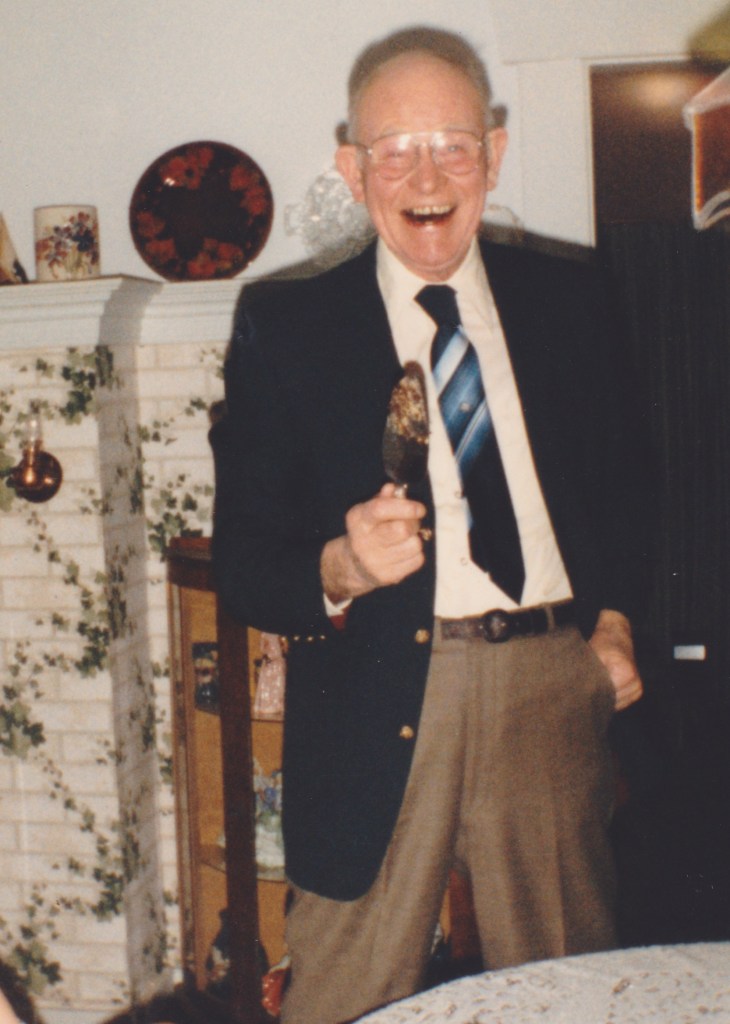
Grandpa could slice politicians like birthday sponge cake

This particular afternoon, though, the tone is vexed… that special incredulity-slash-resignation only politicians can inspire. This afternoon, the value of a dollar or, rather, value past now lost: how much a dollar no longer buys, and the daft decision-makers who don’t or won’t comprehend, much less accept, their own responsibility – not only for here-and-now but come the inevitable reckoning.


Bonus memory… remember this one? Probably from the ’90s… your RSP advisor has you signing a document that reads, Past is no indication of future performance, and while you scrawl, they finish their spiel by saying, “…but historically, the stock market has always tended to rise.” And as far as that was accurate, it was also mere dissembling unless adjusted for inflation.

As snow on the ground is not the weather, ‘rising prices’ are not inflation. As far as inflation is the issue, prices don’t actually rise; rather, the currency’s purchasing power falls, and more dollars must accumulate to buy the same item as before, which seems like prices getting higher but is not the same thing as costs that rise against sound measures.

If today’s runaway inflation has not been headed our way the past fifteen years, then how about the past fifty? A few months after I was born, the 37th US President responded to runaway inflation, which by then of course had been politicised. Two features of his new economic policy were an end to the fixed-exchange currency arrangement, in existence since 1944, which by then of course had been politicised, and a shocking yet not shocking halt to the international convertibility of currencies into US-held gold. Perhaps no shock, none of this is considered among the 37th Administration’s accomplishments, not whether you look here, here, or even here although it is briefly mentioned here.

At least grant the past two years… yet the ‘runaway’ bit, now as in the ’70s, is simply the amplified effect of machinations underway for the past 109 years.
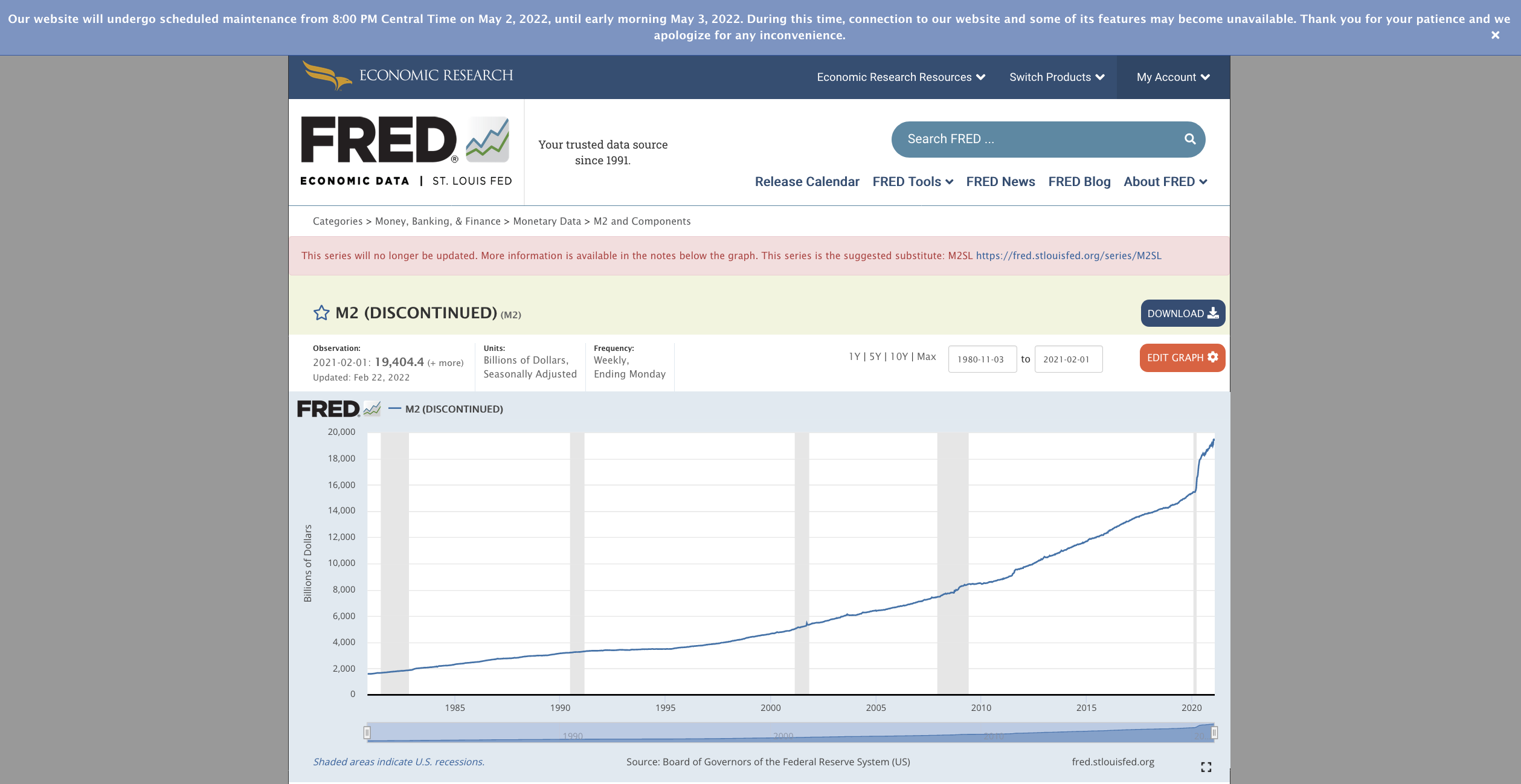
M2 Money Supply still matters. Chart: https://fred.stlouisfed.org/series/M2 (although don’t bother checking on May 2–3, 2022)

Before the Federal Reserve was enacted in 1913, inflation was an expansion of the money supply – these days an increase in the supply of currency units: dollars, renminbi, rupees, whatever. An effect of inflation is a definite fall of purchasing power by dilution of currency units from having created more and more and more of them. Prices ‘rise’ driven by currency debasement, an effect of inflation where prices seem to rise because their numerical values get higher, and people might spend more for the same, or spend less and have less.

Another effect is an expectation everybody gathers for prices to get higher still. Prices ‘getting higher’ vs. prices ‘rising’ is my way to distinguish between what economists say is nominal and what they say is real. Credit the 20th century Fed-era economists, all tied up in knots over the determinants of demand-pull and cost-push and all manner of academic-importance speech, which I guess is the mission-creep you’d need if there were a vacuum of cultural memory that needed filling – as easy as money from thin air, or playing god with people’s lives and livelihoods, or hubris.

How little of this actually is a cultural memory anymore, much less a family one, might be telling. Something I remember my Dad used to say all the time – he said it that Saturday in the living room, and I remember my Grandpa agreed: “It isn’t that people don’t know; they simply don’t want to know.”

There’s a lot riding on partial perspectives – everything, you could say – so, what… let it ride?

Or look into things. More thoroughly, on your own terms, whether you’re curious or not. Suppose you even come to understand the world more than you thought you did, or more than you remembered.

Can you tell which one was the watchdog?

The Bridge to Hell…

Peter Benson’s article, “Francis Fukuyama and the Perils of Identity,” in Philosophy Now (Issue 136), got me thinking again about multiculturalism. I’ve had plenty to say about multiculturalism – seldom positive – although none of it here on The Rhetorical WHY.

If you haven’t yet leaped to conclusions about me, I’ll point out that the full title of this post is “The Bridge to Hell is Paved with Problematic Intention.” It’s meant to be a little satirical, a little disparaging. It’s a wordy mash-up of axioms, cultural and academic. I’m okay with wordy this time.

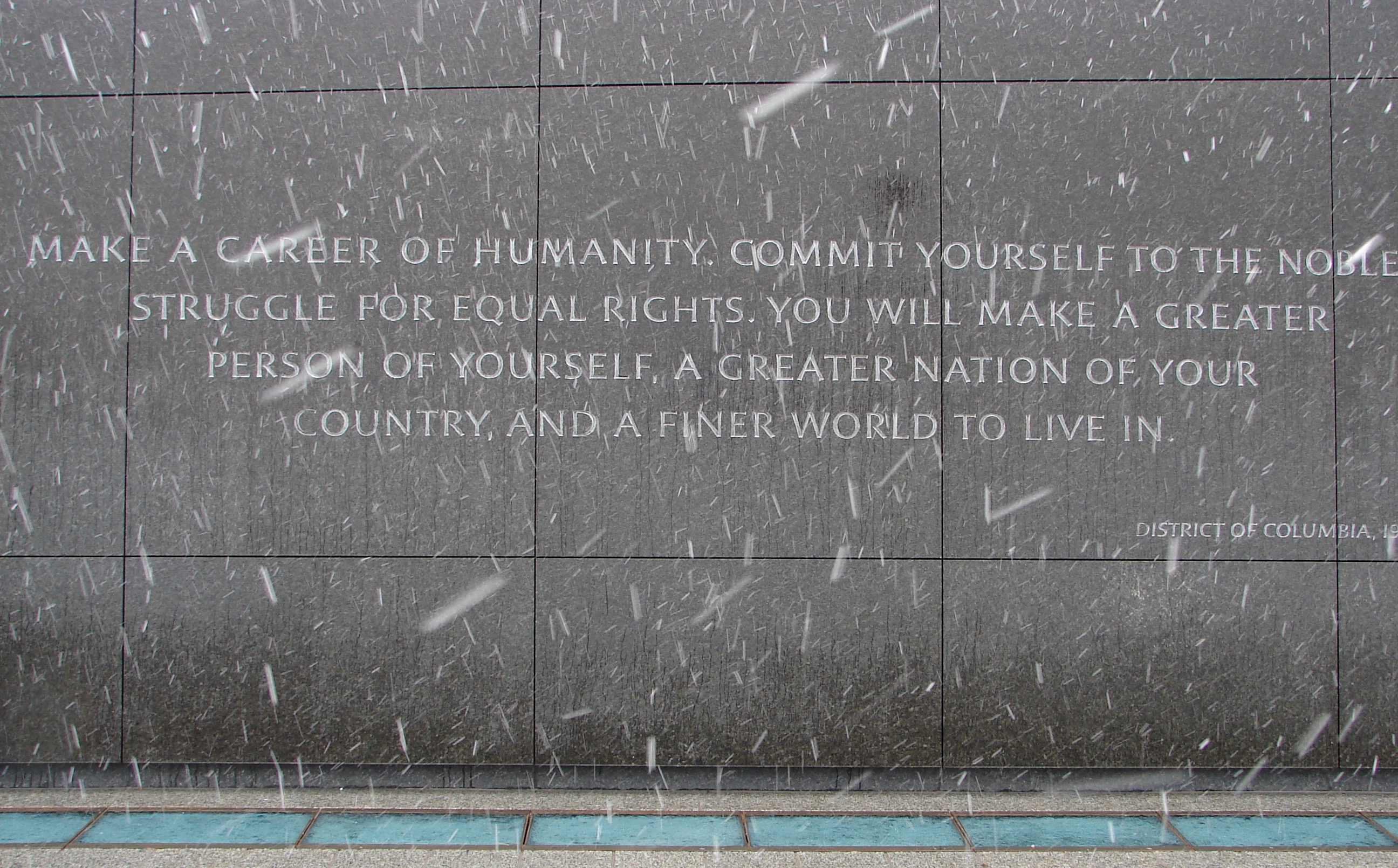
I’m also conscious of the juxtaposition of my crude title and the wisdom of Dr. King. I’m less okay with this but felt the contrast worth any shock, ambiguity, or misapprehension.

Read on, and take issue as you must or as you will.


The Bridge to Hell is Paved with Problematic Intention

Has the trumpeting of multiculturalism taken itself so literally that even individualism (… multipersonism?) is insufficient?

Taking itself, as I say, more literally, multiculturalism sets one culture at equal stature with the rest – seems fair enough – apparently, a shift in meaning from diversity to inclusion, which implies that diversity wasn’t working on account of exclusion.

So, within Culture X or Culture Y, as we might imagine an individual being equal alongside other members, we can imagine across the two cultures potential impasse: “… unresolvable conflicts between mutually exclusive viewpoints [that] dominate the political landscape” (Benson, 2020). I still grant here individual differences, but I have in mind some divide between distinct communities of individuals, i.e. a divide between cultures.

In relation to Culture Y, for example, Culture X might deem its equality mere lip-service and feel de facto unequal: “How are we in Culture X obliged to consider those in Culture Y as ‘equal’ if our culture is not equal to theirs?

Image by MetsikGarden from Pixabay

“How can we treat them as equals, much less be treated as equals, if our larger culture is not equal – that is, if Culture Y does not accept us on equal terms?” Culture Y might declare all individuals equal to begin with and counter that Culture X only perceives inequality. Yet this simply compounds the same injustice for Culture X, who will hardly waive their due consideration.

In any case, equality of cultures seems not the same thing and unable to play out to the same effect as equality of individuals – even more so since an individual who identifies with more than one culture might feel strewn across their own intersections. (Curiously, this assumes one’s identity to be chosen as much as bestowed, which echoes individualism as much as collectivism.) In fact, if equating cultures equates individuals, then equality rests further upon equity, a mantle of justice issuing from a superior authority.

Perhaps Culture Y lives by some unproblematic axiom, such as ‘might makes right’, ‘stay the course’, or even just ‘common sense’ while Culture X lives by ‘power to the people’, ‘diversity is strength’, or ‘revolution is no dinner party’. Can they bridge their divide? Is one culture responsible to reach across, as it were, halfway? We might define an obligation to come any distance according to power of authority. To be sure, imbalanced authority does seem a constant throughout history; for exactly this reason, though, would we expect the side with authority to yield?

I turn to Dr. King. In his time, a generation or two before mine, Dr. King sought and fought for equality and “the cause of peace and brotherhood,” there surely being little more equal than “a single garment of destiny” (King, 1963). As we are all, he claimed, paradoxically yet beautifully this makes us one. Standing upon the authority of centuries, of historical proclamation and practice, and there resting in long studied philosophy and lived experiences of spiritual belief, Dr. King challenged his brothers to bear witness upon themselves. Such authority remains as stable for those to come as for those preceding – that is, unless or until those to come decide to wrest authority someplace else.

Image by John Hain from Pixabay

In our time, justice supersedes civility, and restitution tinges redress. The zeitgeist these days is emotional, distinctly angry. Individuals possess rights, and cultures bear responsibilities. “The politics of identity,” Benson says, “multiply conflicts and divisions.” As we ostensibly advocate for the equality of all individuals, identity politics fights a culture war, a battle for equity across cultures-of-particular-individuals, which actually precludes a wider equity. Cultural equity has supplanted individual equality because, where there is axiomatic ‘strength in numbers’, multiculturalism can only ever be ‘us vs them’. If so, is it still defensible? Is multiculturalism a way to ensure that our outcomes match our aims? Or are the aims of those with authority forever destined to pre-empt the aims of those without it? Indeed, what is the way to ensure that no one of all will ever be marginalised?

For one final point I turn to Benson (2020), not in comparison to Dr. King but out of respect for all being one: “Only when we stop having identities in the group-defined sense can we return to being individuals” (original emphasis). We may discover too late the folly of burning a bridge-too-far while crossing it.

Washington, DC (March 2014) - Day 4 - 101

“… Whose the Forest of Them All?” See What I Did There?

Imagine somebody offers you a friendly smile, but you snarl back. What might be their next reaction? Would they be amused and take it as a friendly jibe, just typical “you”? I suppose that would depend on how well they knew you. Would they be bemused because they don’t know you so well? Really, snarling at a friendly smile…? We’re perfect strangers, for goodness’ sake! Would they be confused because they’re not from around here and just can’t reckon the response in any way?

A person’s reaction to your snarl might conceivably be anything – it depends on so many factors, and even in these three suggestions, one can find how-many-more details, nuances, and possibilities that take things further. Any “next reaction,” you might finally conclude, just depends on the person.

That response, “it depends,” is often criticised as merely wishy-washy yet, apparently, there’s an ironic ring of absoluteness to it, like the postmodern clarion call that nothing is true except for this statement. The reason I pose the scenario at all is to consider who really provides us with our sense of self. Supposing this person smiled at me… I might snarl in the first way, as a jibe, because I’m sure they’ll get the joke. But what if they don’t get it? What if this person even knows me pretty well, and they just don’t get it, not this time? Or what if they feel this just wasn’t the time for joking around? Their next reaction will depend on these and/or plenty of other factors. But again, I raise the scenario to consider how we gather – or, no no, to consider who really provides us – with our sense of self.

And there you have it, the issue: do we each gather our own sense of self, internally, or do others provide us with our sense of self, externally?

I don’t want to revert simply to the nature-nurture argument or chicken-and-the-egg. We seem inescapably bound to considering these by degree – hence, the absolutism that it depends. So, then, to consider by degree… the metaphor I have in mind is that of a mirror. Something someone does induces a response from me. Subsequently, what I provoke in that other person can tell me something more about myself, so long as I’m willing (and able?) to discern my self – myself? – from what they reflect.

Whatever next reaction of theirs follows my snarl, this other person’s reaction serves as a mirrored reflection of me, at least insofar as this other person is concerned. If they laugh at my snarl, then hey, I guess they affirm me as a friend with an appropriate sense of humour; the jibe is appreciated, and maybe we’re even a little closer friends than before. Their positive reaction is my feedback, like looking at myself in a mirror, and my sense of self is in some way provoked on account of them by what they reflect.

I suppose there’s room to discuss a lack of empathy, here, even sociopathic behaviour – these seem also to be part of that endless list of details, nuances, and possibilities. But in acknowledging them, let’s leave them for another day.

If my snarl induces a frown from the other person, or some kind of puzzlement or disapproval, then what they affirm for me is less friendly or wonderful, yet may be just as clear – maybe they snarl back, even more fiercely, or maybe they stomp away with clenched fists. Maybe now I feel worried, in which case my sense of self could suffer from insecurity or dismay – oh dear, they didn’t get the joke! Or maybe they are saddened, and I feel smug – take that, you deserve it – or hostile – get lost, I never liked you anyway – which reinforces my sense of superiority, some kind of self-importance.

The list of possibilities goes on – it depends – but, in any case, I’m able to find myself reaffirmed by that other person’s reaction. I’m “able to” because my snarl clearly exposes my stake in how this other person influences the way I consider my sense of self: why would I even take notice of them in the first place, much less snarl, much less take concern of their next reaction, if they meant nothing to me? The point is that the other person’s reaction provides me a measure, a reason, a reflection by which to gauge my self as myself. Basically, thank you, because I couldn’t do it without you and everybody else, and you’re welcome because neither could you without me, or everybody else.

Now, pretend there are no other people – you, alone, exist as the sole human being. You happen to be walking through a grove of birch trees, say, obviously getting no reactions as we’ve just considered about smiles and snarls.

But as the wind whishes by, fluttering leaves and swaying branches, you take in the world around you with a relative means of judgment that wades through various combinations of reactors provoking reactions from reactees: Are the trees reacting to me? Is the wind reacting to me, or the trees to the wind? and so forth. You can see all sorts of things happening, but how can you be sure what provokes or reflects what else? Some songbirds are flitting about, high up in the branches: Are they chirping at me? You might not even call them “song” birds (that is, if you even had language – what need for language, really, as one sole person?) For all we know, the birds would actually scare you, and you might rightly call them “scarebirds” or something – in this pretend scenario, with you the sole human being, we’re also pretending that you know nothing in the way of biology or flora or fauna. Those are ways of understanding the world developed in the real life community of human beings, not in some pretend scenario of solo existence.

In that land of pretend, after weeks of sunshine, what might be your sense of self on the day it rained, or on the day the leaves yellowed and fell to the ground in heavier, colder winds? Would you even be considering your “self” apart from the entirety of what surrounds you? Here we are, again, at nature-nurture, only this time you might conceivably consider the two in synthesis: not as separately discrete influences – there is nature, and there is nurture – but as one-and-the-same, naturenurture, thereby placing you into the world of existence as part-of-a-greater-whole. Your sense of self could conceivably be more cosmic, in that literal sense of orderliness, and more holistic, in that sense of connectedness.

To mix metaphors, you might feel a mere cog in the wheel, a mere wheel of the gears, yet entirely necessary, just the same. Or how about this: I wonder how imperative my right hand feels, as compared to my left, when I write with a pen, but they’re both pretty important when I play golf.

We can conceivably warrant our selves to ourselves, but – as we step back into the land of real life and other people – we cannot live in total oblivion of the people around us. I grant the possibility of living within ourselves as our selves, which renders the responses and reactions of any one, with others alongside, as little more than colliding self-interests. Still, though… that other people can authorize our sense of self – your sense, my sense – seems as inescapable, as definite, as did nature-nurture or chicken-and-the-egg.

In this little thought experiment, I’ve been wondering whether we each sense our self as reflective of the reactions we induce. How much do we incorporate the feedback we get after snarling at a friendly smile? Do we see that other person as though staring at ourselves in a mirror? And, if so, does that mean we’re each of us necessarily, essentially, and thereby compellingly part of a greater whole… like trees of a forest, or cogs in a wheel, or limbs to a body?

Maybe it’s only an issue because we’re able to raise such questions, to begin with.