These are all descriptors I’ve encountered for Canada, from one source or another. I can make of each one something contextual. Yet as each suggests a departure or break from something previous, that’s really just a subtle way of saying, “Here’s what we aren’t.”
Yet describing something with negative terminology is ultimately meaningless because it can end up becoming silly; for instance, “I am not a giant Godzilla-like dragon that breaths fire and enjoys sipping my iced coffee on Tuesdays.” We could literally imagine anything that isn’t the case and say as much, and we’re no further ahead knowing what actually is the case.
So when I see descriptors like these – for Canada but really for anything – I’m unclear and confused about what to think. It’s a concern for me, the citizen, because who I am and what I value have direct effect on you and everyone else, and me in return all over again.
In the vaunted year 2015, according to Canada’s newly elected PM, Trudeau the Lesser, “There is no core identity, no mainstream in Canada.” True leadership, spoken with not a jot of intended irony.
Canada’s Parliament Building
Ignoring the post-modern fallacy, i.e. nothing is true other than the statement that confirms nothing is true, this description of Canadian identity caresses its negative terminology. It’s an on-ramp to the freeway of silliness upon which no Godzillas sip their Tuesday coffee.
And where the link above was an American take on our Prime Minister’s interpretation of whom he leads, others have taken noted concern of his statement, too, among them some Canadians whom he leads…
On the other hand, and perhaps in response (?), the Government of Canada is now apparently reversing course, telling Canadians and would-be Canadians something awfully more specific about Canadian identity:
I admit, once more, to losing track as a “Canadian,” although at least this time the terminology is positive: “We are indeed ‘this’ and ‘that.’”
Some pretty specific stuff in the now-defunct Global Affairs guide – shame you missed it. For example…
“When lining up in a public place, the bank for instance, Canadians require at least 14 inches of space…”
Right down to the inch? Granted, I’m not the most social-media savvy citizen you could find, but I think a colloquial Canadian response to this – at least on-line – might be “WTF!!!”
… anybody here still know that guy, Al Waxman?
Still, please don’t let me speak on your behalf. That said, that guide seemed to have been compiled by one person in an interview format with a second person because it was written with a first-person perspective: uniquely Canadian, you might say.
Now, if your rejoinder is to excuse that guide as merely a helpful list of suggestions for what is “Canadian,” then allow me to counter with the challenge to separate, in its suggestions, what are quintessential as compared to what are stereotypical descriptions. After all, what Canadian does NOT love beer and hockey and The Hip, just as they detest the gesturing of hands and public displays of affection?
*HINT: you’ll note how I’ve been using negative terminology…
Beautiful British Columbia
We’re approaching another freeway on-ramp, this one a sloped and slippery freeway that circles and loops and arrives at no particular destination because at its terminus interminably works a construction crew, who build it out just a little further than before, apparently with no idea who they are, or what they do, or – perhaps worst of all – why they might want to reflect, with no small concern, upon the work they consider to be of national significance.
Seriously, am I the only one who’s concerned by this?
Time and energy… the one infinite, the other hardly so. The one an abstraction, the other all too real. But while time ticks ceaselessly onward, energy forever needs replenishing. We assign arbitrary limits to time, by calendar, by clock, and as the saying goes, there’s only so much time in a day. Energy, too, we can measure, yet often we equate both time and energy monetarily, if not by actual dollars and cents: we can pay attention, spend a day at the beach, save energy – the less you burn, the more you earn! And certainly, as with money, most people would agree that we just never seem to have enough time or energy.
Another way to frame time and energy is as an investment. We might invest our time and energy learning to be literate, or proficient with various tools, or with some device that requires skilful application. Everything, from a keyboard or a forklift or a tennis racquet to a paring knife or an elevator or a golf club to a cell phone or a self-serve kiosk or the new TV remote, everything takes some knowledge and practice. By that measure, there are all kinds of literacies – we might even say, one of every kind. But no matter what it is, or how long it takes to master, or why we’d even bother, we shall reap what we sow, which is an investment analogy I bet nobody expected.
Technology returns efficiency. In fact, like nothing else, it excels at creating surplus time and energy, enabling us to devote ourselves to other things and improve whichever so-called literacies we choose. The corollary, of course, is that some literacies fade as technology advances. Does this matter, with so many diverse interests and only so much time and energy to invest? How many of us even try everything we encounter, much less master it? Besides, for every technological advancement we face, a whole new batch of things must now be learned. So, for all that technological advancement aids our learning and creates surplus time and energy, we as learners remain the central determinant as to how to use our time and energy.
Enter the classroom what’s lately been called Artificial Intelligence (A.I.). Of course, A.I. has received plenty of enthusiasm, attention, concern, and critique as a developing technological tool, for learning as well as plenty other endeavours and industries. A lengthy consideration from The New York Times offers a useful, broad overview of A.I.: a kind of sophisticated computer programming that collates, provides, and predicts information in real time. Silicon Valley designers aim to have A.I. work at least somewhat independently of its users, so they have stepped away from older, familiar input-output modes, what’s called symbolic A.I., a “top down” approach that demands tediously lengthy entry of preparatory rules and data. Instead, they are engineering “from the ground up,” building inside the computer a neural network that mimics a brain – albeit, a very small one, rivalling a mouse – that can teach itself via trial-and-error to detect and assess patterns found in the data that its computer receives. At these highest echelons, the advancement of A.I. is awe-inspiring.
Now for the polemic.
In the field of education, where I’m trained and most familiar, nothing about A.I. is nearly so clear. Typically, I’ve found classroom A.I. described cursorily, by function or task:
A.I. facilitates individualized learning
A.I. furnishes helpful feedback
A.I. monitors student progress
A.I. highlights possible areas of concern
A.I. lightens the marking load
On it goes… A.I., the panacea. Okay, then, so in a classroom, how should we picture what is meant by “A.I.”?
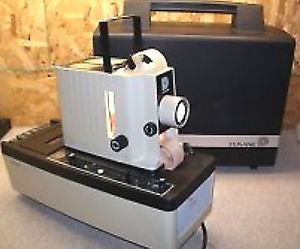
“Anybody remember Mr. Dukane?”
Specific examples of classroom A.I. are hard to come by, beyond top ten lists and othergeneralizeddescriptions. I remember those library film-strip projectors we used in Grade 1, with the tape decks attached. Pressing “Play,” “Stop,” and “Eject” was easy enough for my six year-old fingers, thanks to engineers who designed the machines and producers who made the film strips, even if the odd time the librarian had to load them for us. (At home, in a similar vein, how many parents ruefully if necessarily consider the T.V. a “babysitter” although, granted, these days it’s probably an iPad. But personification does not make for intelligence… does it? Didn’t we all understand that Max Headroom was just a cartoon?) There’s a trivia game app with the hand-held clickers, and there’s an on-line plagiarism detector – both, apparently, are A.I. For years, I had a Smart Board although I think that kind of branding is just so much capitalism and harshly cynical. Next to the Smart Board was a whiteboard, and I used to wonder if, someday, they’d develop some windshield wiper thing to clean it. I even wondered if someday I wouldn’t use it anymore. For the record, I like whiteboards. I use them, happily, all the time.
Look, I can appreciate this “ground-up” concept as it applies to e-machines. (I taught English for sixteen years, so metaphor’s my thing.) But intelligence? Anyway, there seems no clear definition of classroom A.I., and far from seeming intelligent to me, none of what’s out there even seems particularly dim-witted so much as pre-programmed. As far as I can tell, so-called classroom A.I. is stuff that’s been with us all along, no different these days than any tool we already know and use. So how is “classroom A.I.” A.I. of any kind, symbolic or otherwise?
“Hey, so who’s the Sub today?”
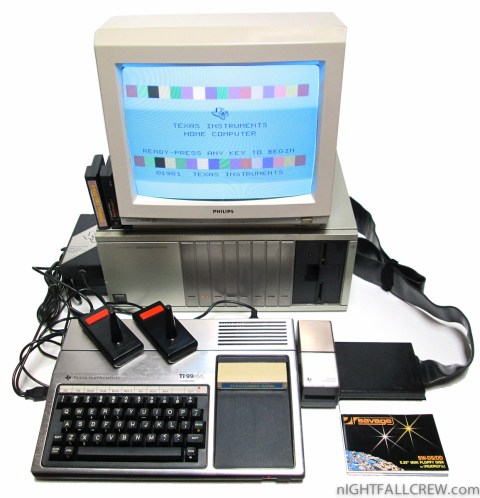
Symbolic A.I., at least the basis of it, seems not too dissimilar to what I remember about computers and even some video arcade favourites from back in the day. Granted, integrated circuits and micro-processers are a tad smaller and faster these days compared to, say, 1982 (… technology benefitting from its own surplus?) Perhaps more germane to this issue is the learning curve, the literacy, demanded of something “intelligent.” Apparently, a robot vacuum learns the room that it cleans, which as I gather is the “ground-up” kind of A.I. Now, for all the respect and awe I can muster for a vacuum cleaner – and setting all “ground-up” puns aside – I still expect slightly less from this robot than passing the written analysis section of the final exam. (I taught English for sixteen years, so written analysis is my thing.) It seems to me that a given tool can be no more effective than its engineering and usage, and for that, isn’t A.I.’s “intelligence” more indicative of its creator’s ingenuity or its user’s aptitude than of itself or its pre-programmed attributes?
By the same token, could proponents of classroom A.I. maybe just ease off a bit from their retcon appropriation of language? I appreciate getting caught up in the excitement, the hype – I mean, it’s 21st century mania out there, candy floss and roller coasters – but that doesn’t mean you can just go about proclaiming things as “A.I.” or, worse, proclaiming A.I. to be some burgeoning technological wonder of classrooms nationwide when… it’s really not. Current classroom A.I. is simply every device that has always already existed in classrooms for decades – that could include living breathing teachers, if the list of functions above is any guide. Okay then, hey! just for fun: if classroom tools can include teachers who live and breathe, by the same turn let’s be more inclusive and call A.I. a “substitute teacher.”
Another similarly common tendency I’ve noted in descriptions of classroom A.I. is to use words like “data,” “algorithm,” and “training” as anthropomorphic proxy for experience, decision-making, and judgment, i.e. for learning. Such connotations are applied as simply as we might borrow a shirt from our sibling’s closet, as liberally as we might shake salt on fries, and they appeal to the like-minded, who share the same excitement. To my mind, judicious intelligence is never so cavalier, and it doesn’t take much horse-sense to know that too much salt is bad for you, or that your sibling might be pissed off after they find their shirt missing. As for actually manufacturing some kind of machine-based intelligence, well… it sure is easy to name something “Artificial Intelligence,” much less bestow “intelligence” by simply declaring it! The kind of help I had back in the day, as I see it, was something I just now decided to call “S.I.”: sentient intelligence.
Facetiousness aside, I grant probably every teacher has spent some time flying on auto-pilot. I’ve definitely had days that left me feeling like an android. And fair enough: something new shakes things up and may require some basic literacy. There’s no proper use of any tool, device, or interface without some learned practical foundation: pencil and paper, protractor, chalk slates, the abacus. How about books, or by ultimate extension, written language, itself? These are all teaching tools, and each has a learning curve. So is A.I. a tool, a device, an interface? All of the above? I draw the line where it comes to classroom tools that don’t coach the basketball team or have kids of their own to pick up by 5pm: the moniker “A.I.” seems more than a bit generous. And hey, one more thing, on that note: wouldn’t a truer account of A.I., the tool, honour its overt yet seemingly ignored tag, “artificial”? R2D2 and C-3PO may be the droids we’re looking for, but they’re still just science fiction.
Fantastic tales aside, technological advancements in what is called the field of A.I. have and will continue to yield useful, efficient innovation. And now I mean real Silicon Valley A.I., not retcon classroom A.I. But even so, to what ends? What specifically is this-or-that A.I. for? In a word: why? We’re headed down an ontological road, and even though people can’t agree on whether we can truly consider our self, we’re proceeding with A.I. in the eventual belief that it can. “It will,” some say. Not likely, I suspect. Not ever. But even if I’m wrong, why would anyone hope that A.I. couldthink for itself? Why?
10. Be “A.I.” 20. Go to 10 Run
Hasn’t Heidegger presented us with enough of a challenge, as it is? Speaking of time and energy, let’s talk opportunity costs. Far greater minds than mine have lamented our ominous embrace with technology. Isn’t the time and energy spent on A.I. – every second, every joule of it – a slap-in-the-face of our young people and the investment that could have been made in them? It’s ironic that we teach them to develop the very technology that will eventually wash them away.
Except that it won’t. I may be out on a limb to say so, but I suspect we will sooner fall prey to the Twitterverse and screen-worship than A.I. will fulfil some sentient Rise of the Machines. The Borg make good villains, and even as I watch a lobby full of Senior Band students in Italy, staring at their iPhones, and fear assimilation and, yes, worry for humanity… even then I reconsider because the Borg are still just a metaphor (… sixteen years, remember?) As a teacher I am more driven to reach my students with my own message than I am to snatch that blasted iPhone from their hands, much as I might like to.
On the other hand, faced with a dystopian onslaught of Replicants, Westworld Gunslingers, and Decepticons, would we not find ourselves merely quivering under the bed, frantically reading up on Isaac Asimov while awaiting the arrival of Iron Man? Even Luke Skywalker proved susceptible to the Dark Side’s tempting allure of Mechanized Humanity; what possible response could we expect from a mere IB cohort of inquiry-based Grade 12 critical thinkers and problem-solvers?
“Resistance is futile.”
At the very least, any interruption of learners by teachers with some classroom tool ought to be…
preceded by a primer on its literacy,
i.e. explaining how to use that particular tool in…
a meaningful context or future setting,
i.e. explaining why to use that particular tool, before anybody…
begins rehearsing and/or mastering that particular tool,
i.e. successfully executing whatever it does
If technology helps create surplus time and energy, then how and why and what had better be considered because we only have so much time and energy at our disposal. The what, the how, and the why are hardly new concepts, but they aren’t always fully considered or appreciated either. They are, however, a means of helpful focusing that few lessons should be without.
As a teacher, sure, I tend to think about the future. But that means spending time and paying attention to what we’re up to, here and now, in the present. To that end, I have an interest in protecting words like “learning” and “intelligence” from ambiguity and overuse. For all the 21st century hearts thumping over the Cinderella-transformation of ENIAC programmable computation to A.I., and the I.o.T., and whatever lies beyond… for all that, our meagre acknowledgement of the ugly step-sister, artificiality, is foreboding. Mimicry is inauthentic, but neither is it without consequence. Let’s take care that the tools we create as means don’t replace the ends we originally had in mind because if any one human trait can match the trumpeting of technology’s sky-high potential – for me at least, not sure for you – I’d say its hubris.
Another fantastic tale comes to mind: Frankenstein’s monster. Technological advancement can be as wonderful as horrifying, probably usually somewhere in between. However it’s characterised or defined, though, by those who create it, it will be realised in the end by those who use it, if not those who face it. For most people, the concept of cell phones in 1982 was hardly imagined. Four decades later, faces down and thumbs rapid-fire, the ubiquity of cell phones is hardly noticed.
As far as I understand Jacques Derrida’s différance, he observes that we understand our experiences as distinctive – but not exhaustive – communicated links or marks comprising an on-going decisive chain of experiential moments.
As to the language we use to describe our experiences, any word we use has contextual meaning, both from its usage at any given time as well as from its etymology over the course of time. I tend to agree with this attendance to context as furnishing meaning, and I can also spot the rabbit hole that it poses. For example, to understand some word’s definition, I might look it up in the dictionary and be left to rely upon the definition provided by [ whomever ], e.g. some editor, who decided what it meant. At the same time, I am faced with all sorts of words in the definition, and they need looking up, too – Sisyphean, indeed! Cruel but so usual. On the other hand, thanks to whomever for compiling the dictionary, a pretty utile compendium, I have to say.
To be clear, I am not intending to invoke logocentrism, by which all our words are accorded a decided meaning from a cultural centre, which propagates existing biases or “privileges”; Derrida would roll over in his grave. Granted, I may already have laid grounds here to be accused of logocentrism, myself, by writing with words (and I confess to using English because I didn’t think anyone had the patience to muddle over Wingdings). My present aim is to suggest how we might address the afore-mentioned rabbit-hole dilemma by searching for or (… almost afraid to say it) by decidingupon some definitions of our own. Not like a dictionary, but more like – – well yes, okay, like a dictionary, but one that we’ll fashion from the ground-up, like when the light bulb would go on above Darla’s head, and Spanky would snap his fingers to say, “Hey, everyone! Maybe we can put on a play!” So, in the spirit of dissemination, hey everybody, maybe we can compile a dictionary! A real, deconstructive, crowd-sourced dictionary!
I’m not really compiling a dictionary. I’m just trying to make some sense of Derrida and différance. Let me try to illustrate what I mean from my own experience.
Sometimes I play Walking Football, a version of the game where players are not permitted to run. Naturally, the debate is over what differentiates walking from running. We’ve agreed that walking means “always having at least one foot in contact with the ground during the striding motion.” Running means “having both feet leave the ground at some point during the striding motion.” This makes for certainty, and so long as our eyes are trained enough to spot feet in motion – which I can spot sometimes so clearly, with such immediacy, that its more like I’m watching, not playing… I’m even ghinding it tuff right now to ghet the right words, but trust me. And so long as each player is willing to obey the rules – and, ohh my, there’s always that one player who just won’t. You know who I mean… *sigh… Anyway, so long as they’re not just words uttered, which then float away in the breeze, then our definitions of the rules for ‘walking’ and ‘running’ are useful.
Luckily, too, I might add, when we clarify the rules, we do so out loud, together, and don’t whisper it around in a circle, like when my daughter plays Telephone at a birthday party – after all, we want everyone to be clear. Finally, even if we have trouble spotting feet in motion, because it all happens too quickly, or even if that one player is a cheater at heart, the definitions themselves remain clear, and usually at least one or two of us can remember them well enough to recite back, as needed, usually with a lot of furrowed brows and finger-pointing. One time we even wrote the no-running rule on the gym chalkboard, and even though no one challenged this on the grounds that writing is secondary to speech, everyone still understood why it was scrawled there, by which I mean everyone knew exactly who should read it the most – wow, does every game have that player?
Bottom line: accountability is down to the sincerity and respect offered to each player by every other player who decides to participate. As an aside, the need for a referee, an arbiter, is all the more clear when the stakes are as high as bragging rights and free beer. But, even as we play for fun, the rules exist or else the game, as such, does not. (On that note, I find a lot of players simply don’t like Walking Football and would rather play with running, and that’s fine, too: it’s their decision, and plenty other like-minded players keep both games afloat. I find the Walking game amplifies decision-making, so maybe this feature just appeals to me. And I still play traditional football, too.)
My broader point is that any one person must decide to accept what has been defined and, likewise, any group of people must reach a consensus. Shared meaning matters because, otherwise, as I say, we don’t have a game, or else we have a very different game, or we just have anarchy. But whether that person, alone, or the group, altogether, searching for a way to decide upon meaning, has the patience to delve down the rabbit hole… well, yes, context does indeed matter – both usage and etymology. I’ve said and written as much, myself, for a long time. So, in light of all this, I hope I’ve gathered a little something of Derrida’s différance. I’m still learning.
Another illustration: in my teaching, I occasionally introduced this matter of contextual meaning by offering students a list of synonyms: “slim,” “slender,” “skinny,” “thin,” “narrow.” Each word, of course, has its own particular meaning. “If they meant the same thing,” I offered, “then we’d use the same word,” so just what explains the need for all these synonyms? Well, students would say, there are lots of different things out there that possess or demonstrate these various ‘adjectives’ (my word, not theirs), so we’ve come up with each adjective to describe each thing (and I think that’s a charitable “we,” like the Royal “We.”)
During the ensuing discussion, I might ask which of these words typically describe human traits versus those – leaving aside metaphors – that typically do not. Next, which words typically possess positive connotations, and which negative, or neutral? And, as it pertains to the personification metaphors, which words are more easily envisioned versus those that really stretch the imagination, or even credibility?
Eventually, I would shift from ontology to epistemology, posing the questions at the heart of my intention: For any of the previous questions about these synonyms, how do you know what you’re talking about? For what each of these words could mean, where have your assurances come from? Of course, the most frequent reply to that question was “the dictionary,” followed by “my parents” or “books I’ve read,” or “just everyday experience, listening and talking to people.” Occasionally, the reply was something akin to “Who cares… it just means what it means, doesn’t it?” In every reply, though, one common thread was detectable: the involvement of other people as part of the meaning-making process. Fair enough, we can’t all be Thoreau.
One more illustration: when is “red” no longer red but perhaps orange or purple? Well, for one thing, if you’re colour blind, the question means something entirely different, which I say not flippantly but again to illustrate how important dialogue and community are to deciding what something means. For another thing, in keeping with context-dependency, we might wish to ask, “Why even ask?” Again, this is not flippant or dismissive but practical: when does it matter so that we distinctly need to identify the colour red? Where a group of people might face the question over what is red versus what is orange or purple, we might expect some kind of discussion to ensue. And, whether one asks as part of such a group or as a hermit, alone, I submit this one person’s decision about what is “red” ultimately comes down to one person to determine: “Red is this,” or “This is red,” or even, “Gosh, I still can’t really decide.” Even a coerced decision we can still attribute to the one who forces the issue – one person has decided on behalf of another, however benignly or violently: might makes right, or red, as it were.
Coercion introduces a political consideration about whose authority or power has influence, similar to needing referees on account of those players who decide to run. The point, for now, is simply that a decision over what something means to a person is ultimately made by a person, leaving others to deal with that decision on their own terms in whatever way. But other people are part of the meaning-making process, even passively, or else I wouldn’t need language to begin with since the rest of you wouldn’t trouble me by existing. Not to worry, by the way, I appreciate you reading this far. From what I understand (and I am convinced I must learn more, being no avid student of either postmodernism or Derrida), his observation of différance either discounts or else offers no account for the arbitrary decision-making that people might make when they decide they’ve had enough. People tend to land somewhere in a community, and it’s the rare person who lives and plays wholly and uncompromisingly by their own rules. However, the fact that he felt différance was worth the effort to publicise and explain to the rest of us does reflect an arbitrary decision on the part of Derrida and says something – sort of ‘out loud’ – about him.
So this is where I have more fundamental trouble understanding Derrida and différance – the very notion of “different,” as in, in what world could there not be an arbiter? Even a life alone would face endless decisions: what to eat, where to go, when to sleep, and so forth. From such musing – speaking of rabbit holes – I was led to reading about another philosopher named Jacques, this one Rancière, and what he calls the axiom of equality. In pure nutshell form, I take this to mean that no (socio-political) inequality exists until it has been claimed to exist – and note that it’s claimed in a boat-rocking kind of way, what the kids these days are calling “disruptive.” The upshot is that equality, itself, can only ever be theoretical because someone somewhere inevitably is and always will be marginalised by the arbitrary decisions of cultural hegemony. Still learning.
Back to the Walking Football analogy: if the rabbit hole of defining a word in the context of those that surround it, then having to define, even further, all those words, and on and on, and experience is inexhaustible, and what’s the point, and lift a glass to nihilism… if that kind of limitless indefinite deconstructive search-and-compare lies at the heart of what is different, then maybe Derrida just found it difficult to reach agreement with other people. It stands to reason that, if he played Walking Football, Derrida might be the worst cheater on the floor, continually running when he should be walking, then denying it just the same as he tried to gain advantage. Maybe, fed up being called a cheater, he would take his ball and go home to play by himself, where no one could say he was wrong. Being alone, after all… who would be there, whether as an obedient player or as a sneaky one, to challenge him?
In fact, maybe that’s why he chose to return to play the next day – for all the arguing, he enjoyed the game, or the attention, or the camaraderie, or the exercise, or whatever, more than being accused of cheating. I wonder if, perhaps, in the great game of philosophy football, he would have been the only rival to strike real fear in Diogenes – I mean awe & respect kind of fear, and I mean if they had lived at the same time. It’s hard to know about Diogenes since nothing he wrote down ever survived, and these days, I doubt more than a few can recall any of whatever he said out loud, besides that lamp-carrying honesty thing. (We should all have such good spirit when it comes to our first principles.) Anyway, I think Diogenes played for Wimbledon.
Well, I am being unkind to Derrida. Evidently, he was a kinder person by nature than I have let on, as well as an advocate for all voices, all people. And the professional care, the uncompromising expertise he took to convey his ideas, to trouble himself with delving down the rabbit hole so arbitrarily – to go down at all but, moreover, to go so far when he might, just the same, have decided to halt. Delve as far as you like, but accept responsibility for your decision, every time.
In that respect, how does Derrida differ from any other person facing decisions? Did he have still other motivations? No player who kicks a football is deliberately playing to lose, not unless they have been coerced by someone else to do so. On the other hand, for all I know, maybe what Derrida called red I would call blue. Be careful not to pass the ball to the wrong team! (By the way, in sport, dynasties are remembered precisely because they eventually come to an end.)
Was Derrida no less accountable and open to scrutiny than you, or me, or anybody else? To suggest that a word only makes sense based on how it differs from those around it is no less arbitrary than its reciprocal suggestion: a word only makes sense based on how it describes only what it describes. Half-full / half-empty, a six and two 3s… Two sides of the same coin are still the same coin.
Alternatively, who put him up to all this? Meanwhile, on his own, surely Derrida had it within himself, as people do when they reach a point, simply to say, “Here is enough. I decide to stop here. For me, [the item in question] means this.” If that doesn’t ring true and sound like him, well, I’d say that can be just as telling of his character; I heard it suggested, once, how we can be helped in knowing something by what it is not. So, fine – for Derrida to stake the claim called différance, I’m willing to concede him that moment. We all land somewhere, and we’re all hardly alike, even when we’re alike.
We are, each and every one of us, individual. But together we comprise something just as dynamic on a larger scale – one might construe us societally, or perhaps historically, anthropologically, or on and on, in whatever way through whichever lens. For me, différance appears an attempt to speak for all about all, prescriptively. A grand stab at philosophy, no question, and that’s the beauty of the equality of philosophy, with thanks to Rancière: we all have a part to play and a right to respond.
For the time being, as I have understood Derrida and his thinking, and I willingly stand to be instructed further, différance strikes me as ironic, being an advocacy for the dynamic development of people and language and culture that self-assuredly asserts its own accuracy. That is not an uncommon indictment of postmodernists. What’s more, it is ohh, so human.










 The Rhetorical WHY