Time and energy… the one infinite, the other hardly so. The one an abstraction, the other all too real. And while time ticks ceaselessly onward, energy forever needs replenishing. We assign arbitrary limits to time, by calendar, by clock, and as the saying goes, there’s only so much time in a day. Energy, too, we can measure, yet often we equate both time and energy monetarily, if not by actual dollars and cents: we can pay attention, spend a day at the beach, save energy – the less you burn, the more you earn! And certainly, as with money, most people would agree that we just never seem to have enough time or energy.
Another way to frame time and energy is as an investment. We might invest our time and energy learning to be literate, or proficient with various tools, or with some device that requires skilful application. Everything, from a keyboard or a forklift or a tennis racquet to a paring knife or an elevator or a golf club to a cell phone or a self-serve kiosk or the new TV remote, everything takes some knowledge and practice. By that measure, there are all kinds of literacies – we might even say, one of every kind. But no matter what it is, or how long it takes to master, or why we’d even bother, we shall reap what we sow, which is an investment analogy I bet nobody expected.
Technology returns efficiency. In fact, like nothing else, it excels at creating surplus time and energy, enabling us to devote ourselves to other things and improve whichever so-called literacies we choose. The corollary, of course, is that some literacies fade as technology advances. Does this matter, with so many diverse interests and only so much time and energy to invest? How many of us even try everything we encounter, much less master it? Besides, for every technological advancement we face, a whole new batch of things must now be learned. So, for all that technological advancement aids our learning and creates surplus time and energy, we as learners remain the central determinant as to how to use our time and energy.
Enter the classroom what’s lately been called Artificial Intelligence (A.I.). Of course, A.I. has received plenty of enthusiasm, attention, concern, and critique as a developing technological tool, for learning as well as plenty other endeavours and industries. A lengthy consideration from The New York Times offers a useful, broad overview of A.I.: a kind of sophisticated computer programming that collates, provides, and predicts information in real time. Silicon Valley designers aim to have A.I. work at least somewhat independently of its users, so they have stepped away from older, familiar input-output modes, what’s called symbolic A.I., a “top down” approach that demands tediously lengthy entry of preparatory rules and data. Instead, they are engineering “from the ground up,” building inside the computer a neural network that mimics a brain – albeit, a very small one, rivalling a mouse – that can teach itself via trial-and-error to detect and assess patterns found in the data that its computer receives. At these highest echelons, the advancement of A.I. is awe-inspiring.
Now for the polemic.
In the year 2018, in the field of education, in which I’m trained and most familiar, nothing about A.I. is nearly so clear. Typically, I’ve found classroom A.I. described cursorily, by function or task:
A.I. facilitates individualized learning
A.I. furnishes helpful feedback
A.I. monitors student progress
A.I. highlights possible areas of concern
A.I. lightens the marking load
On it goes… A.I., the panacea. Okay, then, so in a classroom, how should we picture what is meant by “A.I.”?
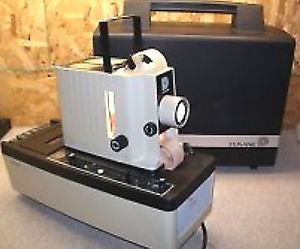
“Anybody remember Mr. Dukane?”
Specific examples of classroom A.I. are hard to come by, beyond top ten lists and othergeneralizeddescriptions. I remember those library film-strip projectors we used in Grade 1, with the tape decks attached. Pressing “Play,” “Stop,” and “Eject” was easy enough for my six year-old fingers, thanks to engineers who designed the machines and producers who made the film strips, even if the odd time the librarian had to load them for us.
(At home, in a similar vein, how many parents ruefully if necessarily consider the T.V. a “babysitter” although, granted, these days it’s probably an iPad. But personification does not make for intelligence… does it? Didn’t we all understand that Max Headroom was just a cartoon?)
There’s a trivia game app with the hand-held clickers, and there’s an on-line plagiarism detector – both, apparently, are A.I. For years, I had a Smart Board although I think that kind of branding is just so much capitalism and harshly cynical. Next to the Smart Board was a whiteboard, and I used to wonder if, someday, they’d develop some windshield wiper thing to clean it. I even wondered if someday I wouldn’t use it anymore. For the record, I like whiteboards. I use them, happily, all the time.
Look, I can appreciate this “ground-up” concept as it applies to e-machines. (I taught English for sixteen years, so metaphor’s my thing.) But intelligence? Anyway, there seems no clear definition of classroom A.I., and far from seeming intelligent to me, none of what’s out there even seems particularly dim-witted so much as pre-programmed. As far as I can tell, so-called classroom A.I. is stuff that’s been with us all along, no different these days than any tool we already know and use. So how is “classroom A.I.” A.I. of any kind, symbolic or otherwise?
“Hey, so who’s the Sub today?”
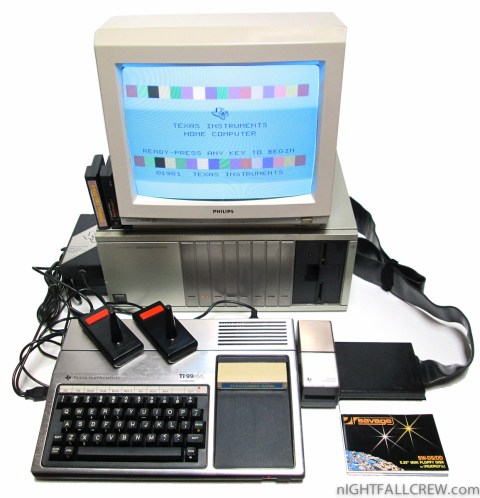
Symbolic A.I., at least the basis of it, seems not too dissimilar to what I remember about computers and even some video arcade favourites from back in the day. Granted, integrated circuits and micro-processers are a tad smaller and faster these days compared to, say, 1982 (… technology benefitting from its own surplus?) Perhaps more germane to this issue is the learning curve, the literacy, demanded of something “intelligent.” Apparently, a robot vacuum learns the room that it cleans, which as I gather is the “ground-up” kind of A.I. Now, for all the respect and awe I can muster for a vacuum cleaner – and setting all “ground-up” puns aside – I still expect slightly less from this robot than passing the written analysis section of the final exam. (I taught English for sixteen years, so written analysis is my thing.) It seems to me that a given tool can be no more effective than its engineering and usage, and for that, isn’t A.I.’s “intelligence” more indicative of its creator’s ingenuity or its user’s aptitude than of itself or its pre-programmed attributes?
By the same token, could proponents of classroom A.I. maybe just ease off a bit from their retcon appropriation of language? I appreciate getting caught up in the excitement, the hype – I mean, it’s 21st century mania out there, candy floss and roller coasters – but that doesn’t mean you can just go about proclaiming things as “A.I.” or, worse, proclaiming A.I. to be some burgeoning technological wonder of classrooms nationwide when… it’s really not. Current classroom A.I. is simply every device that has always already existed in classrooms for decades – that could include living breathing teachers, if the list of functions above is any guide. Okay then, hey! just for fun: if classroom tools can include teachers who live and breathe, by the same turn let’s be more inclusive and call A.I. a “substitute teacher.”
Another similarly common tendency I’ve noted in descriptions of classroom A.I. is to use words like “data,” “algorithm,” and “training” as anthropomorphic proxy for experience, decision-making, and judgment, i.e. for learning. Such connotations are applied as simply as we might borrow a shirt from our sibling’s closet, as liberally as we might shake salt on fries, and they appeal to the like-minded, who share the same excitement. To my mind, judicious intelligence is never so cavalier, and it doesn’t take much horse-sense to know that too much salt is bad for you, or that your sibling might be pissed off after they find their shirt missing. As for actually manufacturing some kind of machine-based intelligence, well… it sure is easy to name something “Artificial Intelligence,” much less bestow “intelligence” by simply declaring it! The kind of help I had back in the day, as I see it, was something I just now decided to call “S.I.”: sentient intelligence.
Facetiousness aside, I grant probably every teacher has spent some time flying on auto-pilot. I’ve definitely had days that left me feeling like an android. And fair enough: something new shakes things up and may require some basic literacy. There’s no proper use of any tool, device, or interface without some learned practical foundation: pencil and paper, protractor, chalk slates, the abacus. How about books, or by ultimate extension, written language, itself? These are all teaching tools, and each has a learning curve. So is A.I. a tool, a device, an interface? All of the above? I draw the line where it comes to classroom tools that don’t coach the basketball team or have kids of their own to pick up by 5pm: the moniker “A.I.” seems more than a bit generous.
And hey, one more thing, on that note: wouldn’t a truer account of A.I., the tool, honour its overt yet seemingly ignored tag, “artificial”? R2D2 and C-3PO may be the droids we’re looking for, but they’re still just science fiction.
Fantastic tales aside, technological advancements in what is called the field of A.I. have and will continue to yield useful, efficient innovation. And now I mean real Silicon Valley A.I., not retcon classroom A.I. But even so, to what ends? What specifically is this-or-that A.I. for? In a word: why? We’re headed down an ontological road, and even though people can’t agree on whether we can truly consider our self, we’re proceeding with A.I. in the eventual belief that it can. “It will,” some say. Not likely, I suspect. Not ever. But even if I’m wrong, why would anyone hope that A.I. couldthink for itself? Why?
10. Be “A.I.” 20. Go to 10 Run
Hasn’t Heidegger presented us with enough of a challenge, as it is? Speaking of time and energy, let’s talk opportunity costs. Far greater minds than mine have lamented our ominous embrace with technology. Isn’t the time and energy spent on A.I. – every second, every joule of it – a slap-in-the-face of our young people and the investment that could have been made in them? It’s ironic that we teach them to develop the very technology that will eventually wash them away.
Except that it won’t. I may be out on a limb to say so, but I suspect we will sooner fall prey to the Twitterverse and screen-worship than A.I. will fulfil some sentient Rise of the Machines. The Borg make good villains, and even as I watch a lobby full of Senior Band students in Italy, staring at their iPhones, and fear assimilation and, yes, worry for humanity… even then I reconsider because the Borg are still just a metaphor (… sixteen years, remember?) As a teacher I am more driven to reach my students with my own message than I am to snatch that blasted iPhone from their hands, much as I might like to.
On the other hand, faced with a dystopian onslaught of Replicants, Westworld Gunslingers, and Decepticons, would we not find ourselves merely quivering under the bed, frantically reading up on Isaac Asimov while awaiting the arrival of Iron Man? Even Luke Skywalker proved susceptible to the Dark Side’s tempting allure of Mechanized Humanity; what possible response could we expect from a mere IB cohort of inquiry-based Grade 12 critical thinkers and problem-solvers?
“Resistance is futile.”
At the very least, any interruption of learners by teachers with some classroom tool ought to be…
preceded by a primer on its literacy,
i.e. explaining how to use that particular tool in…
a meaningful context or future setting,
i.e. explaining why to use that particular tool, before anybody…
begins rehearsing and/or mastering that particular tool,
i.e. successfully executing whatever it does
If technology helps create surplus time and energy, then how and why and what had better be considered because we only have so much time and energy at our disposal. The what, the how, and the why are hardly new concepts, but they aren’t always fully considered or appreciated either. They are, however, a means of helpful focusing that few lessons should be without.
As a teacher, sure, I tend to think about the future. But that means spending time and paying attention to what we’re up to, here and now, in the present. To that end, I have an interest in protecting words like “learning” and “intelligence” from ambiguity and overuse. For all the 21st century hearts thumping over the Cinderella-transformation of ENIAC programmable computation to A.I., and the I.o.T., and whatever lies beyond… for all that, our meagre acknowledgement of the ugly step-sister, artificiality, is foreboding. Mimicry is inauthentic, but neither is it without consequence. Let’s take care that the tools we create as means don’t replace the ends we originally had in mind because if any one human trait can match the trumpeting of technology’s sky-high potential – for me at least, not sure for you – I’d say its hubris.
Another fantastic tale comes to mind: Frankenstein’s monster. Technological advancement can be as wonderful as it is horrifying – probably usually somewhere in between. However it’s characterised or defined, though, by those who create it, it will be realised in the end by those who use it, if not those who face it. For most people, the concept of cell phones in 1982 was hardly imagined. Four decades later, faces down and thumbs rapid-fire, the ubiquity of cell phones is hardly noticed.
What is the story? In a nutshell, Facebook permitted C.A. wide access to its users’ private data, without their consent. Authorities now suspect that C.A. used the data to affect political influence in various countries around the world, specifically by way of on-line advertisements and news stories, both factual and contrived. People were fed information tailored to appeal to them and thereby challenged to discern the factual from the fictional.
Here are a sampling of reports about the story and its fallout, some of which has been severe.
Raising the level of discourse is about discerning and appreciating peoples’ motives, thereby helping to determine what people are after, in order to understand why they do what they do.
To my students, I am confident that our coursework has prepared you to face the kind of cognitive assault launched by C.A. on people across the world. For my part, I’m comfortable keeping my Facebook account open… for the time being, anyway.
To everybody else, yes, absolutely this post is a plug for raising the level of discourse, an approach I encourage all of you to consider.
Read more about my own general take on Facebook here.
**All the personal profile links in this article, like Colette’s, were live at the time of publishing… hard to know what’s happened to everyone since. I haven’t exactly been keeping tabs [Nov. 23, 2020]
On-line comments are not guns – they don’t kill people. And the people who wield them, as in write them, are not having a stand-off at high noon. On-line comments are not deadly but, man, can they be deadly stupid.
They can be uninformed, superficial, emotionally driven, and – frankly – bloody lazy. Plenty of opinions from plenty of people carrying free-speech chips on self-righteous shoulders. On-line comments are a sign of the times.
“Just how many people bother to research and draft for a ‘Comments’ section response, anyway?”
Does it show I’m fed up with people trying to win personal pissing matches in the “Comments” section? …people clawing their way to the top of some imagined pile of respect, in a community comprising whomever read the article – unless of course they only read the headline. Does it show? …the invective, the insults, the spree of one-liners? Commenters affirming, negating, defending, attacking. Pointing out who’s so obviously wrong and what’s so evidently right. Commenters commenting, exercising democracy one comment at a time? On-line comments are the Twitter of– er, hmm, gimme some time to work on that one.
Of course I’m unable to say on-line comments kill people but not because they actually don’t kill people. It’s because, in that analogy, on-line comments are just the bullets. Keyboards would be the guns. And it’s still people pulling the trigger by pressing ‘send’ – I’m sure there’s a triggering joke in here somewhere. For now, enough to say that guns don’t post comments, people do.
Time was when sending a letter-to-the-editor to your chosen publication was the main public recourse although you had no guarantee it would be published, or at least not published in full. But then came the Internet, the great equalizer. I can only suspect that, way back when, when that first on-line article permitted readers to leave comments, the author or editor or publisher proudly lifted a glass of wine to rejoice the enabling of the public voice. One step forward for free speech. Here’s to democracy.
How often I’ve read an article, then perused the on-line comments, looking for a broader sense of opinion: “Maybe I’ll encounter some different perspectives, pick up a hyperlink or two.” This does still happen, and for me, it’s what makes on-line comments worthwhile. It also means I’m relying on the other commenters to offer anything of substance. But, obviously (…is it obvious?) substance doesn’t always just happen. Then again, I suppose it’s pretty naïve to expect that it would.
And if you thought, in the sheer amount of comments for just one single article, that the law of averages would help, then you probably haven’t read too many on-line comments. They often far, far surpass the length of the article and illustrate far, far less than broader opinion or different perspectives or anything useful at all about the topic. Just as often they proliferate because somebody needed to win.
How often is someone’s on-line comment about the article as compared to that commenter seeking personal affirmation or recognition as some kind of uber-reliability source? “As a former [ masterclass expert in this field ] with [ world-renowned qualifications-slash-certified expertise ] and [ decades ] of experience, my post here is [ untouchable truth ], and you’re all fools and dead to me except if you reply with reverent admiration.” How often does an on-line comment chain turn into a personal on-line shoving match? And how often has somebody replied along these lines: “You’re pretty tough when it’s not face-to-face…” ?
Surely nobody thinks they’re even beginning to solve some issue in the on-line Comments. Do they? At least, they couldn’t possibly think so when all they’ve written is a sentence or two. Right? At least, when they’ve written sentences. But, unquestionably, the essay-length on-line comment is the exception to the rule. Isn’t it? At least, it is in the Age of Twitter – wait, sorry, I already slammed Twitter. This time, I’ll go with Google making us stupid (not for the first time). By the way, even shortened attention spans have been called into question (have a look, neither’s a long read). My own sense, for what it’s worth, is that we attend to what stimulates us the most although – egregiously – I have no research to back my opinion, and if any of you trolls call me on that, I’ll comment you back. Must be almost time for that trigger joke.
Are people commenting when maybe they should be writing an article of their own? Would that be too much responsibility to bear? to ask? Would writing an article require too much effort? People seem to care enough to leave a comment yet not enough to offer something more substantive than a line or two, or a paragraph the odd time. Even a few paragraphs, that one time by that one person, but anything truly edited for cohesion – are you kidding, what are we, journalists? How many of us are writers, period, much less paid ones? Heaven forbid anyone be expected to offer more than a few lines of opinion masquerading as oh-such-obvious-fact, or one-liner, or dogmatic tirade! (Yes, I not only see the irony, I intended it.) Leave all that responsibility crap for whoever else. Whomever, actually, but that would mean caring.
Who are you, anyway, that you’d present yourself in a manner as superficial as on-line comments, then expect to be taken seriously? Who are you, that you’d conflate your real-life person with your on-line persona in such a way that one belies the other? Which one is demonstrating the true you? Who are you, to be taking this so personally right now when, in fact, right now I’m giving you the benefit of the doubt? Cynicism aside, everyone can think – hence my frustration. If on-line comments suggest anything, they suggest that emotion rules, not thinking.
Don’t misconstrue – thinking and emotion, I’d say, both occur, but by default (I’d say), emotion controls thinking more than the other way around. Far more rarely does rationality show up beyond the article itself, if even there.
Below is an edited chain of comments that I cut & pasted from an NPR article posted to Facebook, about the bombing of the Manchester arena following the Ariana Grande concert in 2017.
To be precise, these comments that I cut & pasted are from the Facebook post, not NPR’s website. I also present these comments as a single, focused discussion when, in fact, other peoples’ semi-related comments had appeared in between some of these, responding to still other people. But the way comments appear is evidently controlled more by their time stamp, when they were posted, than by which person receives a reply in the thread. So, in selecting only these comments here, I tried to maintain the direct discussion between particular people, back and forth. Finally, I’ve published their Facebook names with hyperlinks because all this is publicly published anyway, and nobody’s owed any shelter.
Rather than take sides, see if you can read this thread to understand my point, the futility of trying to solve such grand issues in a Comments section, the pointlessness of on-line comments in general. (Yes, I see the irony in having my own Comments section below. I even intended it.)
Ask of each comment, and each commenter…
what, really, is the motive behind this comment getting not just written but posted?
what, really, is the response that this person…
believes for themselves?
presumes from the other person?
seeks from anyone else (like us) who may be reading?
Read not only with self-awareness but with other-awareness, with empathy. But please resist taking sides on the issues, irrespective of your own feelings, because the point here is the comments having been crafted and shared, not the terror incident or the politics that are introduced. A tangential point is to acknowledge that it’s possible and sometimes productive to keep our feelings and our rationality separate.
The Thread
James Alford What a great freedom festival! I just don’t know what we’d do without all the freedom that comes with unfettered access to semiautomatic weapons. Thanks for sharing this awesome display of our enviable freedom!
How do other nations cope without our awesome brand of freedom?! I mean, other than longer life expectancy, ultra low crime rates, drastically lower prison populations, and better overall quality of life.
Yep. Would never wanna swap my bullet-y freedom for any of that.
Scott Macleod How are the Ariana Grande concerts in places without freedom?
James Alford Scott, they do have WAY less freedom, don’t they?! They only have 0.23 gun homicides per 100,000. We have almost 11!!! Murkah!
Scott Macleod James, that is a meaningless statistic. Here I’ll show you:
Last year cars killed:
Switzerland 269
Israel 263
Sweden 285
Norway 145
Australia 1,299
Canada 2,075
United States 36,166
Deaths from drowning, children under 14:
Switzerland 3
Israel 8
Sweden 4
Norway 1
Australia 33
Canada 28
United States 548
Deaths from alcohol per year:
Switzerland 1,600
Israel n/a
Sweden 2,222
Norway 1,016
Australia 5,554
Canada 8,100
United States 88,000
The United States is an outlier on all of these. You can do the same breakdown with antibiotics. You can do it with hot water heaters. Or with deaths from bees. And the US will have higher death rates.
Jacqui Parker Percentages based on overall population would make more sense in your example.
Seth Martin Did anyone in this thread actually read the article?
Scott Macleod The numbers don’t change when broken down per capita. The US is still an outlier. Know why? Because deaths from X will always be higher in countries with more X. Determining causality is much more complicated. Would taking X away eliminate those deaths? Or would X just be substituted for something else and what would have been deaths from X become deaths from Y? This is what’s important.
Jim Chan Total death doesn’t equal to death rate. What are you a 2nd grader?
Scott Macleod Jim, see comment above. Per capita break down does not change the analysis.
Amon-Raa Valencia Scott Macleod the replacement theory can be checked by looking at life expectancy.
Do the countries you point out have higher life expectancy than the US?
James Alford I’m afraid you’re unacquainted with how percentages work, Scott.
If I have 10 tomatoes in my garden, and 2 of them are rotten, and you have 10,000 tomatoes, and 200 of them are rotten, then my problem is still 10 times bigger than yours, even though you have 100 times more rotten tomatoes.
Find a local 5th grader. He’ll be happy to provide more illustrations.
Wesley D. Stoner So Scott Macleod, in your example, if X = guns then the US logically has more gun deaths because there are more guns, right? Where do you think I am going next….
Scott Macleod So by that logic, James, those other countries have the same problem the US does from guns? Please respond without insults.
Scott Macleod <<Scott Macleod the replacement theory can be checked by looking at life expectancy.
Do the countries you point out have higher life expectancy than the US?>>
Other factors go into determining life expectancy. Access to healthcare for example.
James Alford Nevermind, Scott. The original stat said it all. The U.K. (who you brought up) has a gun homicide rate 44 times lower than ours. If you can’t grasp that incredibly straightforward piece of empirical data, then we don’t have a starting point.
Chris Toscano James Alford, you have unlocked Master Troll Level 99. Fine work sir! Look at all the ammosexuals that you have up in arms.
Margaret Moore Bennett Scott Macleod, I am a statistics teacher, you show a basic lack of understanding for how statistics work. You are a poster child for why the GOP is successful with the un and under-educated.
Scott Macleod <<Nevermind, Scott. The original stat said it all. The U.K. (who you brought up) has a gun homicide rate 44 times lower than ours. If you can’t grasp that incredibly straightforward piece of empirical data, then we don’t have a starting point.>>
A) Again, this stat is meaningless. It tells us nothing about causality or how public policy changes the death rates.
B) Those are GUN death rates. Of course a country with 330 million GUNS is going to have higher death rates from GUNS. Just like a country with greater access to antibiotics has more deaths from antibiotics. It tells us nothing about whether antibiotics or guns are good or bad for society.
Scott Macleod How about explaining it to me Margaret rather than resorting to ad hominem and appeals to authority?
Scott Macleod I am not uneducated. I am not a republican. There’s two misses. What are the odds your third claim that I demonstrate a lack of understanding for statistics is correct.
David Houghton Well, you led with raw numbers and not per capita numbers. Not exactly putting your best foot forward on the stats front.
Tandy Fitzgerald Scott Macleod does that mean a US citizen is more reckless when it comes to driving that the rest of the world and less aware when it comes to their children swimming or less aware of health issues and oblivious to the affects of alcohol? Man US citizens really do prefer to live on the edge far more than anyone else in the world…I guess freedom has more prices then just serving in the military.
Scott Macleod I led with what I had available to copy and paste to demonstrate what I was getting at. I agree it would have been better to break them down per capita. Alas, I’m on my phone and these comments move quickly.
Normally when you see this argument, though, it involves raw numbers. As I have said, what I was illustrating does not change when broken down per capita.
Nick Lucas Scott Macleod My favorite part about your posts is that you are trying to dismiss data because of your claims of causality but you make your first statement of the Ariana Grande concert without the same rule of thought.
What gun would have somehow stopped that bomb from exploding? Why didn’t a person with a gun stop the OK bombing or Boston bombing?
This is the problem with bias is we tend to not be able to apply the same logic to our own beliefs that we do others we disagree with.
Michael Dugger Scott Macleod no gun would’ve have stopped a silent bomb carrier Scott.
Scott Macleod Nick, my original comment was a quip. It was a snarky counter to the OP. I feel like you are reading too much into it.
Nevertheless, it does illustrate what I mentioned earlier. When X is not available, people will substitute with Y and nearly the same amount of people would likely die anyway. Why commit suicide with a $500 gun when you can do it with $3 of rope? Looking at guns only is a disingenuous way of looking at the problem. To be sincere, we would need to look at all homicides to determine causality.
I have not made the claim that access to guns will stop bombings.
Bill Melton “Would it make you happier, little girl, if they were pushed out of a seventh floor window?” Archie Bunker
Jenny Caldwell Scott Macleod Those aren’t death rates, those are simply the numbers of deaths. Death rates are population-based, i.e. # of deaths by drowning/1000. US death *rates* by gun violence are indeed much higher than other countries.
Paul Errman James Alford go cry yourself a river. When their violent crime rate drops and they actually have a population of over 300 million call us.
Onica Annika Scott Macleod you can’t take a gun into a concert permit or not. Stupid example.
Onica Annika Scott Macleod Snowflake are you triggered? 😂😂
Scott Macleod <<Scott Macleod you can’t take a gun into a concert permit or not. Stupid example.>>
I never said you could or that you should. Why are you bringing this irrelevant insight into the conversation?
Scott Macleod <<Scott Macleod Those aren’t death rates, those are simply the numbers of deaths. Death rates are population-based, i.e. # of deaths by drowning/1000. US death *rates* by gun violence are indeed much higher than other countries.>>
I know this. I never disagreed. US death rates by gun violence are higher. I never claimed otherwise. What I dispute is the significance of this information.
Scott Macleod We also have higher death RATES due to drowning, alcohol consumption, motor vehicle accidents, and a whole host of other phenomena. Why?
Looking at RATES and ignoring all other factors gives people a misleading glimpse into reality.
Onica Annika Scott Macleod YOU WROTR “How are the Ariana Grande concerts in places without freedom? 👌🏻”
By comparing the bombing in Manchester to carrying guns and implying people would be safer at concerts WITH GUNS is how THIS WAS BROUGHT UP.
You cannot shoot a suicide bomber without expecting to have an explosion. It would have made absolutely NO DIFFERENCE!
Next are comments following NPR’s report on two bounty hunters who engaged a fugitive at a car dealership in Texas, also in 2017 and also posted to Facebook.
The Next Thread
‘Jonathan Fitzgerald So I’m starting to get a little pissed by all this bounty hunter bashing. While a little rough around the edges. Boba Felt was a pretty decent guy. And could tell some great jokes, once he got a few drinks in him. Cad Bane was a generous and loving fellow. He was known to work at the soup kitchens all the time. So chill out. They aren’t ALL bad.
Candy Ellman Johannes That may be but when you see the video it’s quite clear that the two bounty hunters handled the situation very badly. Because they were like that doesn’t mean they were good at their JOB. It doesn’t mean they’re bad. Just that they shouldn’t have been handling this job.
Isaac Unson Wow, what a tragic and visceral story! Should I maybe post a comment to spur discussion about bounty hunting, or the lack of consideration for things going south very badly?
Nahhhh, that’s original content worthy of discussion. Why not just be cynical and predictable instead and make the usual jokes about guns?
Russell Good It’s fitting this happened in a death merchants offices. More people are killed with vehicles, than anything else, and yet anyone can buy a car without a background check. Unlicensed drivers and unregistered vehicles are hurtling past the innocent in their thousands at this very minute. When will we stop the insanity?
Candy Ellman Johannes A death merchant? No, they’re not. They can’t control how someone is going to drive the cars they buy. And a background check will not tell you how they will do that. Just drive around our community in Texas and you will see a lot of idiots on the road. Most of whom would clear any background check you might think they should conduct.
Patrick Oleary Bounty hunters, we don’t need their scum!
Dan Varns Right, the bounty hunters are the bad guy, not the wanted criminal who assaulted a police officer. Got it. Brilliant, take you all day to come up with that??
PaulandCarla Todaro Why would anyone want to watch that? Why would you tell us to? So sad that we can watch such violence and then continue to scroll.
Marcus Harrison You idiots this wasn’t about exercising freedom.You people are so stupid!
Christopher Hill How do libtards turn this into a gun control argument
I hardly even know where to begin with either discussion. The responses, pardon the pun, speak for themselves, from the aggressors to the defenders to the cooler heads to the comic relief. I don’t even say “aggressors” and “defenders” with any political bent so much as simply noting name-calling and tone. The fact that one person or another, with [whichever] political beliefs, is the aggressor or the defender, here, is not my point, which is why I cautioned to read without taking sides – everybody can be mean-spirited or good-willed, aggressive or defensive. My point is that everybody can also think and listen and reflect, if only they wish to do so, which means more targeted effort and more controlled emotional reaction.
The futility of quoted statistics, which are then attacked and defended, as are the people themselves, in a forum that is informal and, for the most part, unmonitored (perhaps beyond hate speech or something that Facebook would moderate) …what’s the point of it all? Once these people close their browsers, what does each one feel he or she has accomplished? If little to nothing, then why even participate? If something more, then who besides themselves is measuring their effectiveness and, anyway, to what end? And who besides themselves even has a right to judge their effectiveness, especially since this cast of characters – evidently – would have plenty more to say about being judged, and we just kick-start another thread!
Once they close their browsers, what does anybody feel they’ve accomplished? If little to nothing, then why even participate? If something more, then who besides themselves is measuring their effectiveness and, anyway, to what end?
How many of you just now reading saw either of these comment threads before reading them here in my post? Which audience needs to see these threads, and why?
Are Comments sections some kind of exercise of free speech? If so, are they worth the trouble? On-line comments are not always anonymous, but they’re also not face-to-face, and that’s perhaps most significant here as to the point of being responsible and thorough before posting something regarding another person. However, it’s most significant in both positive and negative ways – positive because we owe the other person enough dignity to offer them an intelligent reply that respects their point of view, and negative because we can insult the bastard without (likely) ever feeling some physical repercussion. At the opening, I called on-line commenters lazy. Maybe they’re cowardly, too.
Geez, how seriously am I taking this? They’re just blog comments, for goodness’ sake!
Oh please, it’s a comments section not a peer-reviewed journal.
Here’s another partial comment thread, cut & pasted from The Atlantic website, this time without any comments removed from in between – these are consecutive responses to an article about America’s intellectual decline – a topic not too dissimilar from this very post, even though I disagree in detail with a number of the writer’s claims. However, again, the point here is not to debate the issues. It’s to note the motives and tone behind the comments.
Start with Gutenberg. Then move on to education, art, medicine, culture, and philosophy. Don’t forget Martin Luther and Henry VIII.
Yes the Greeks and Arabs and others made their contributions. But how did those contributions find their way to becoming building blocks for Western Civ? Via the Romans (Christians by the end) and the Crusades (Christian holy wars). For centuries it was literate clergymen who preserved the ancient knowledge which would eventually set the stage for the Enlightenment.
Like it or not, Christianity is at least as inextricably entwined with the building of Western Civilization as any other influence one could name.
It’s truly odd that you find this overwhelmingly obvious fact truly odd.
No, Christianity made western civilization what it is today. It’s not what made it possible. However, we can never know what it would look like had Christianity not exerted the power it did.
In other news, if your Mom had chosen a different man to be your father, not only can we never know what you’d look like today–it wouldn’t in fact be you. That child might well not have even existed.
Europe’s faced many existential threats over the millennia. Change just a few events, and Western Civilization wouldn’t have survived. Subtract Christianity, and there’s a strong chance the region becomes conquered by neighboring civilizations, and never even develops the thing we now call Western Civilization.
And that’s as far as I need to go chasing after this particularly nonsensical counter-factual.
“exactly, it’s a counter factual, no need to chase it.”
Asking what might have happened if different decisions had been made is often vital to understanding historical events. Although the process is inherently fraught with ambiguity, it’s a valid exercise.
Your reply makes it seem like perhaps you don’t grasp the purpose of a counter-factual.
This counter-factual is nonsensical. Not all of them are.
yes I understand that as well. This is getting a little exasperating. My only point in this was that one cannot attribute western civilization’s existence to christianity. At most, one can say that christianity was instrumental in the history and current state of western civilization.
Had David simply crafted a more thorough reply to begin with, as he indicates in the final response of this chain, he might have pre-empted all these back-and-forth remarks. More complete remarks might have stirred new ideas, better avenues for discussion, alternatives for research, and just a more thorough model for others to consider. And, sure, where his exchange with Duncan Tweedy was essentially civil and pain-free, he has still made the potential for a bunch of negative things to occur…
(i) people might have accepted his cursory remarks, thereby reinforcing (albeit superficially) their own beliefs in that echo-chamber kind of way
(ii) people might have rejected his cursory remarks, thereby reinforcing (albeit superficially) their own beliefs in that polarising kind of way
(iii) people might have misread, misunderstood, misconstrued, or otherwise missed the context of his remarks and, additionally, might have failed to follow up this thread as far as the point where I have cut & pasted it here
(iv) as a result of (ii) or (iii), people might have grown upset or angry with his cursory remarks and taken him on with vitriol, or worse, simply have begun insulting him outright, neither of which contributes to any constructive progress but, rather, destructive regress and both of which inspire ill feelings that those people now carry into everyday life, and which might later be echoed – on-line or off-line – by still others
(v) some other outcome I haven’t mentioned
Had David afforded more time and thought to (a) the kind of response that could adequately convey his thinking, and also (b) the kinds of responses he might elicit from people who read his remarks if he were to write them this way or that way, then he wouldn’t have responded the way we find here. Yet it hardly seems worth critiquing these, or any, on-line comments at all, they’re so ubiquitous! Yes, I see the irony; in fact, I intended it.
Just how many people bother to research and draft for a “Comments” section response, anyway? The whole concept of the on-line “Comments” section seems tailor-made to evade the vetting and sober second-thought of taking a breath and waiting the requisite 24 hours before responding to messages we don’t like. I’d pay $49 for the t-shirt that reads, “Who took the ‘Editor’ out of ‘Letter to the Editor’? Send me $50 and I’ll tell you.”
Obviously, the question is not how many bother to research and draft. It’s not even a question of whether to bother researching and drafting. It’s a question of whether to bother engaging in the on-line comments, to begin with. And I describe it as “bother” because research and drafting mean “work,” i.e. “What a blasted bother!” as in making a deliberate driven effort versus the blurt of perfunctory emotional reaction, which has always been a human foible and which, these days, seems even that much more common.
All that bother for… what, exactly? For someone to reply with one-line invectives? Who are we trying to reach, on-line? And, in light of that, who are we trying to be?
“Who are you on-line? The person versus the persona – it’s a concept worth considering.”
We’re all still responsible for the things we say, especially when they get published, and especially when “published” now means forever to be seen on-line (a consideration discussed here as well) – a newspaper or a book might at least fall out of print or get tossed in the trash. We might consider being responsible for the writing of an article, so why not for the offering of a comment? All the people I’ve quoted here have plenty to offer, I suspect, given their apparent literacy. But taking the time and resources at their disposal and using them in a more constructive way evidently hasn’t happened. Can that be changed?
What incentive would motivate these, or any, people to offer more when commenting on-line? Do people care about a growing reputation, however much or little it permeates the Cloud of e-culture? Who do they think they are? Who do they think that we think they are? Do they even care what others think they are? Do they care, themselves? There’s so little accountability, no formal editing or vetting as might be found in print publication, aside from moderation, as I’ve said, and that often simply automated. Sometimes there’s a log-in procedure via Facebook or Disqus, say, for whatever assurance that offers. It allowed me to publish selected commenters, here.
“Who are we on-line?” asks Flora the Explorer. It’s a question worth considering before we ever touch a keyboard. So, okay: who are you on-line? The person versus the persona – it’s a concept worth considering since I suspect 99% of on-line commenters will never meet their fellows face-to-face. Yet, precisely because of that physical separation, I suspect few care to consider (or even just bother to actively recognise?) this concept. Yes, that’s ironic, and it’s a shame. If people did care more (or at least actively acknowledge?) the fact that dialogue comprises more than self, how much more might a conversation yield? As it is, on-line dynamics affect our selves so subtly yet profoundly that the Internet, the great democratic equalizer, is proving its ability to take us one step forward and two steps back.
Who’s who? The more we conflate our Person with our Persona, the more care we must take to be honest about who we are presenting as ourselves. Having integrity has to mean more than having strong opinions, or talented chops. These three were willing to pose for a candid moment as something other-than-pretend (i.e. as themselves!) not merely because they could distinguish persona from person but, presumably, because they respected and even liked each other – go figure…
In and of themselves, given their entire context including their culture, article & blog comments tend to run the risk of oversimplifying issues that warrant and deserve far greater diligence and time spent in meaningful appreciation. Issues that deserve… really? Why? Well, for starters, somebody published an article about [whatever it was], so now it’s out there for public consideration. Moreover, somebody decided that publishing [whatever it was] was worth the bother, and like you and me and everyone, that somebody deserves some basic dignity and respect, whether we ultimately agree with their published material or not. At a minimum, that requires reading the article, if not subsequently researching a bit more. Beyond that, it requires crafting responses of your own that do right by the author who invested the time and effort to create an article worthy of your comment – not “worthy” because you agree but “worthy” because you bothered to respond. Boy, all this bother! Why bother?
“The Internet gives everyone a voice!” … just a shame that so many decide, instead, to use it superficially, far beneath both its potential as well as their own
The Rhetorical WHY, itself, is a response not unlike what I suggest here – like anyone, I can’t cover it all in one go, but at the least, I can offer something more than a one-liner. The rest of you deserve that much, as I deserve likewise from the rest of you. So, in fact, it is about deserving: if one deserves, then all deserve – either no one is above any other, as far as it involves basic respect for human dignity, or we’re all of us bound for war, waged by all upon all.
For the record, this time I’m not trying to be ironic, though it might seem so now more than ever before. This time, it’s all too serious.
If people considered article & blog comments as I’ve tried to frame them here, as a matter of respect for human dignity, then comments – and public discourse, altogether – could be a whole lot different, and probably more constructive. Instead of comments, maybe people would compose entire articles of their own, which I remember is what Internet apologists used to boast: “The platform of the Internet is the great equalizer!” and “The Internet gives everyone a voice!” and “The Internet is democracy at its finest!” …that sort of thing. Shame that so many decide, instead, to use it superficially, far beneath both its potential as well as their own.
So, please, follow up on your own, comment and post, publish and be responsible. Contribute constructively. Most importantly, be thoughtful and thorough because that’s respectful of everybody else’s time and effort and bother. No one can cover every single detail, and every person has two cents to add of their own. But don’t be fooled by that miniscule metaphor – two cents refers to humility, so please make an effort to offer more than a reactive outburst.
Thanks, everybody, for leaving whatever considered comments you might have, and don’t let the end of this post be the end of your opinion.