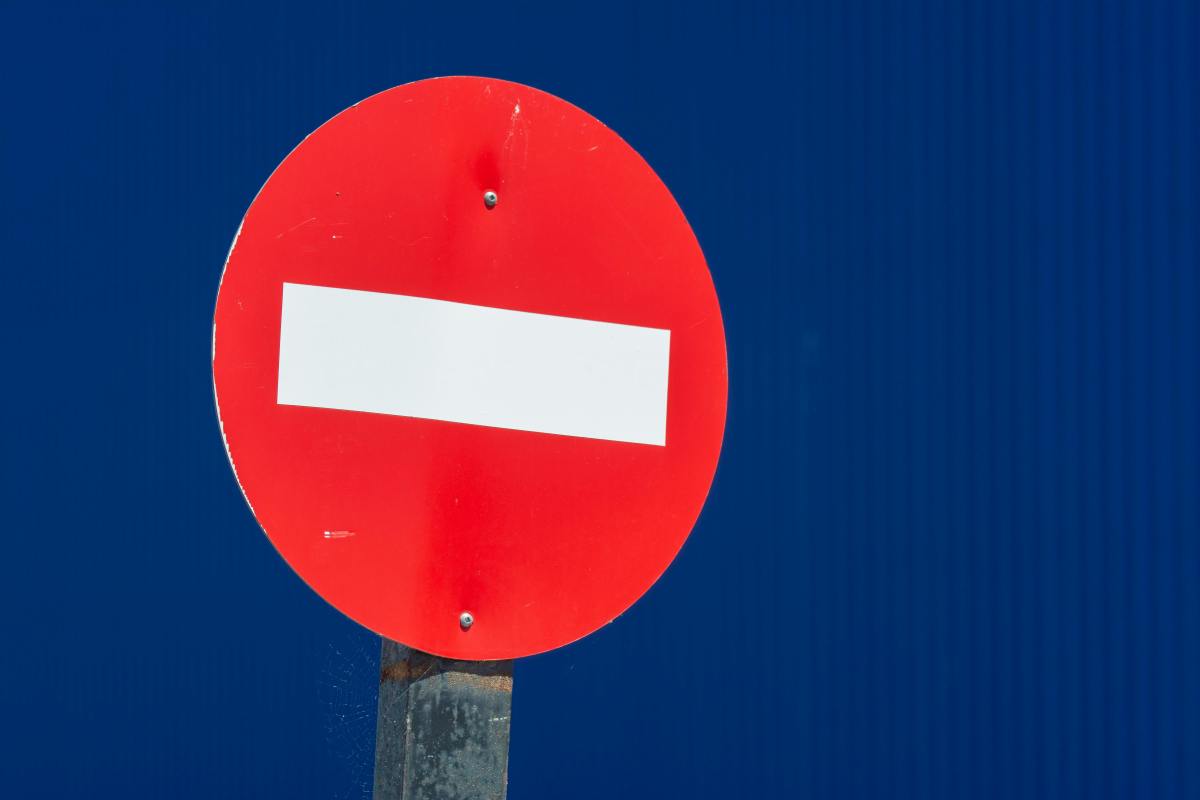
We Get What You Pay For

Featured Photo Credit: Jan van der Wolf on Pexels

Am I the only one who sees at least a hazy comparison between banning social media and banning vices like alcohol and tobacco?

Just for instance… over the past fiftyodd years, we’ve not only managed to restrict the age for purchasing alcohol and tobacco, we’ve also reached some level of comfort that such restrictions may be growing somewhat more culturally acceptable, and even worth further pursuit.

Today, similar acceptance seems evident in myriad age-restricted bans upon the usage of social media, even as weighed against its benefits… one Google search is all anyone needs to confirm the health concerns. And let’s set aside that any threat to the health of so-called “minors” might also mean a threat to the health of so-called “adults” – we’ve apparently reached a comfort level on that, too, one that leaves the adults free to decide for themselves whether or not to damage their health.

Illicit drugs, pornography, firearms – all restricted, if not illegal. Even movie theatres, video games, and music releases can have age restrictions or purchase & supervision requirements. As for me (though not sure for you), I’ve known plenty of minors in my lifetime who were turned down when they asked adults to forgive such bans and let them purchase [ restricted Product X ]. The point just now is not enforcement, which in real consequence is hit-or-miss, but more plainly actuality, which by point of fact is cultural evidence that we’ve found actual reason and method in our past for imposing restrictions and bans.
 
As for the current hoo-haw… if it suggests anything, could it be simply that plenty of people have raised considerable concern? On its face, the mere call to ban social media seems grave enough to warrant a far more judicious – and far less rapid – pursuit of any usage, widespread or minimal, while we try to understand the longer-term consequences of social media, not to mention A.I. As much as the pace of e-culture has reduced our tolerance for waiting, it has also accelerated our lack of patience, which in turn has amplified our imprudence. Among these various cultural reductions, it’s that last one for me (though not sure for you) that really threatens our future.

Someone will argue that social media, and A.I. too, still have practical utility and that weighing this against any ban would short-change the deprived children and youth who use them. Yes, and a 12 year-old can’t just walk into the Motor Vehicles office and book a Road Test, yet driving too has great practical utility. Driving also presents a severe threat to public safety, even after motorists have earned their privilege by passing various licensing processes. Take issue as one may against protecting the duration or stringency of road safety and driver licensing, but for good reason, we do restrict its access.

So, as we halt a minor’s purchase of alcohol or tobacco, why not also a smart phone? Instead of banning social media or A.I., why not restrict the age for operating the devices and accounts we use to access them. How about restricting Rogers / Telus / Bell accounts to make it illegal for minors to be signed on as family members? As no responsible parent simply turns over their car keys to a 12 year-old, why hand them a restricted smart phone? That’s a cultural thing – a willingness to obey the law on account of respecting the belief that instituted it. Unless, of course, that’s a comfort level thing too, and people just aren’t comfortable with it – either way, wouldn’t that tell us something more about what we value most?

Funny over the past ~10-12 millenia how human civilization managed to grow without electronic anything – even longer than that, if we start redefining “human civilization.” Funnier still – and a little ironic – how all that non-digital time finally landed us here to be facing all this, just the same… did we follow some improper process along the way? Along that timeline, as social media and A.I. suddenly now present socio-economic threat, are we even capable of regulating or curtailing or halting their production and usage quickly enough? Are we even concerned enough to try? If no incentive to try outweighs the incentives to not try, at least not for the people who could try, then I’d say we definitely do and don’t know much about what we value most.

Do we value our health? As social media bears a documented health threat, why aren’t we flatly banning it all, for everyone? Or, if we won’t ban what’s addictive because its addictive, then at least we might regulate it because its addictive, and distorting, and hyper-personalized, and fatiguing, and algorithmic, and profitable. Regulate social media the way we regulate alcohol, or tax it the way we sin-tax alcohol and tobacco. Or at least license its proper usage… how ubiquitous would it be if access to social media were limited, even by dollar-cost? Wait, I forgot – it already is. So how important is any of this, as a health concern, when at least some people are evidently addicted? No problem – remember? Adults make their own decisions, plus bars and nightclubs seem to fare pretty well, and people still smoke too, if just a different shrub than before. Lucky for us, all that stuff is legal.

Bans and restrictions are no more effective in practice than their enforcement – in the world where I live, everyone who really wants to is able to smoke and drink and drive and shoot. But, as any of them might be held to account, well… that’s usually something after the fact, if even then. Lucky for us.

As for me though (not sure for you), rather than hassle everyone with bans and restrictions, rather than nag young people with “A.I. makes you lazy” or “Social media makes you ill,” I prefer to help them learn why “being lazy” or “being ill” is a worthwhile concern. I prefer to persuade people with more inclusive, longer-term responses, apart from whichever bans and restrictions might still get imposed. And I’d rather see us educating people about which choices we face, and which reasons underpin worthwhile debate, and which alternatives are available to those who want to live some better way than enduring threats to health and safety.

Create incentives that change behaviour – or hey, create disincentives that change behaviour, whichever – but create something more nuanced and imaginative than the decree of bans and restrictions, something more capable than getting peoples’ backs up. Unless, of course, we’re clearer now on what we value most.

On Sharing the Road with Those Who Consider Themselves

There’s a pro-cycling argument that vilifies car drivers. When you drive, you “kill the planet.”

Fallacies aside, there are cyclists who also own cars, whom I’ve heard defend their car usage as judicious and planet-healthy by taking only long highway trips, and by only driving on weekends, and so forth. It’s a shame that any motorist behind a wheel isn’t afforded this same discriminating benefit of the doubt. What I mean is it’s a shame for cyclists because, without that benefit of the doubt, this pro-cycling argument amounts to little more than bald hypocrisy.

So, for those who cycle yet also drive a car, stay out of the debate, period. Your conflict of interest serves neither side and only self-aggrandises you.

Now, obviously, we have evidence that cars pollute. We also know about many other behaviours that damage our environment. We don’t monitor every cyclist’s off-bike behaviour – I’m sure that could only be an invasion of their privacy – but if we did, what incriminating behaviours and choices would we find? Would it admonish the pro-cycling crew to consider where, in their do-no-wrong lifestyles, an injudicious choice might also be helping to “kill the planet”?

The only people I’ve ever met who had any authentic voice in this argument were some tree-hugging Outdoor Ed counsellors, and (every one of the following details is true because I saw it-slash-they told me themselves) even they took the ferry to Langdale after leaving their minibus at Horseshoe Bay, then piloted to and from Gibsons in boats and shopped at grocery stores and took hot showers and bought jeans from Old Navy and lived in the 21st century with their iPhones and their Snapchat. They “kill the planet,” too, just way slower and perhaps more subtly than the rest of us. Stick that in your spokes and pedal: we’re all “killing the planet,” just some of us at a faster rate than the planet’s reactions might counteract. Perhaps that excuses these counsellors’ hypocrisy ever so much more than those cyclists whose holier-than-thou militancy is no oxymoron.

Speaking of which, the next time a cyclist criticises a motorist, consider that the driver may be in the midst of five errands, efficiently driving from place to place. Or consider that a lone driver has just left home, on the way to pick up carpool partners. Or consider that a driver needed the car that day because their child was too young to walk, or their parent was too old to walk, or their appointment was too far to reach in the time available. I’ve driven every one of these experiences since January – that’s six months ago – and have still found time on other days to walk to the bank, the grocery store, the park, the coffee shop, and my Dad’s apartment because there was no need to drive, or there was too much snow, or too much traffic. On none of these trips did I spy any stealth cyclist tracking my whereabouts, by which I mean, of course, my howabouts.

That time a cyclist ran the 4-Way at full speed, and I halted my car in order not to run him down, he saluted me with a scowl and a finger. Understand, this was a 4-Way, in Vancouver. So, having finally inched my way forward to be next, I stopped, proceeded, and halted my car 4-5 feet past the stop line on account of the cyclist sailing through – at full speed, pretty sure he hadn’t inched his way forward – narrowly missing my front bumper because I stopped it from hitting him. Not the first time I’ve seen cyclists blow a 4-Way intersection, by the by. Even if he were to argue the point that he’d had right-of-way (I mean, if he weren’t otherwise unconscious or dead on the pavement), I’ve always understood that we yield to the right when simultaneously arriving at intersections, and he came from my left. So I’m pretty sure it’s safe to conclude that this cyclist was simply an asshole, the very people about whom I write.

You see, I respect cyclists who spend their time and energy obeying traffic law as opposed to scorning motorists, cyclists whose priorities settle upon sharing the road – you know, like all the cycling promo-ads suggest. Those cyclists who obey the law make driving predictable, which helps to make the road safer. So, all, feel free to second-guess a cyclist’s scowl or criticism the next time you see one in the roadway passing on the right side of a moving vehicle, or the next time you see one evade a traffic light by joining pedestrians in the crosswalk, or the next time you see one completely blow through a stop sign at full speed rather than obey the traffic control, the next time you encounter that cyclist whose self-portrayal is the unmistakably hypocritical, dogmatic extremist – you know, the one saving the planet by putting themselves in harm’s way, such heroism.

Safe driving is predictable driving – everyone doing what is expected, which by definition has been prescribed by law, which counts for cyclists and motorists, too. As it is, on account of safety, the city engineers have eliminated nearly every uncontrolled intersection by adding bulges, circles, and diverters because, even with rules of the road, people operating moving vehicles are still known to make unpredictable decisions. But while I check the news each day, I haven’t ever seen such motorists asking for special dispensation. I’m simply addressing those cyclists who are asking for it.

Safe driving is predictable, everybody doing what’s expected and understood as the law. I even have a license, issued by government, to show that I’ve met the standard. But license or not, when people adjust to their own interpretations of the law, which is all over the place all the time, the rest of us are forced to adjust, too, in a chain reaction. At that point, you just rely on peoples’ abilities, then cross your fingers and hope no one’s taken too much by surprise. And yes, a car flying at full speed through a stop sign is extremely dangerous to everybody. I saw that happen 2-3 blocks from the 4-Way, maybe a month later. Just as stupid. That driver is a reckless threat and should be punished.

But a cyclist flying at full speed through an intersection, or down a sidewalk, or across a crowded parking lot might still get themselves killed by the unsuspecting driver’s car. Whether or not that driver was reckless or safe, either way, that cyclist is reckless and dead. The laws of the road are there to make the roads safe and predictable for everybody on them or near them. For safety, the same argument is as true for drivers as for cyclists, and also pedestrians: only by obeying the laws can we ensure some measure of roadway predictability. And without enough police to enforce obedience at every turn, cyclists and motorists alike must rely upon each other, dare I say, trust each other. It’s hard to trust by way of criticising, then asking for special treatment, then flaunting the very laws that help keep you safe.

If bicycles, with higher manoeuvrability yet lower mass and speed, are to share the road with more lumbering, polluting cars and trucks, then roadway predictability and efficiency trump convenience. Why? Because cars and trucks will not be disappearing any time soon. That’s a reality at odds with city planning founded upon ideology, a topic for another day. Then again, an ideology offers feel-good reassurance. If it’s really time to cure the planet of pollution, if it’s really time to do something dramatically effective, then maybe it’s time for a flat-out ban of cars and trucks from roadways, period. Jet planes, too, all planes. Ships and boats. Motorcycles? OK.

Not likely for any of this to happen, but maybe it’s time. Maybe it was time seventy or eighty years ago. With no motorized vehicles around, cyclists could start their own delivery businesses, conveying fresh produce from Superstore to your kitchen, or new shoes from Payless to your closet, or a traveller with luggage from the airport to her home, or kids from home to school and back, and on and on. It would end all that arrogant hypocrisy aimed at drivers if only because they’d be huffing and puffing too much to speak anymore although, eventually, I’m sure they’d find something new and offensive to bitch about. Ideology’s funny that way.

Meanwhile, reality never stops. And if we run that intersection, we’d best be prepared to get run down.