Is Something Wrong with Bloom’s Taxonomy?

Feature Image Credit by John Manuel Kennedy Traverso on Wikipedia

Some thoughts prompted by this article by Ron Berger in EdWeek.


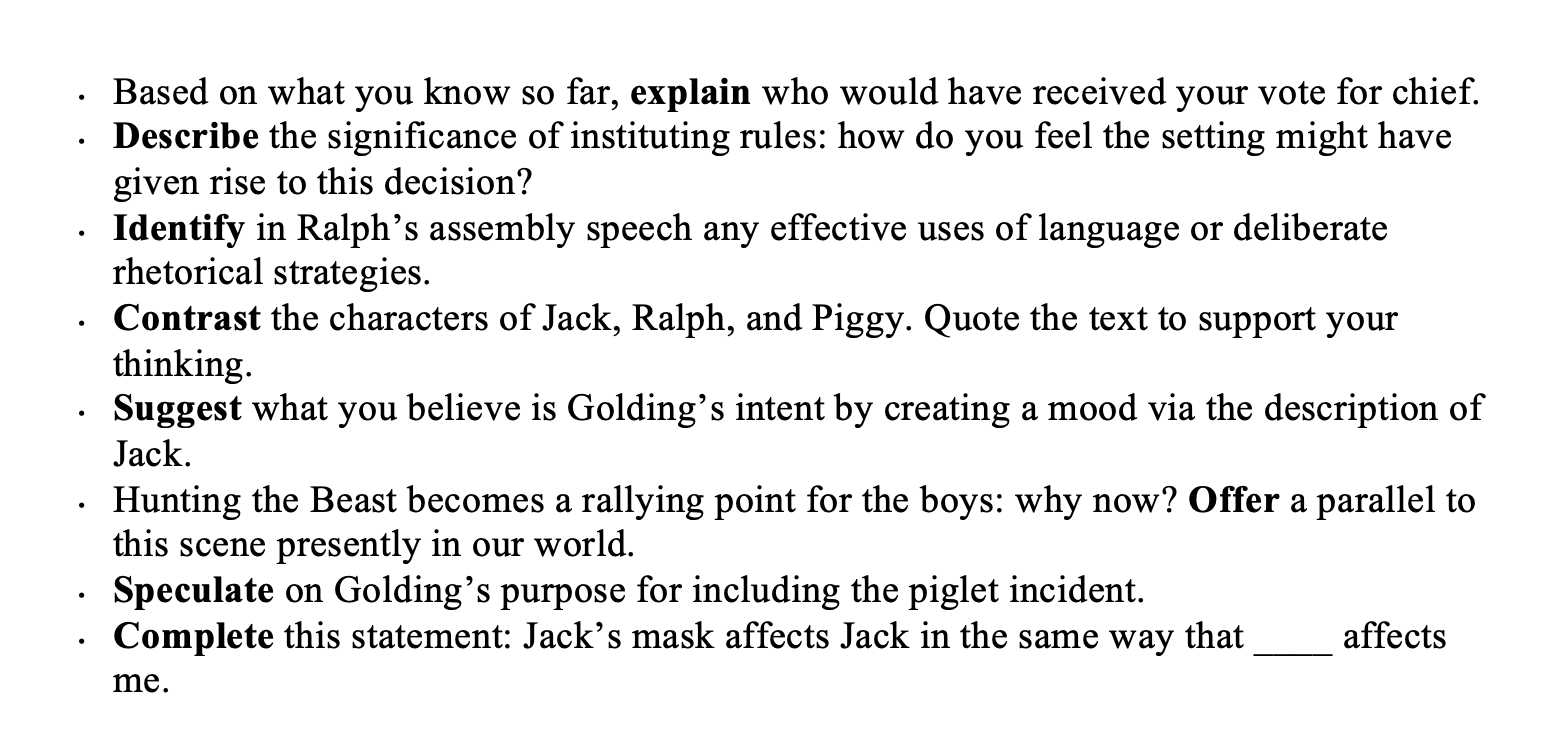
Early in my teaching, I decided to write prompts instead of questions. In fact, what I wrote were called imperatives or commands, a type of sentence that drops the second-person singular subject, “You,” and opens with the predicate verb:

“(You) Explain the irony of the outdoor scene from Chapter 3.”
“(You) Organise your ideas into three categories and (you) list 3–5 details beneath each one.”
“(You) Provide at least two explanations that support your conclusion.”

I decided to write prompts for two reasons. Teaching English, I wanted to practice what I preached: the verb is the most important word in a sentence. And, as a new teacher, I wanted to use Bloom’s Taxonomy because I bought into its gradual climb up the higher-order ladder, which at the time seemed to me correct.

As time went on, though, the ‘higher-order’ interpretation seemed mistaken, and was maybe fostering poorer teaching than otherwise. But I knew the importance of verbs and the power a word could have, so I started mixing so-called ‘lower-order’ commands, e.g. list, describe, explain, into ‘higher-order’ tasks and thinking, e.g. analyse, evaluate, justify. For one class, I adapted an old novel study quiz comprising uncomplicated interrogative sentences.

An inherent message to such a quiz, I felt, was essentially a teacher saying to students, “Prove that you actually read the book,” which opened up somewhat dubious questions about trust and earning grades. By rewording the quiz questions into imperatives, I wanted students to write something beyond the one-and-done sentence response.

Revising interrogative questions into imperative prompts eventually contributed to my questioning one of the structural premises behind our revised Government Curriculum, which currently emphasises skill over content. Where this Curriculum does prescribe some limited content knowledge, called “Big Ideas,” its inquiry pedagogy and student-centred approach are inherently individualised and thereby prone to opinion, which for me alters the common curricular debate over what knowledge is of most worth into a debate over whose knowledge is of most worth. Of itself, I’d say this is a worthwhile development although, in context, I think things tend to get a lot more nuanced.

So-called ‘lower-level’ skills seem no less important to me than so-called ‘higher-level’ (or the more snobbish ‘higher-order’) skills; in fact, so-called higher-order critical thinking skills depend not only on what we immediately read or hear but on what we can remember and recall from longer-term memory. And I tend to see content and skill not as discrete but integrated. To emphasise either one over the other is something akin to affixing ‘knowing’ to the bottom and ‘doing’ to the top of Bloom’s Taxonomy.

In teachers and in students, we find both the reflection of thinking and the action of doing – content as well as skill – in simultaneous tandem dynamic. To ignore their inseparability risks a curricular blunder: as skill without content is aimless, so content without skill is inert. We’re wise to conclude the same about teachers and students, who study content and skill: to each, the other is indispensible.

As to those prompts I revised, students’ submissions let me know pretty quickly that they were provoking a lot more careful, imaginative thinking. Responses were detailed, thoughtful, far more personal – I knew they couldn’t be searching Google. Students often told me, “These questions are so hard,” which was honestly what I wanted to hear. I also took note that students still called them questions.

And I soon realised how much longer these responses took to read… 30min per student, 15hrs per class. I came to assigning only two prompts per chapter, and later only one, which later became “five throughout the book that you trace and develop into questions of your own.” By the time I read Ron Berger’s article, critiquing the ‘higher-order’ interpretation, my own experience was enough to confirm his assessment:

“… the root problem with [Bloom’s] framework is that it does not accurately represent the way that we learn things. We don’t start by remembering things, then understand them, then apply them, and move up the pyramid in steps as our capacity grows. Instead, much of the time we build understanding by applying knowledge and by creating things.”

Bloom’s original taxonomy has ‘knowing’ at the bottom and ‘doing’ at the top, as if to suggest that doing is contingent upon knowing. But I agree with Berger: “Every part of the framework matters, [and] teachers should instead strive for balance and integration.” Learning is neither hierarchical nor linear. If anything, as Berger mentions, we tend to create and analyse by applying what we remember in an ongoing simultaneous process. For example, consider the old adage…

I read, and I forget. I see, and I remember. I do, and I understand.

This adage is an analogy, and analogies aren’t meant to be perfect, which makes them just as instructive where their comparisons break down, showing us both what something is as well as what something is not. Ambiguity falls to context, which in turn falls at the feet of a teacher’s professional judgment: decisions really are the core of teaching.

This adage is also a simple taxonomy, one that no academic is likely to endorse – what is meant by “reading,” for example, and how is this distinguished from “seeing,” and aren’t both unique kinds of “doing”? Still, it does seem to express a bit of wisdom.

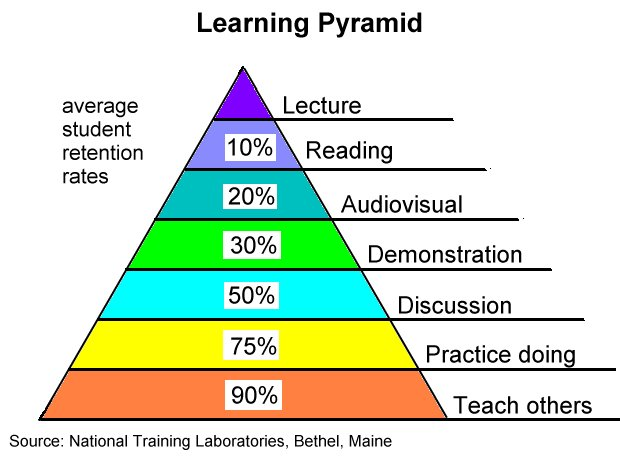
Who believes what you see? Edgar Dale’s Pyramid has been granted some pride of place in Education… looks like he must have sat through some boring lectures or something

What you may have seen from academics is something similar called the Learning Pyramid or the Cone of Experience, attributed to Edgar Dale. But don’t think that simply adding someone’s name underscores its validity or contends with other wrinkles called e-learning and machine learning.

Anyway, as an attempt to describe learning, the adage is an analogy, like Bloom’s taxonomy or any framework: fixed and rigid and literally contrived. Such things hardly represent our lived experiences although, in fairness, every perspective carries a unique set of assumptions inside its luggage.

The Measure of Our Own

Featured Image Credit: Alberto Ramírez Sobrino on Pexels

How many of you, I wonder, wear shoes that fit. No need to raise hands, but just now consider, “Yes or No… I’m wearing shoes that fit.”

As you consider this about yourself, ask as well whether you’re thinking not solely of your shoes but also of your feet.

This is an illustration of the way to think as a teacher: keeping two ideas in mind at the same time. For most teachers, there’s typically even three or more ideas to keep in mind, but two will do for now, or perhaps better just to say, “For now, more than one.”

The test of a first-rate intelligence is the ability to hold two opposed ideas in mind at the same time, and still retain the ability to function.

(F. Scott Fitzgerald, 1936, “The Crack-Up”)

And why say anything at all? Because suspending our judgment helps prevent leaping to conclusions, which inescapably leaves someone out, and leaving someone out is anathema to teachers, literally the opposite of good teaching. Leaving people out is politics.

Reflective thinking, in short, means judgment suspended during further inquiry; and suspense is likely to be somewhat painful… the most important factor in the training of good mental habits consists in acquiring the attitude of suspended conclusion, and in mastering the various methods of searching for new materials to corroborate or to refute the first suggestions that occur. To maintain the state of doubt and to carry on systematic and protracted inquiry ― these are the essentials of thinking.

(John Dewey, 1910, p. 13, ‘How We Think’)

The point to stress, beyond keeping in mind more than one idea at a time, is the sense of what we value – that sense of what ‘fits’ – which is to say no longer simply the shoes or the feet contained inside them, but what most appropriately suits in their coming together. In assessing ‘appropriate’ value, that sense of what ‘fits’, we weigh more than any single consideration – even when we don’t recognise them all: we lump more than one consideration together and treat them as ‘one’ consideration, like a kind of rational shorthand. When asked about the fit of our shoes, we may think shoes, we may think feet, or we may think distinctly both at once. The point to stress is that shorthand is subtle enough to go undetected.

Image Credit: Erin Li on Pexels

The point to heed is that talk about ‘fit’ is talk about more than just the assessment of our satisfaction or frustration – our emotions. Any satisfaction or frustration we feel about the fit of our shoes will have arisen from that pair of shoes, now bought and paid for – and buyer beware! So as we feel those emotions, let’s heed how they arise from an empirical objectivity: “I paid $200 for these blasted things – and look at these blisters!”

Money, foot care, bandaids, a trip to the pharmacy, maybe a trip back to the shoe store… even if tangentially, then still no less materially, all these considerations plus how-many-others will factor in to our satisfaction or frustration, our emotional approval or disapproval, of the fit of our shoes – what better measure or evidence, what better empirical objectivity, for assessing the fit of our shoes than a blister on the back of our heel?

The fit of shoes is a congruous match-up of size and shape, the shoes and the feet that wear them. It’s something any good sales person comes to learn over time: as much as you must know your product – available in these shapes and sizes – you must also come to know people because customers also come in all imaginable shapes and sizes, and unimaginable ones, too – did you know the same person might have two differently sized feet? What on earth to do then!

Image Credit: Gerd Altmann from Pixabay

In the same way we might consider feet while we consider the fit of shoes, let’s now put on our teacher hats and consider what makes an appropriate learning environment for young people. For starters, count how many things we’re now bringing to consideration… at the very least, I count two:

• learning environments, and
• young people

… and what else?

I’m sure we would all share similar feelings about the fit of a poor learning environment for young people. So, as we put on those teacher hats and consider what makes for an appropriate learning environment for young people, zero-in on that word, ‘appropriate’, and ask yourself what informs it… its prescription, its sense of value. Ask yourself, “Beyond what I value, what I say ‘fits’, what is my source of that value?”

Image Credit: Belinda Fewings on Unsplash

I’m pretty sure we could eventually reach some consensus on the empirical objectivity of an appropriate learning environment for young people although I hesitate to suggest what that consensus might actually be. But while we decided, what exactly would account for our initial reactions? What would we lump together in shorthand, and why that, and what could we factor in to more considered measure, and why that?

It’s as if to say of young people and learning environments, both at once, that each one doesn’t just stir its own reaction within us; rather, together they prompt a reaction from us, on account of something about each one of them, something not just worthy but something that warrants our appreciation: young people, for instance, evoke from us emotions like humility and compassion, on account of their vulnerability; and learning environments provoke emotions of respect and approval, on account of their helpfulness.

Image Credit: CDC on Unsplash

So ask yourself… what empirical objectivity arises from this combination of young people on the one hand and learning environments on the other: in their coming together, what is it that makes us so certain? And beyond mere nature, how do we measure – how do we know – what’s most appropriate… almost as if to ask, “What does each one deserve?” And, in between ‘what each one deserves’, how do we not simply describe but also account for what’s most ‘appropriate’?

Before blisters and complaining and asking for our money back, before even spending as much as one thin dime, how do we know if the shoe fits?

On Bias: I. Disparate Bias

Featured Image Credit: Photo by Obelixlatino on Pixabay

On Bias: I. Disparate Bias

Various dictionaries define bias as a tendency or inclination: usually preconceived, sometimes unreasoned, and typically unfair; an inherent if not intentionally irrational preference. Partiality, expectancy, perception… where such words are synonymous, still if they meant exactly the same thing, wouldn’t we use exactly the same word? So what exactly is bias?

Sociologist Jim Mackenzie, ostensibly on behalf of teachers, introduces bias as “something we all deplore.” He associates bias with truth, in a negative way where bias leans toward its own ends, and with justice where bias unchecked is distinctly unfair. Still, his ensuing analysis of two “images” is instructive. First, bias indicates something to be gotten rid of… imagine an excess of prejudice, or a distortion or “impurity in a lens… that prevents us from seeing things as they really are” (p. 491) which, you’ll notice, leaves an alternative of being unable or unwilling to get rid of it. Second, as a void or deficit to be filled, or an insufficient consideration or partial blindness by which we’re unable to see what’s already there, or even see any alternatives, bias indicates something to be gained which, again, leaves open the inability or unwillingness to gain it.

Before going any further, I’d be remiss to overlook my own word choice, summarising Mackenzie: both times, you’ll see I wrote “… bias indicates, which leaves….” Something indicated is pointed out, presumably against criteria or else how would you know to single it out? And for leaving an open alternative from which to choose, such criteria would be definite, or else why not assert amidst ambiguity? Anyway, this is the reasoning for my word choice, and you can take it or leave it, as you will.

Considering his first image, an excess of prejudice, Mackenzie cites Edmund Husserl and the “full intellectual freedom” needed to “break down the mental barriers which [our habits of thought] have set along the horizons of our thinking” (p. 43) – by today’s messaging, ‘open-mindedness is a hard ask’. Maybe so, but set against this is Husserl’s steadfast urgency that “nothing less is required.”

Husserl’s prescription reminded me of Sir Francis Bacon, who would have us overcome what he called the four Idols of the Mind that “imbue and corrupt [our] understanding in innumerable and sometimes imperceptible ways”:

The human understanding is most excited by that which strikes and enters the mind at once and suddenly, and by which the imagination is immediately filled and inflated. It then begins almost imperceptibly to conceive and suppose that everything is similar to the few objects which have taken possession of the mind…

… although the greatest generalities in nature must be positive, just as they are found, and in fact not causable, yet the human understanding, incapable of resting, seeks for something more intelligible. Thus, however, while aiming at further progress, it falls back to what is actually less advanced, namely, final causes; for they are clearly more allied to man’s own nature, than the system of the universe, and from this source they have wonderfully corrupted philosophy.…

The human understanding resembles not a dry light, but admits a tincture of the will and passions, which generate their own system accordingly; for man always believes more readily that which he prefers. He, therefore, rejects difficulties for want of patience in investigation; sobriety, because it limits his hope; the depths of nature, from superstition; the light of experiment, from arrogance and pride, lest his mind should appear to be occupied with common and varying objects; paradoxes, from a fear of the opinion of the vulgar; in short, his feelings imbue and corrupt his understanding in innumerable and sometimes imperceptible ways. (pp. 24–26)

My guess would be no love lost for Bacon, these days, which is nothing if not ironic.

Husserl also reminded me of one of my professors, Dr. William Pinar, whose concept of “reactivation” would seem to grant history just that wee bit more consideration as we set about our ideas and memories, revisiting if not revising them with more intention and, presumably, greater awareness. All these together – Bacon, Husserl, Pinar – I see reflecting Mackenzie’s second image, a deficit of alternatives, not something to be corrected or removed but rather a void to be filled, an absence noted, an allusion by Joyce to the “gnomon in the Euclid” (p. 1). What luck for Mackenzie, being so well represented (thanks of course to me).

And lucky for all of us to be surrounded by the greatest unfilled void imaginable, a universe of limitless time and space: “… a pretty big place!” to quote Dr. Arroway, and certainly big enough to surpass any no-worries belief that, nah, we have it all well in-hand. Mackenzie’s implication is that everyone’s necessarily biased for being finite. Sure, we continually develop new understandings across spaces over time. But short of real omniscience, as if we might observe the Earth’s sphere from its surface – so, make that well short – short of that, who could possibly come to know all there is to know? Our limit is our bias although I find a lot of people seem to get this reversed. Then again, pride and prejudice pair up for box office mojo that wisdom and humility would hardly dare to dream.

Our limit is our bias although I find a lot of people seem to get this reversed.

Bias arises inevitably from… well, call it what you want: our nature, a state of being, Dasein. Whatever to call it, we’re inescapably subject to it, beset and enamoured by it. Its cumulative effects inflect our cultural systems and institutions while remaining, as Heikes says, invisible to everyone involved, like the water to those oblivious fish. This may be why Mackenzie sets the “onus of proof” for demonstrating bias, be it misunderstanding or insufficient consideration, upon “the person who claims that something is biased, for that is provable,” i.e. hey look! something more, something else, something different. As for demonstrating that someone has fully completely understood or utterly thoroughly considered a matter, and therefore is unbiased: this remains impossible although more and more our cultural infatuation is to start your impossible and put those pesky finite limitations to the sword. Time to fly on waxen wing and silence thy father’s voice.

Characterising limit as the antagonist is not our only option although for raising hackles, or for squeamish sentiments like Mackenzie’s introduction, I guess bias was inevitably doomed to be the dagger of our mind. Still, somewhat less drastic is MacMullen, who casts bias as a more benign prejudice “that exhibits resistance to rational criticism” wherein, I suppose, the patient must minister to himself. As it happens, I have a teacher bias that is comfortable with MacMullen’s perspective, particularly where he cuts to the core debate that has faced biased educators through the ages: what should comprise the curriculum? what should we teach because what is worth learning? what is school for? Whatever our response to any of this, surely it’s not to cap our limits but to stretch them.

“We must decide,” MacMullen counsels, “whether, when, and how to expose children to (what we take to be) the most powerful critiques of and significant alternatives to our existing political order.” Critical thinking powers activate! – though that goes for you too, Critical Theorists, so I hope you brought enough for everybody.

Hey, though, one look at the pantheon of scholars and heroes in this post should be all anyone needs, as compared to MacMullen’s thing about (what we take to be) critiques and alternatives to our existing political order – or any order, for that matter… since when did the root of all debate become a mere parenthetical?

Click here to read On Bias: II. Wrong Bias?