Click here to read Pt. IV. Source?
On Teleology: V. Setting
Pretty recently, Science helped us understand two separate but related things in a more holistic way, and I think you’ll see what Science means once we dub the two things as ‘space’ and ‘time’.
Science merged these two fundamentals into one singular mind-bending concept, then imaginatively called it spacetime. Think Einstein and gravity and General Relativity although don’t think Newton and gravity and the falling apple… except of course, in our case, do think a falling acorn.

Let’s fall back down to Earth, ourselves, to swirl about in the gravity well as we revisit Part I’s analogies of schools and shipbuilding and students K-12, and our culture’s hankering obsession with Science and efficiency.
Being a teacher, I think a lot about efficiency, particularly for things like lessons and planning and short- & long-term objectives. Of course, in the Scientific here-and-now of the 21st century – ours being that hard core Sciencey culture of efficiency: a purpose for everything, nothing wasted – whenever I think about lessons and planning and short- & long-term objectives, naturally I think of spacetime… although maybe not quite the way you’d expect, with sole respect to ‘time’. I think of spacetime with sole respect to ‘spacetime’.
Try it, yourself, by swapping out temporal ‘short-term’ & ‘long-term’ objectives for physical ones, such as ‘nearby’ & ‘further afield’. I also swap out the emptiness of ‘space’ with the tangibility of ‘place’ although, no, I’m not trying to make placetime a thing.
And this then, finally, is what I’ve been wondering about teleology: as time and place sometimes combine into one thing that we call setting, I wonder how we’re teleologically set for some kind of fulfilment or completion by our passage not simply in time but across space through time: what is our purpose as we find ourselves set within some place and time? Naturally, this includes all those with whom we’re set alongside – as I pointed out once before, we can’t all be Thoreau.
To explore all this, I’ve been using analogies. For instance, inasmuch as we might consider any teacher a so-called ‘shipbuilder’, we might ask by analogy, within the geography and economy of the setting, what kind of ship a teacher intends to ‘build’ of each student. As we would never build a ship apart from its filling some function or purpose, we might ask by analogy what function or purpose teachers envisage or intend for K-12 graduates – what kind(s) of people do we want K-12 graduates to become? And what kinds of people do teachers actually end up ‘building’, and how much are the students involved? What kinds of people finally cross that diploma stage? What is their telos, and who gets a say?
To consider telos further, I compared people to acorns that fall from trees, themselves born of acorns. By analogy, someone might suggest our broader telos as something similar – a kind of cyclical propagation as we hang and ripen from so-called trees and eventually fall to rest upon some unique spot of ground, there to grow roots of our own.
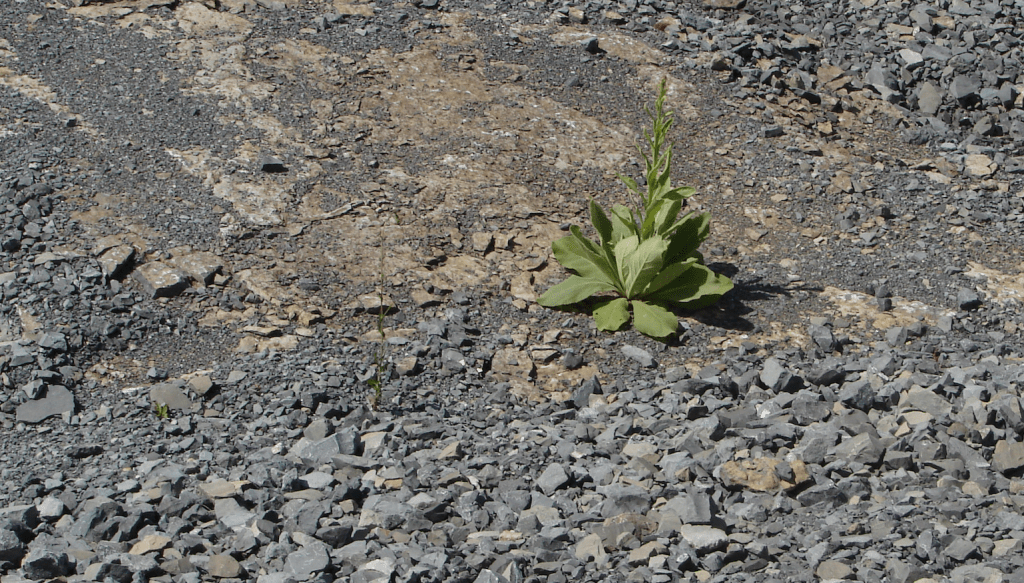
Falling to land and coming to rest as each of us does, each in place at some moment in time, what is our purpose not only there but then? And how do we assess our surroundings as capable of providing suitable conditions for root and growth? And, in whichever conditions we actually find ourselves placed, how do we know what we are or aren’t supposed to do next? How are we even brought to know – much less to ask – anything more specific than this cyclical continuance of reproduction and propagation before we die? I ask only because… well, only because I asked.
And, amidst all this, all around alongside us, as mentioned, are our neighbours… every other acorn, landed in place across time, the same as we are – a homogenous lineage of heterogeneity, all of us together, if not all at once: each as different, and unique, and persistent, and curious, and as full of intention as you and me. For every one of these, what is their source of telos?
Or maybe better to ask, who is their source?
Who is yours?
Click here to return to Pt. I. Efficiency

 The Rhetorical WHY
3 thoughts on “On Teleology: V. Setting”