Of Memories in Motion

Elsewhere – and, come to think of it, (sort of) elsewhere – I’ve mentioned Martha Nussbaum’s exploration of memory.

For her part, what she’s suggesting connects our emotions, which help us respond to the world, with our memories, which arise as a flood of perceptions that she calls emotional habits. Essentially, in our day-to-day living, the purpose of our emotions is to help us make sense of it all by recalling previous times when we felt such-and-such a way; the purpose of our memories is to supply those emotions with substance – and not with just any old substance but with invested value. If Nussbaum is on to something, then this is why we’re moved to say about [ your life here ] that “we care.”

Nussbaum refers to neuroscientist, Joseph LeDoux, who suggests that memories are not individual items but composite outcomes of our physiological network – in one sense, like how a check-up isn’t just your doctor and a stethoscope but all their years and training, and this upon centuries of practice, which now includes you, the patient; in another sense, like how a bridge isn’t just an edifice of concrete, cable, and steel but an intentional span engineered to overcome the gulf that precluded any link between two separated sides.

Iconic

One idea suggested by memory is that, with something going on inside everybody, we can still only respond from our current perspective. That means some parts of our lives will remain unseen from others and maybe even subconsciously from ourselves – we can never really completely know what’s happening with anybody. Occasionally, I’ve seen people apparently lose sight of this and press ahead with someone else, despite what seemed to be signals to hold up – yet as this is merely something I remember seeing from my perspective, here’s me doing it, myself, right now! A lot of our shared living is guesswork, and if it seems like I’ve suddenly departed from the topic of memory, I wonder if it’s fair to say I’m still in the ballpark.

In the ballpark, I guess, if just a little off-base…

Memories remind us of when we were other places, doing things, which all contributes to describing who we are now although, of course, not completely since nobody remembers everything, much less remembers anything perfectly. Maybe let’s say what gets remembered is what we take to be most important, which could be rather selective and self-serving, as we might decide to ‘remember’ only what helps us out the most. That’s a pretty blanket statement, though, and I can’t blame your eye-roll just now. As to what we do remember, we can decide whether a memory is something from the past to which we’re attached, or something in the past from which to distance ourselves. But either way, the past is always there, all of it, and that’s affecting all of us.

As to memories being fallible, this takes me back to guesswork, of a kind, as we try to recall exactly this-or-that detail. But since we can only remember from our current perspective, there’s a great deal of our lives that goes never seen by others, and even grows fuzzy and inexact to us – like I said, we can never really completely know what’s happening with anybody, selves included. If each person’s memories can only acknowledge their own cross-sections of the past, and this but partially, then over time I imagine this would cause a bit of collective amnesia, eventually having a kind of atomizing effect as certain details were highlighted while others were finally lost forever.

Certainly our culture seems to embrace the individual, has done ever since the Enlightenment sort of introduced the world to itself, as it were. What crawled from those Platonic caves of religious obeisance and feudal sovereignty eventually separated into an oddly homogeneous heterogeneity of individualism, which today we venerate with slogans like “Liberty, Happiness, and that other one – slips my mind. If we’ve actually been killing off cultural memory and swapping in some individuated substitute… well, in that case, I’d say cultural memory is becoming a rather haphazard assemblage of whatever coincides between us. Which, hey, might work for a while, but… life-by-coincidence I just feel like can’t be good.

That brings something else to mind… for all our enlightenment, we seem awfully susceptible to uncertainty. Weren’t we a lot longer chained up to those cave walls… yet now it’s like we can’t even remember what certainty is. Maybe our uncertainty – what the kids these days call narratives – whether spun by someone or spun by us, whether in our favour or in our face, maybe our uncertainty lies in its doctor’s motives. And of course, the better the storytelling, and the sharper the hook, the more we’ll feel we can relate – which is something else I mentioned of Martha Nussbaum although, this time, I’d say let’s take heed as a cautionary word. Yes, the more precise the object, the sharper that vision, and the more certainty we’re likely to feel, but no trust will exceed the worthiness, the value, of its object. Stick to the healthy objects, I guess is what I’m saying, objects not just inherently potent but of the greatest worthiness… your most highly treasured value.

In that sense, memories – remember this was all about memories? – in that sense, memories implicate, or are they implicated by, our present circumstances and our future objectives. As we presently look back to our memories, our memories are prompting our attention forward, into the future. We don’t remember anything perfectly, but we also don’t forget everything utterly. I’m not necessarily saying we spin solely what we remember; rather, I’m saying let’s not spin solely to remember. Just like words matter because, once spoken, their consequences flow, our memories matter too, for the same dynamic reason. They need to be as genuine as we can recall them. “And then,” Nussbaum concludes, perhaps with a touch of whimsy, “it remains to be seen what the world will let us do about them” (p. 135). Whether their flow will be placid, mundane, inconsequential, or anything beyond is beside the point that their flow is indisputably certain. What is past is having a very real effect right now and will thus see its effect realised in what is yet to come, come what may.

“Okay,” you say, “but what happened to that imaginary bridge – what was it, spanning the gulf between here and memory, or something? I mean, here you are, now, going on about time and spin and worth? Has this post lost its way? Another batch of mixed metaphors?”
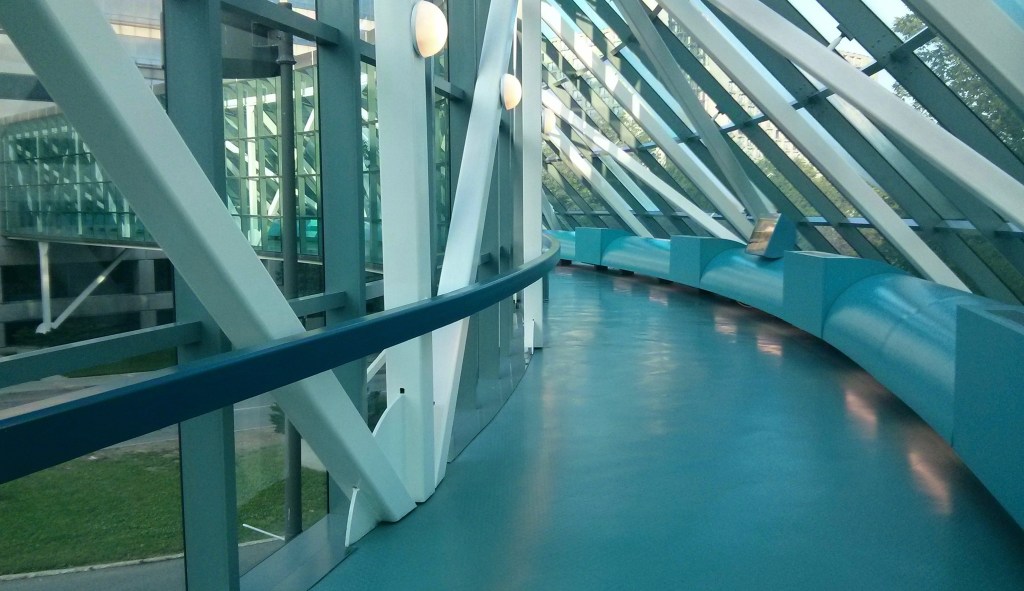
Is that really even a “bridge”… ?

Fair. OK, well, besides piecemeal memories inciting ad hoc futures for atomized individual persons, what all this seems to implicate, for me, is the sincerity of relationships, of care. Our continued honest attempts to communicate with each other are like an antidote, and in their absence we risk sullying or undoing whatever may have been true of us beforehand. Of course, though – and here I go again! – that last sentence was written through an altruistic lens, not really allowing for someone with, say, more practical motives. Meanwhile, as to any less-than-honest attempts at communication, well, they’re obviously no antidote at all but really pollutants. As only real engineers build bridges, so only real physicians administer antidotes, and only real spin doctors spin.

… OK, this one counts

One last thing… I think maybe what’s most potent about our memories – in their pointing us toward objects ahead – is the nature of their absence, like travelling into the city and saying, “Look where there used to be trees.” As we take hold of a memory and turn it over in our fingers… with the curiosity that brought it back, we acknowledge a kind of respectful past-that-was as we find it within us-as-is. There’s a bit of healthy mutuality in that, for without that memory, we could only make less of ourselves while, without us, the memory wouldn’t be recalled at all. I suppose that’s all a bit banal, but still… it seems important, a kind of respectfulness that authorizes both the memory and ourselves at once, however inexact our memories may actually be.

But we need to be careful. Any respectful authorization of memory and ourselves at once is us doing both, which is tantamount to saying “I am history,” as in “Whatever I declare now is now what happened then,” which of course would be delusional. And not in the sense of claiming to be God, who controlled it all back then as now but, rather, in the sense of looking inward to ourselves, like a doctor prescribing an antidote without remembering what it was for.

Someone very practical once told me there are plenty of good memories to be made and happy events to experience wherever one resides. Practical health in this object, practical wisdom, a beautiful radiance such as might alight you from the bridge deck with delight since now you want to see where it’s landed you, over here on the other side. As I recall, my reply was something along the lines to say, yes, that’s definitely true although it ain’t where you’re at so much as it’s who you’re with.

In the gulf beneath, a mighty flood rolls on, and you still hold your dearest treasures to heart. And from the shore you understand a wee bit better why somebody decided to build that bridge.
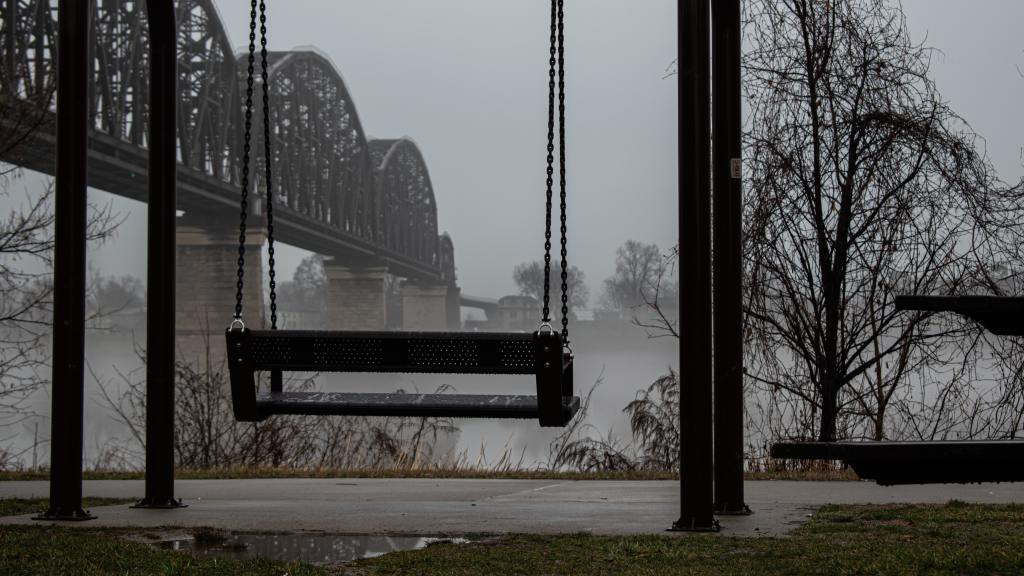
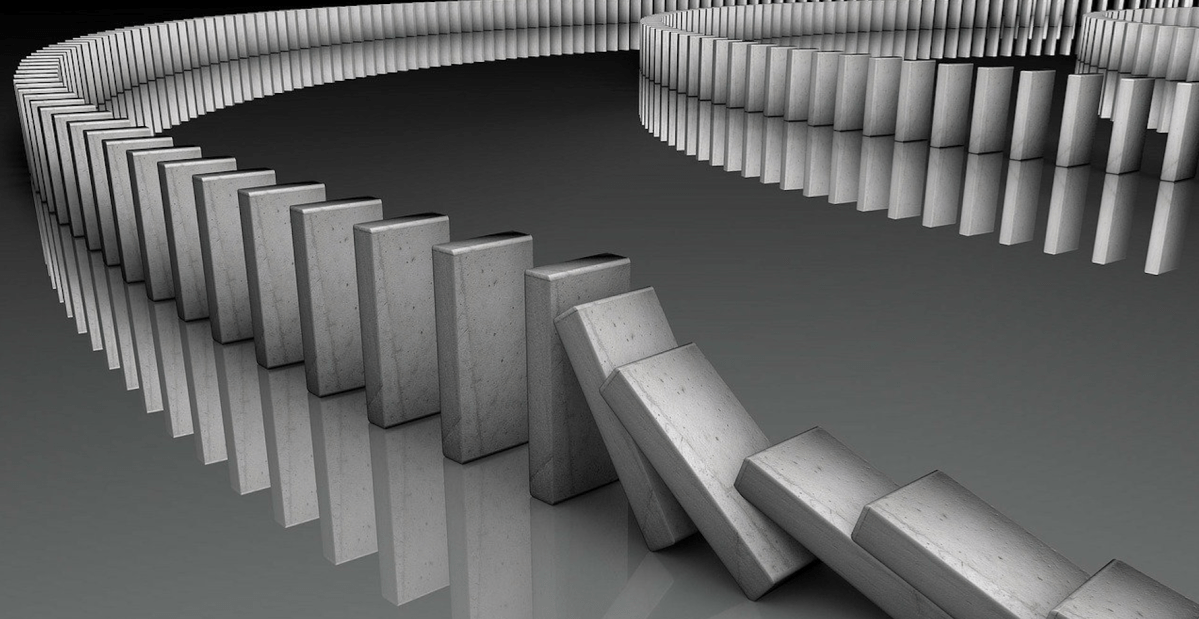
Photo by Kyle Fiori on Unsplash

Memories Go Fourth

Featured Image by PublicDomainPictures on Pixabay

Do you click hyperlinks? This post is full of them: click them, follow them, read them. Or else search the topics and find links of your own, but get started doing something to learn more.

A year ago, I was reminiscing… three memories: inflation, gold, and a profligate economy founded upon debt, which only sounds like an oxymoron.

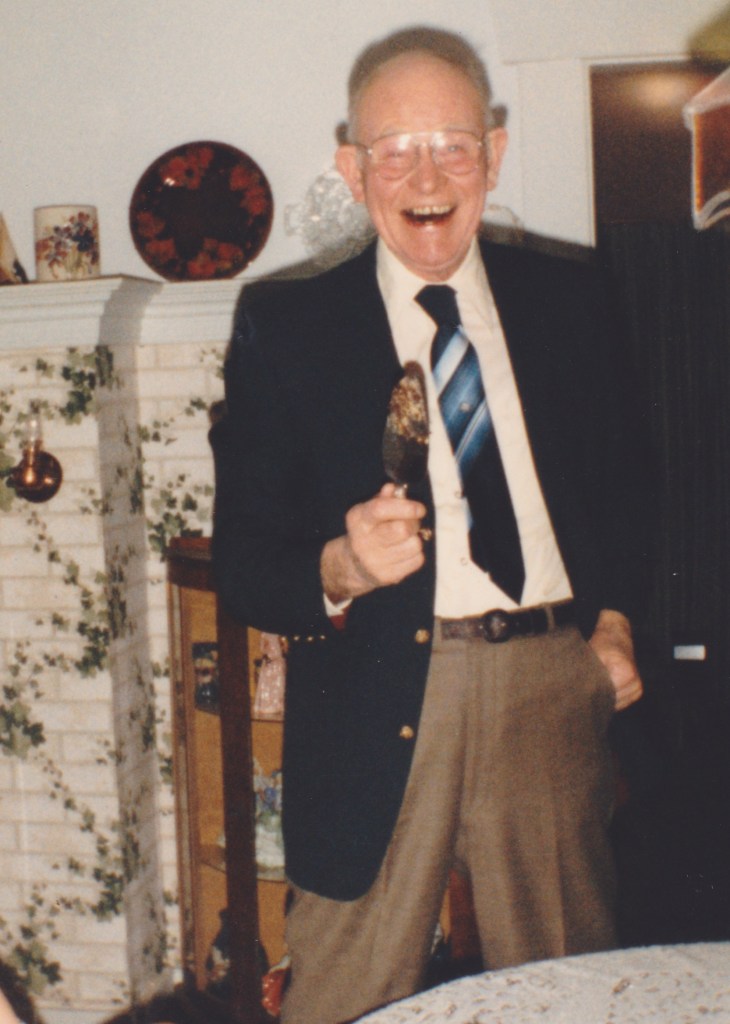
… Grandpa here yet?

One more memory, along those lines. Mid ’70s, probably pre-Star Wars, probably a Saturday, and Grandpa’s over for dinner, always a minor Occasion. With front-door greetings over, coats taken, dogs settled, and drinks well in hand, the family sits together around the living room, as ever talking and remembering and passing the time.

Grandpa could slice politicians like birthday sponge cake

This particular afternoon, though, the tone is vexed… that special incredulity-slash-resignation only politicians can inspire. This afternoon, the value of a dollar or, rather, value past now lost: how much a dollar no longer buys, and the daft decision-makers who don’t or won’t comprehend, much less accept, their own responsibility – not only for here-and-now but come the inevitable reckoning.


Bonus memory… remember this one? Probably from the ’90s… your RSP advisor has you signing a document that reads, Past is no indication of future performance, and while you scrawl, they finish their spiel by saying, “…but historically, the stock market has always tended to rise.” And as far as that was accurate, it was also mere dissembling unless adjusted for inflation.

As snow on the ground is not the weather, ‘rising prices’ are not inflation. As far as inflation is the issue, prices don’t actually rise; rather, the currency’s purchasing power falls, and more dollars must accumulate to buy the same item as before, which seems like prices getting higher but is not the same thing as costs that rise against sound measures.

If today’s runaway inflation has not been headed our way the past fifteen years, then how about the past fifty? A few months after I was born, the 37th US President responded to runaway inflation, which by then of course had been politicised. Two features of his new economic policy were an end to the fixed-exchange currency arrangement, in existence since 1944, which by then of course had been politicised, and a shocking yet not shocking halt to the international convertibility of currencies into US-held gold. Perhaps no shock, none of this is considered among the 37th Administration’s accomplishments, not whether you look here, here, or even here although it is briefly mentioned here.

At least grant the past two years… yet the ‘runaway’ bit, now as in the ’70s, is simply the amplified effect of machinations underway for the past 109 years.

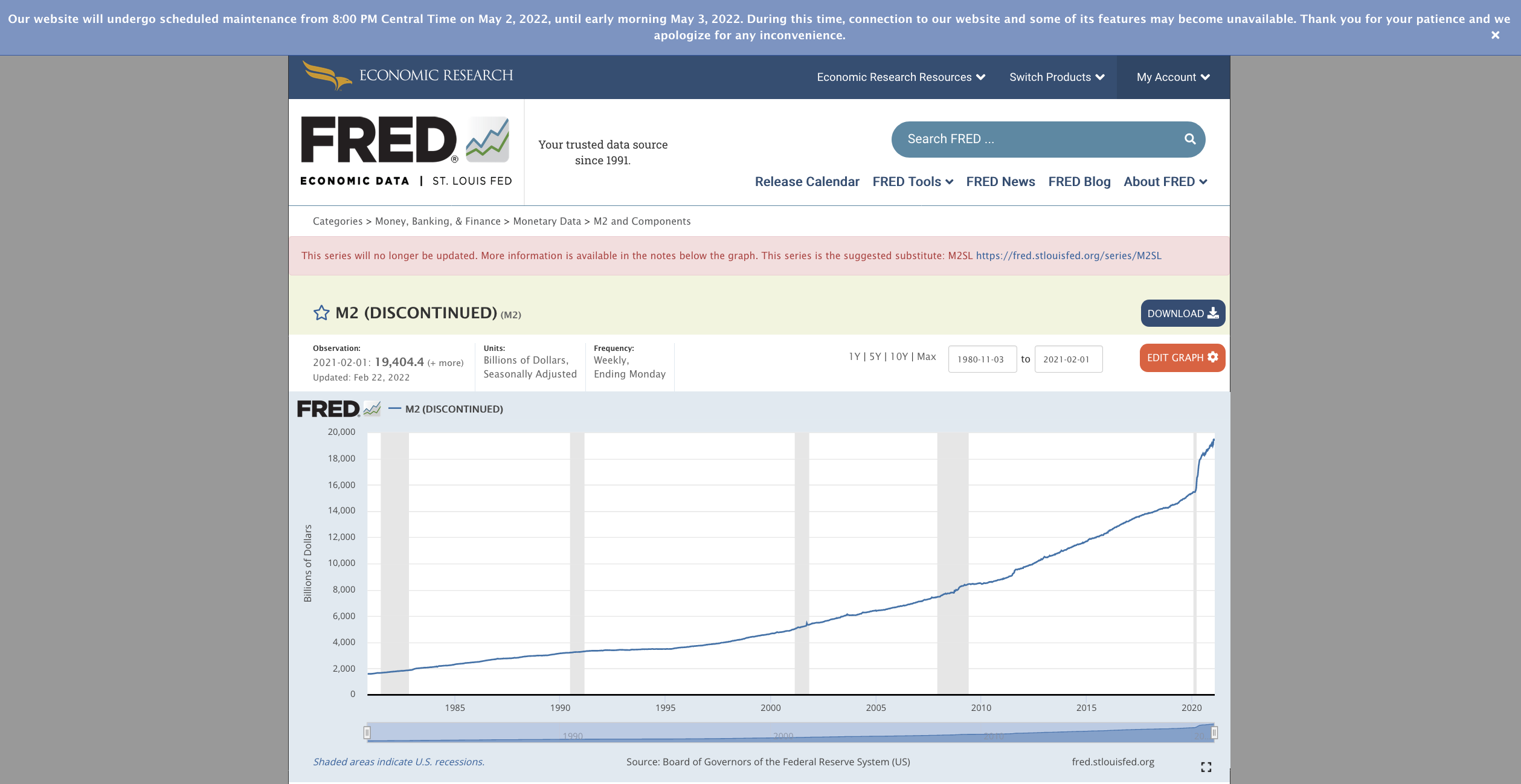
M2 Money Supply still matters. Chart: https://fred.stlouisfed.org/series/M2 (although don’t bother checking on May 2–3, 2022)

Before the Federal Reserve was enacted in 1913, inflation was an expansion of the money supply – these days an increase in the supply of currency units: dollars, renminbi, rupees, whatever. An effect of inflation is a definite fall of purchasing power by dilution of currency units from having created more and more and more of them. Prices ‘rise’ driven by currency debasement, an effect of inflation where prices seem to rise because their numerical values get higher, and people might spend more for the same, or spend less and have less.

Another effect is an expectation everybody gathers for prices to get higher still. Prices ‘getting higher’ vs. prices ‘rising’ is my way to distinguish between what economists say is nominal and what they say is real. Credit the 20th century Fed-era economists, all tied up in knots over the determinants of demand-pull and cost-push and all manner of academic-importance speech, which I guess is the mission-creep you’d need if there were a vacuum of cultural memory that needed filling – as easy as money from thin air, or playing god with people’s lives and livelihoods, or hubris.

How little of this actually is a cultural memory anymore, much less a family one, might be telling. Something I remember my Dad used to say all the time – he said it that Saturday in the living room, and I remember my Grandpa agreed: “It isn’t that people don’t know; they simply don’t want to know.”

There’s a lot riding on partial perspectives – everything, you could say – so, what… let it ride?

Or look into things. More thoroughly, on your own terms, whether you’re curious or not. Suppose you even come to understand the world more than you thought you did, or more than you remembered.

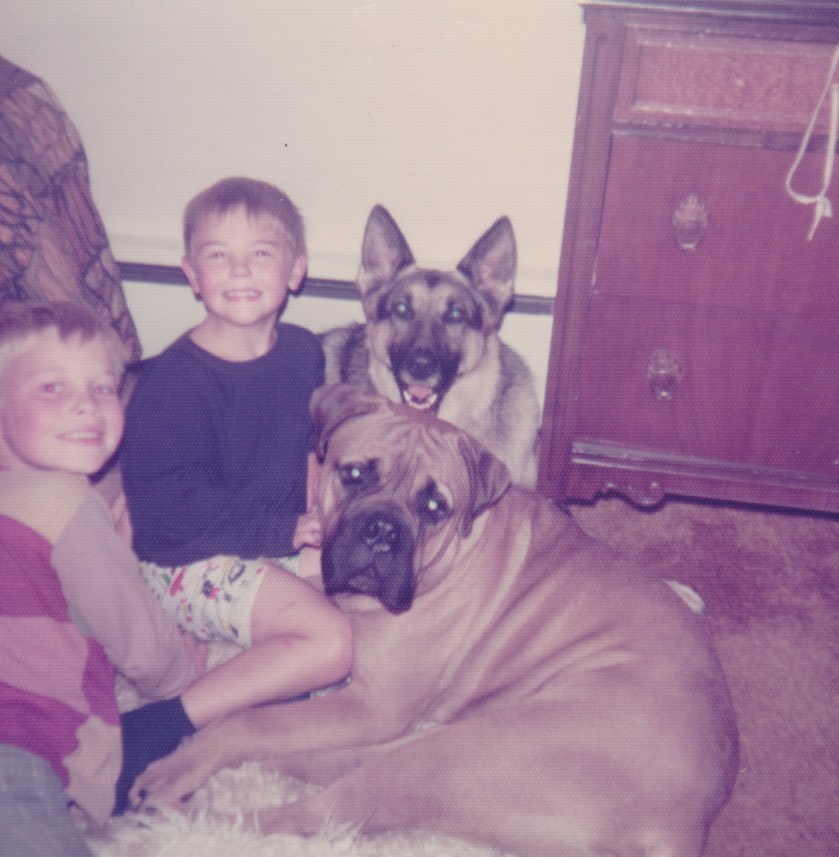
Can you tell which one was the watchdog?

Three Memories…

Featured Image by PublicDomainPictures on Pixabay

At a glance, this post admittedly seems eclectic, which is writer’s code for incoherent. Two things… (i) okay, that’s fair; (ii) ‘show, don’t tell’ is writer’s code for respecting the audience, which is coded code for ‘intentionally eclectic’.

If this works out, future posts will probably be a whole lot easier.

Elsewhere, briefly, I consider something Martha Nussbaum offers about emotions – their essence, their “history,” as she puts it – which really I take to be our histories, and history too, I suppose.

To characterise grief, for example, she says, “… the experience itself involves a storm of memories and concrete perceptions,” what she earlier calls “rich and dense perceptions” (p. 65). Later, she indicates “memory” as synonymous with “an emotional habit” (p. 114) and cites neuroscientist Joseph LeDoux to say memories are not individual items per se but composite outcomes of our physiological network – in one sense, like how a movie isn’t just ‘by’ the Director but thanks to the enduring efforts of an entire cast and crew; in another sense, like how a highway is not so much a destination as a well-trodden connection between two destinations.

For his part, LeDoux distinguishes between (what I will call) instincts and emotions – the former we share with the lowest bacterium, the latter all our own, being self-aware, to boast on high as we will.

All this is fascinating. But when I experience flashes of memory, that seem to me disjointed things, which come and go, glimmer and fade, tripped by who-knows-what… when this happens to me, rather than look back at what comprises them, just as often I’m trying to piece them together with sharper moments into some more indicative pattern. I guess you could say I’m trying to find some meaning to them.

So… three memories, falling together…


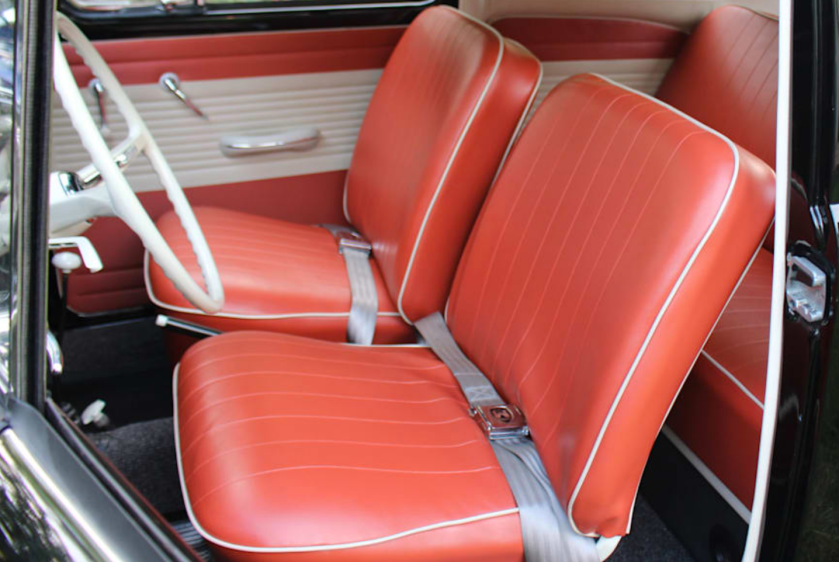
In the backseat of my Mom’s VW, stopped for a fill-up, when gas stations belonged in neighbourhoods…

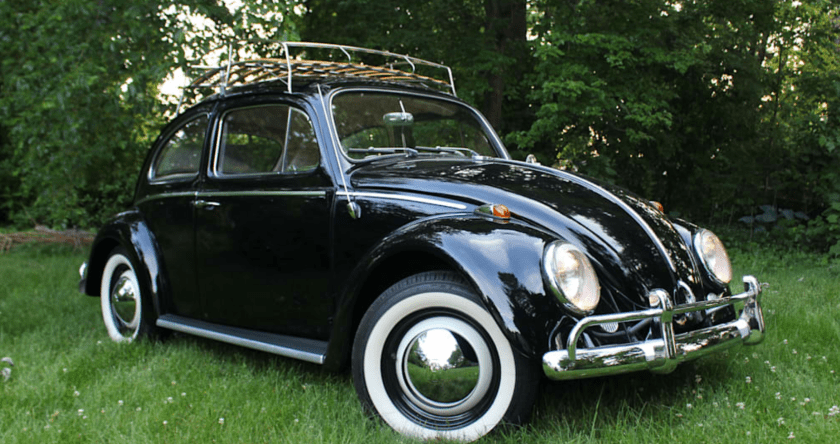
A 1964 Volkswagen Beetle

The jockey’s a young guy, teens or twenties, although that’s still just an adult to me. And he is hustling – from the driver’s window to the pump, the squeegee, the tires, back around to check the oil. I crane my neck, too obedient to undo my seatbelt, so all I see is an elbow and a ball cap. Into the building, back with the Chargex. Somewhere in all this, while he’s blurring past the front windshield, my Mom remarks to me, to herself, something like “Would you look at him – if the whole country worked that hard, the economy wouldn’t be in so much trouble.”

At the time, I took her word for it – this is before friends, or books, or stuff like favourite bands and watching movies. I just logged the admiration, and only much later was I struck that my Mom would ever note the economy. But I figure that’s how pervasive inflation really was at the time. For me, inflation was California on the evening news, people atop car hoods and lounging in open passenger doors, lined up waiting for gas.

“Check the oil too, I guess”

VW Image Credits: Photos by Joel Stocksdale on AutoBlog

Click here and here if you like the VW Beetle


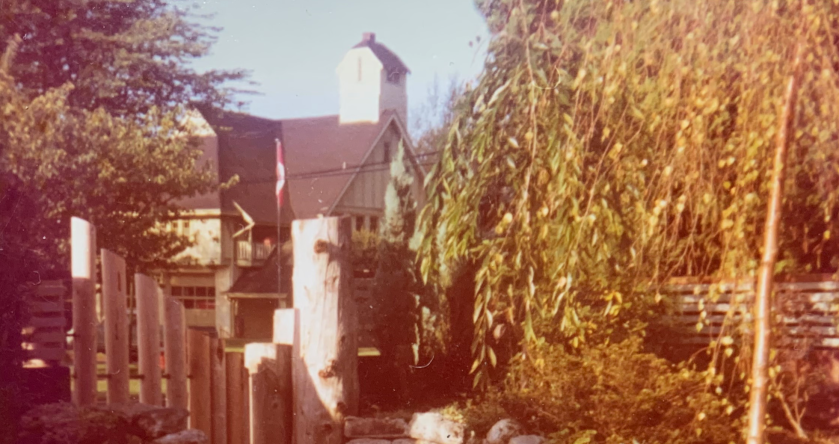
In the front “yard” of the Firehall, where we played soccer and football, and watched the trucks come and go – today with one of the neighbourhood kids.

Just me and him, and no football – just talking. He’s one of these kids who’s already matured, a real brain, and speaks with that cadence had by adults. Of all things, we’re talking about gold, which somewhere along the way I’ve heard my brother talking about with my Dad. And you know what they say… by the time you’re hearing nine-year olds talk about it at the Firehall, it’s definitely reached its peak.

In fact, he informs me with assured cadence, gold is now well past its peak on the way down, a claim my Dad confirms for me later that evening. And, in one conversation, for decades is lost all the lustre that no amount of history will sustain when you don’t know any of it anyway.

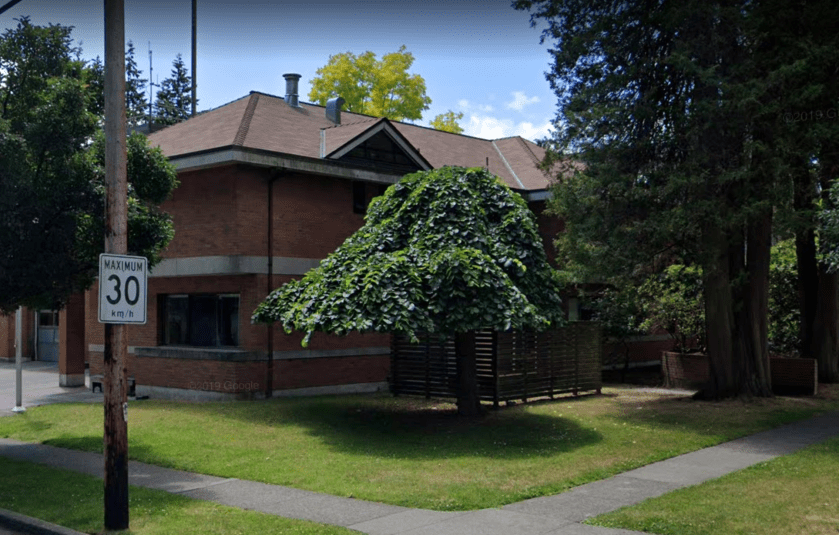
New building these days… same trees, less grass, and no tower

In the living room – the second one, where the furniture feels out of place and the jaded nuclear family finally muddles to a close.

I listen from the door as my Dad, in his deliberate way, explains fractional reserve banking and fiat currencies to me from the easy chair – derisively, at my incredulity, and ruefully, now that he, and we, are irrevocably scarred by misfortune. He explains the Commodity Exchange, in all its cacophony, and the primacy of foreign exchange, and he explains bank reserves, and the vacuous basis of all: debt.

And he forecasts the end – how it can only end, how it must end – and offers his strictest piece of advice: never owe what you can’t afford because – and really now I’m paraphrasing, this was like 1985 – because what people commonly call a House of Cards is actually a Set of Dominos, that are already well underway.


They’re faded memories, 35–40–45 years ago now, and an admitted jumble… is their only common thread “me” and nothing more?

You might say so – and hey, belonging to me, how could they mean anything to you beyond the scope of your physiological network? Different cast + different crew = different movie. So why even share them like this?

No, I wouldn’t expect my memories to strike you, at least not the way they strike me. Still, though… high road or low road – I just can’t help but wonder whether we’re all bound for the same destination.

Click here to read Memories Go Fourth