Learning As Renovation

Featured Photo Credit (Edited): Monica Silvestre on Pexels

I have already offered an analogy for learning as a kind of renovation. It’s no perfect comparison – no “analogy” is meant to be – so feel free to use your imagination. What I like is the suggestion of integrity and the potential for improvement: something original remains, upon which we build and rebuild.

From that earlier post:

“Renovation also happens to suit a constructivist perspective on learning, i.e. learning as an active process during which someone integrates new experiences with what they already know. Yet this distinction between ‘what is known’ and ‘what is new’ has also been an avenue for critiquing constructivism’s overwhelming predominance, as has the general notion that active learners mean passive teachers, as has the nuance of what ‘active’ even means – thinking about stuff or doing stuff. Other nuances distinguish something learned from something experienced and something internal or uniquely derived from something external or belatedly accepted as consensus.”

With all that said, what statement about learning is credible without some thought afforded to teaching – I began sketching that out, too, at the time. So… Take 2: ‘learning as renovation’ means what for teaching? What exactly is teaching?

Photo Credit: Brett Jordan on Unsplash

For me, these questions just prompt more questions. One, well known to educators for being contentious, asks ‘What is worth teaching?’ As compared to the die-hard habits of so-called traditional teaching, our 21st century constructi-verse might hone a laudibly more nuanced sensitivity for whichever teaching better suits the thing being learned. But since education today seems wholly fixed upon the future, we might better proceed from ‘What is worth teaching?’ to the deeper complication that Pinar carves inside the politics of curriculum: ‘What knowledge is of most worth?’ By this, of course, I take him really to be asking, ‘Whose knowledge…?’ and on it goes, that contention.

Of course, values change, even as change takes decades or more. But what these particular questions implicate – or, rather, who they implicate – seems to be haves and have-nots as the future sends the past on its way. Put another way, the general response to ‘Whose knowledge is of most worth?’ seems to be one more clarification: ‘At which moment in history do you mean?’ which prompts questions further still, such as those arising more recently about Truth and Reconciliation and how educators might most appropriately respond, given the unknowable future.

In my doctoral work, I conceptualise curriculum as relational, i.e. an interpretive process underway between and among each student-teacher pairing, such that each person involved is contributing to every other by sincerity of their shared interests, i.e. “whose interests…?” Of course, since everyone has a backstory that no one else can know completely, peoples’ lives are more complex than first glance can suggest. That means any assumption made is a leap to conclusion, which is true, for instance, of even our closest relationships, much less between students and teachers.

Less commonly posed than ‘What knowledge is of most worth?’ is a question that seems to reach a likelier core of contention: ‘Whose knowledge… ?’

Likewise, as each teacher has a unique perspective on learning – like this reflection of mine – a teacher in the classroom is bound to know their school and its students in a way the rest of us never could and, thus, that teacher will apply their perspective in ways the rest of us never would. This, too, is true of us all in relation to each other, and any constructive way forward would seem to rest upon a sincere and joint interaction.

In that way, as teachers are able to grant each student’s unique perspective and backstory, they are also obliged to acknowledge each student’s needs, then offer a curricular experience that informs and persuades while still leaving space for each student, i.e. “whose needs, whose space…?” in order that each might make more meaningful sense of their own learning.

By analogy, then, this would seem to make teaching a kind of renovation plan, loose yet backed by at least two key factors: (i) sound foresight, which translates to careful, informed planning that aims for some defined vision, i.e. “whose vision…?” and (ii) a set of reliable tools, which is really to say the resourcefulness, compassion, and patience required to apply each tool in the most suitable way at the most appropriate time.

… that ‘Toolkit’ you hear so much about? For me, no, in fact… not exactly
Photo Credit: Todd Quackenbush on Unsplash

Of course, all this as metaphor sounds ideal whereas, in practice, nothing is guaranteed; renovation is seldom so tidy a business. More famously, it tends to get more complicated and even turns out some rather untimely outcomes.

Classrooms, by comparison, while complex can also be the most enjoyable places, and unlike renovations as we typically know them, I’m not sure learning needs to get more complicated than respecting the dignity of everyone involved. Beyond that, the rest is up to us as teachers and learners, albeit in distinctive roles, as we nonetheless learn and teach each other in ways that leave space where everyone is able to build and rebuild.

Is Something Wrong with Bloom’s Taxonomy?

Feature Image Credit by John Manuel Kennedy Traverso on Wikipedia

Some thoughts prompted by this article by Ron Berger in EdWeek.


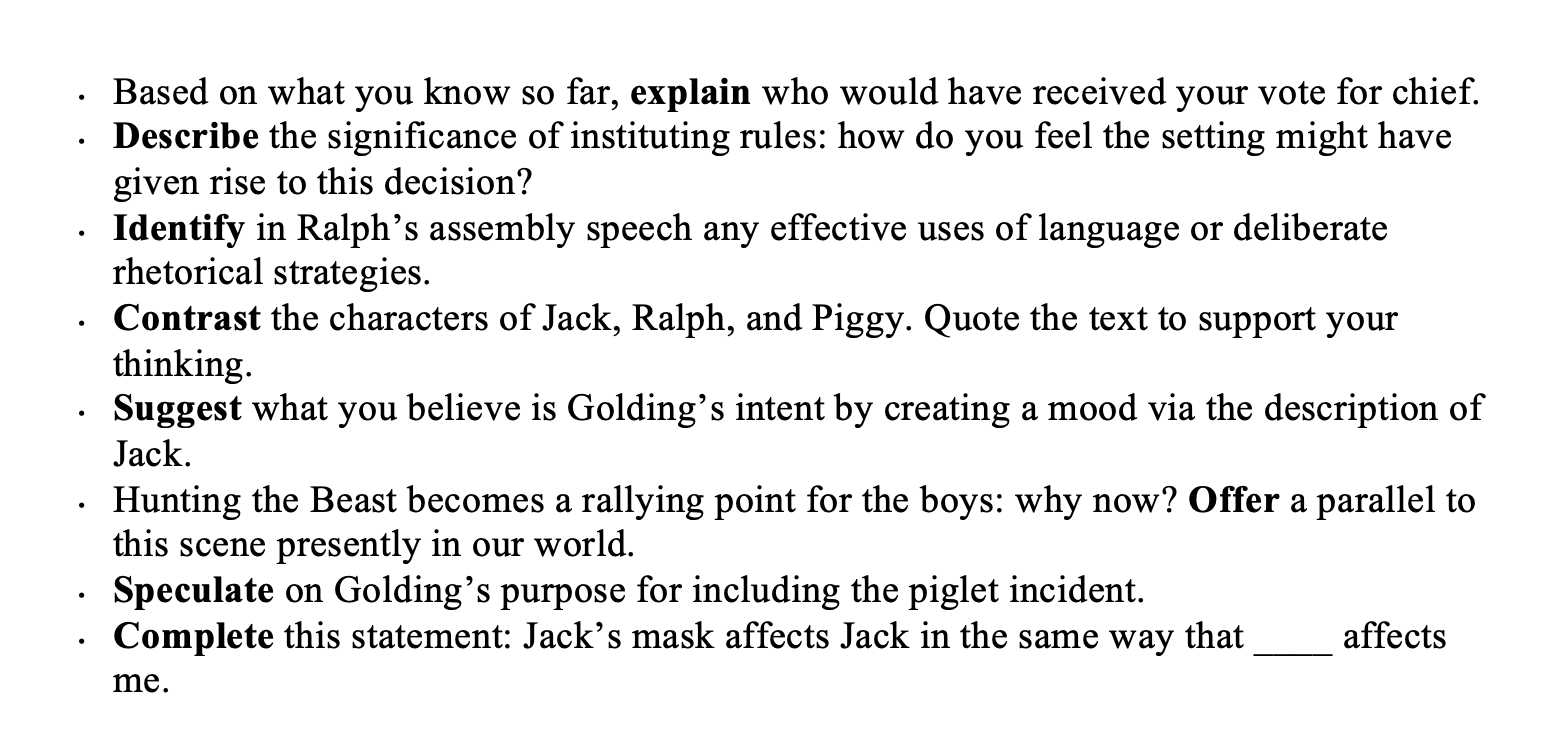
Early in my teaching, I decided to write prompts instead of questions. In fact, what I wrote were called imperatives or commands, a type of sentence that drops the second-person singular subject, “You,” and opens with the predicate verb:

“(You) Explain the irony of the outdoor scene from Chapter 3.”
“(You) Organise your ideas into three categories and (you) list 3–5 details beneath each one.”
“(You) Provide at least two explanations that support your conclusion.”

I decided to write prompts for two reasons. Teaching English, I wanted to practice what I preached: the verb is the most important word in a sentence. And, as a new teacher, I wanted to use Bloom’s Taxonomy because I bought into its gradual climb up the higher-order ladder, which at the time seemed to me correct.

As time went on, though, the ‘higher-order’ interpretation seemed mistaken, and was maybe fostering poorer teaching than otherwise. But I knew the importance of verbs and the power a word could have, so I started mixing so-called ‘lower-order’ commands, e.g. list, describe, explain, into ‘higher-order’ tasks and thinking, e.g. analyse, evaluate, justify. For one class, I adapted an old novel study quiz comprising uncomplicated interrogative sentences.

An inherent message to such a quiz, I felt, was essentially a teacher saying to students, “Prove that you actually read the book,” which opened up somewhat dubious questions about trust and earning grades. By rewording the quiz questions into imperatives, I wanted students to write something beyond the one-and-done sentence response.

Revising interrogative questions into imperative prompts eventually contributed to my questioning one of the structural premises behind our revised Government Curriculum, which currently emphasises skill over content. Where this Curriculum does prescribe some limited content knowledge, called “Big Ideas,” its inquiry pedagogy and student-centred approach are inherently individualised and thereby prone to opinion, which for me alters the common curricular debate over what knowledge is of most worth into a debate over whose knowledge is of most worth. Of itself, I’d say this is a worthwhile development although, in context, I think things tend to get a lot more nuanced.

So-called ‘lower-level’ skills seem no less important to me than so-called ‘higher-level’ (or the more snobbish ‘higher-order’) skills; in fact, so-called higher-order critical thinking skills depend not only on what we immediately read or hear but on what we can remember and recall from longer-term memory. And I tend to see content and skill not as discrete but integrated. To emphasise either one over the other is something akin to affixing ‘knowing’ to the bottom and ‘doing’ to the top of Bloom’s Taxonomy.

In teachers and in students, we find both the reflection of thinking and the action of doing – content as well as skill – in simultaneous tandem dynamic. To ignore their inseparability risks a curricular blunder: as skill without content is aimless, so content without skill is inert. We’re wise to conclude the same about teachers and students, who study content and skill: to each, the other is indispensible.

As to those prompts I revised, students’ submissions let me know pretty quickly that they were provoking a lot more careful, imaginative thinking. Responses were detailed, thoughtful, far more personal – I knew they couldn’t be searching Google. Students often told me, “These questions are so hard,” which was honestly what I wanted to hear. I also took note that students still called them questions.

And I soon realised how much longer these responses took to read… 30min per student, 15hrs per class. I came to assigning only two prompts per chapter, and later only one, which later became “five throughout the book that you trace and develop into questions of your own.” By the time I read Ron Berger’s article, critiquing the ‘higher-order’ interpretation, my own experience was enough to confirm his assessment:

“… the root problem with [Bloom’s] framework is that it does not accurately represent the way that we learn things. We don’t start by remembering things, then understand them, then apply them, and move up the pyramid in steps as our capacity grows. Instead, much of the time we build understanding by applying knowledge and by creating things.”

Bloom’s original taxonomy has ‘knowing’ at the bottom and ‘doing’ at the top, as if to suggest that doing is contingent upon knowing. But I agree with Berger: “Every part of the framework matters, [and] teachers should instead strive for balance and integration.” Learning is neither hierarchical nor linear. If anything, as Berger mentions, we tend to create and analyse by applying what we remember in an ongoing simultaneous process. For example, consider the old adage…

I read, and I forget. I see, and I remember. I do, and I understand.

This adage is an analogy, and analogies aren’t meant to be perfect, which makes them just as instructive where their comparisons break down, showing us both what something is as well as what something is not. Ambiguity falls to context, which in turn falls at the feet of a teacher’s professional judgment: decisions really are the core of teaching.

This adage is also a simple taxonomy, one that no academic is likely to endorse – what is meant by “reading,” for example, and how is this distinguished from “seeing,” and aren’t both unique kinds of “doing”? Still, it does seem to express a bit of wisdom.

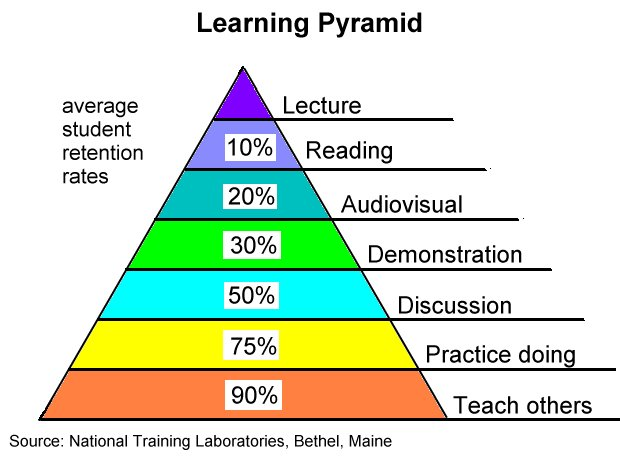
Who believes what you see? Edgar Dale’s Pyramid has been granted some pride of place in Education… looks like he must have sat through some boring lectures or something

What you may have seen from academics is something similar called the Learning Pyramid or the Cone of Experience, attributed to Edgar Dale. But don’t think that simply adding someone’s name underscores its validity or contends with other wrinkles called e-learning and machine learning.

Anyway, as an attempt to describe learning, the adage is an analogy, like Bloom’s taxonomy or any framework: fixed and rigid and literally contrived. Such things hardly represent our lived experiences although, in fairness, every perspective carries a unique set of assumptions inside its luggage.

From drowningintheshallow – “Traditions, not Traditional”

Sometimes, when we look into a mirror, we’re making sure everything is presentable, just right.

That seems like a bit of a trap to me – for one thing, you could only know ‘just right’ if you had some standard for measure, which seems like a recipe for perfectionism. You might also simply fall into seeing what you want to see. But what may be worst of all is the risk we take for granting our own self-assurance to the judgment of others.

On another day, that may have just described school, but setting that aside, I think it’s still fair to say that a mirror, like any household item, has its pros and cons.

Another way to characterise that look into the mirror is a search for flaws. In a similar way, this also seems to me like a risk since now we’re adopting a frame-of-mind for spotting what is wrong and applying that to our own self-esteem. It’s like practising how to be critical, with you as the practice dummy.

If you combine these two looks – the one, for self-assurance, and the other, a search for flaws – it almost seems no surprise those times we encounter hypocrisy… then again, isn’t there just something about people, that we seem to excel at paradox? I’m sure the psychologists have plenty more to say on this although I’m also sure those are details no one would credibly seek in a blog post. So setting that aside as well, I think it’s still fair to say the search for flaws seems pretty easy to adopt precisely because nobody’s perfect. Everyone’s a critic.

All that seems pretty ‘con’ when it comes to mirrors, so maybe let’s finish with a ‘pro’: we might conceivably look into a mirror for healthy self-appraisal, a more balanced search that weighs itself somewhere in between flaw and assurance, in order to learn and grow. That kind of look inherently grants itself placement among others, which seems honest to me, and humble too.

For me, this featured post from drowningintheshallow looks into the mirror for just this sort of self-appraisal, and by emphasising the ‘thinking’ bit of critical thinking, it credibly raises the level of discourse.

One last thing, although I wonder how many academics and teacher educators seek on-line blogs for credible detail… to this list of words oversimplified by popular usage, such as ‘traditional’ and ‘critical thinking’, I would add ‘self-reflection’.

Like I said, we seem to excel at saying what we want to say.