Learning As Renovation

Featured Photo Credit (Edited): Monica Silvestre on Pexels

I have already offered an analogy for learning as a kind of renovation. It’s no perfect comparison – no “analogy” is meant to be – so feel free to use your imagination. What I like about renovation is the suggestion of integrity and the potential for improvement: something original remains, upon which we build and rebuild.

From that earlier post:

“Renovation also happens to suit a constructivist perspective on learning, i.e. learning as an active process during which someone integrates new experiences with what they already know. Yet this distinction between ‘what is known’ and ‘what is new’ has also been an avenue for critiquing constructivism’s overwhelming predominance, as has the general notion that active learners mean passive teachers, as has the nuance of what ‘active’ even means – thinking about stuff or doing stuff. Other nuances distinguish something learned from something experienced and something internal or uniquely derived from something external or belatedly accepted as consensus.”

With all that said, what statement about learning is credible without some thought afforded to teaching – I began sketching that out, too, at the time. So, today… Take 2: ‘learning as renovation’ means what for teaching? What exactly is teaching?

Photo Credit: Brett Jordan on Unsplash

For me, these questions just prompt more questions. One, well known to educators for being contentious, asks ‘What is worth teaching?’ As compared to the die-hard habits of so-called traditional teaching, our 21st century constructi-verse might hone a laudibly more nuanced sensitivity for whichever teaching better suits the thing being learned. But since education today seems wholly fixed upon the future, we might better proceed from ‘What is worth teaching?’ to the deeper complication that Pinar carves inside the politics of curriculum: ‘What knowledge is of most worth?’ By this, of course, I take him really to be asking, ‘Whose knowledge…?’ and on it goes, that contention.

Of course, values change, even as change takes decades or more. But what these particular questions implicate – or, rather, who they implicate – seems to be haves and have-nots as the future sends the past on its way. Put another way, the general response to ‘Whose knowledge is of most worth?’ seems to be one more clarification: ‘At which moment in history do you mean?’ which prompts questions further still, such as those arising more recently about Truth and Reconciliation and how educators might most appropriately respond, given the unknowable future.

In my doctoral work, I conceptualise curriculum as relational, i.e. an interpretive process underway between and among each student-teacher pairing, such that each person involved is contributing to every other by sincerity of their shared interests, i.e. “whose interests…?” Of course, since everyone has a backstory that no one else can know completely, peoples’ lives are more complex than first glance can suggest. That means any assumption made is a leap to conclusion, which is true, for instance, of even our closest relationships, much less between students and teachers.

Less commonly posed than ‘What knowledge is of most worth?’ is a question that seems to reach a likelier core of contention: ‘Whose knowledge… ?’

Likewise, as each teacher has a unique perspective on learning – like this reflection of mine – a teacher in the classroom is bound to know their school and its students in a way the rest of us never could and, thus, that teacher will apply their perspective in ways the rest of us never would. This, too, is true of us all in relation to each other, and any constructive way forward would seem to rest upon a sincere and joint interaction.

In that way, as teachers are able to grant each student’s unique perspective and backstory, they are also obliged to acknowledge each student’s needs, then offer a curricular experience that informs and persuades while still leaving space for each student, i.e. “whose needs, whose space…?” in order that each might make more meaningful sense of their own learning.

By analogy, then, this would seem to make teaching a kind of renovation plan, loose yet backed by at least two key factors: (i) sound foresight, which translates to careful, informed planning that aims for some defined vision, i.e. “whose vision…?” and (ii) a set of reliable tools, which is really to say not the tools, themselves, but the resourcefulness, compassion, and patience required to apply each tool in the most suitable way at the most appropriate time.

… that ‘Toolkit’ you hear so much about? For me, in fact… no, not exactly
Photo Credit: Todd Quackenbush on Unsplash

Of course, all this as metaphor sounds ideal whereas, in practice, nothing is guaranteed; renovation is seldom so tidy a business. More famously, it tends to get more complicated and even turns out some rather untimely outcomes.

Classrooms, by comparison, while complex can also be the most enjoyable places, and unlike renovations as we typically know them, I’m not sure learning needs to get more complicated than respecting the dignity of everyone involved. Beyond that, the rest is up to us as teachers and learners, albeit in distinctive roles, as we nonetheless learn and teach each other in ways that leave space where everyone is able to build and rebuild.

Of Memories in Motion

Elsewhere – and, come to think of it, (sort of) elsewhere – I’ve mentioned Martha Nussbaum’s exploration of memory.

For her part, what she’s suggesting connects our emotions, which help us respond to the world, with our memories, which arise as a flood of perceptions that she calls emotional habits. Essentially, in our day-to-day living, the purpose of our emotions is to help us make sense of it all by recalling previous times when we felt such-and-such a way; the purpose of our memories is to supply those emotions with substance – and not with just any old substance but with invested value. If Nussbaum is on to something, then this is why we’re moved to say about [ your life here ] that “we care.”

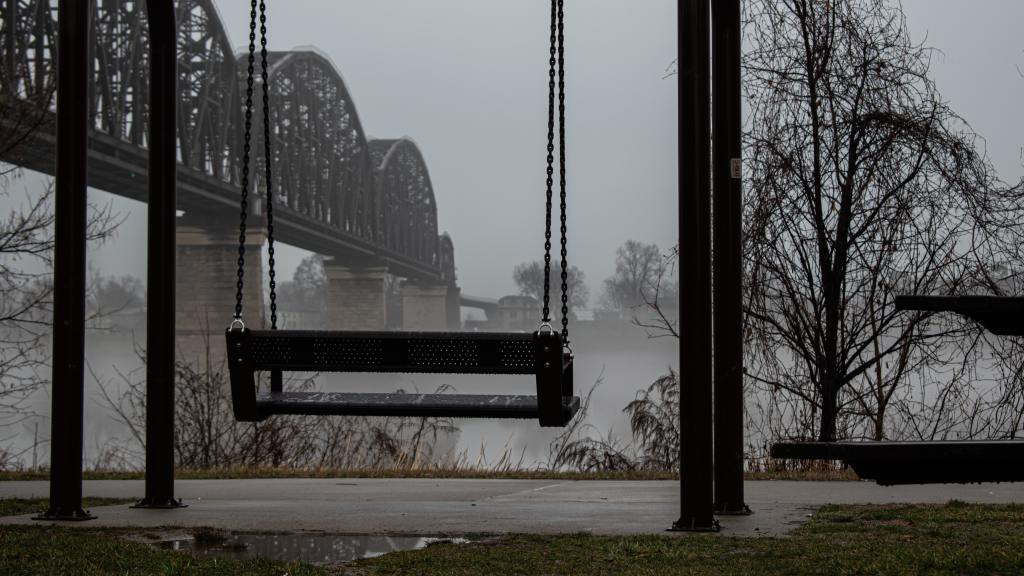
Nussbaum refers to neuroscientist, Joseph LeDoux, who suggests that memories are not individual items but composite outcomes of our physiological network – in one sense, like how a check-up isn’t just your doctor and a stethoscope but all their years and training, and this upon centuries of practice, which now includes you, the patient; in another sense, like how a bridge isn’t just an edifice of concrete, cable, and steel but an intentional span engineered to overcome the gulf that precluded any link between two separated sides.

Iconic

One idea suggested by memory is that, with something going on inside everybody, we can still only respond from our current perspective. That means some parts of our lives will remain unseen from others and maybe even subconsciously from ourselves – we can never really completely know what’s happening with anybody. Occasionally, I’ve seen people apparently lose sight of this and press ahead with someone else, despite what seemed to be signals to hold up – yet as this is merely something I remember seeing from my perspective, here’s me doing it, myself, right now! A lot of our shared living is guesswork, and if it seems like I’ve suddenly departed from the topic of memory, I wonder if it’s fair to say I’m still in the ballpark.

In the ballpark, I guess, if just a little off-base…

Memories remind us of when we were other places, doing things, which all contributes to describing who we are now although, of course, not completely since nobody remembers everything, much less remembers anything perfectly. Maybe let’s say what gets remembered is what we take to be most important, which could be rather selective and self-serving, as we might decide to ‘remember’ only what helps us out the most. That’s a pretty blanket statement, though, and I can’t blame your eye-roll just now. As to what we do remember, we can decide whether a memory is something from the past to which we’re attached, or something in the past from which to distance ourselves. But either way, the past is always there, all of it, and that’s affecting all of us.

As to memories being fallible, this takes me back to guesswork, of a kind, as we try to recall exactly this-or-that detail. But since we can only remember from our current perspective, there’s a great deal of our lives that goes never seen by others, and even grows fuzzy and inexact to us – like I said, we can never really completely know what’s happening with anybody, selves included. If each person’s memories can only acknowledge their own cross-sections of the past, and this but partially, then over time I imagine this would cause a bit of collective amnesia, eventually having a kind of atomizing effect as certain details were highlighted while others were finally lost forever.

Certainly our culture seems to embrace the individual, has done ever since the Enlightenment sort of introduced the world to itself, as it were. What crawled from those Platonic caves of religious obeisance and feudal sovereignty eventually separated into an oddly homogeneous heterogeneity of individualism, which today we venerate with slogans like “Liberty, Happiness, and that other one – slips my mind. If we’ve actually been killing off cultural memory and swapping in some individuated substitute… well, in that case, I’d say cultural memory is becoming a rather haphazard assemblage of whatever coincides between us. Which, hey, might work for a while, but… life-by-coincidence I just feel like can’t be good.

That brings something else to mind… for all our enlightenment, we seem awfully susceptible to uncertainty. Weren’t we a lot longer chained up to those cave walls… yet now it’s like we can’t even remember what certainty is. Maybe our uncertainty – what the kids these days call narratives – whether spun by someone or spun by us, whether in our favour or in our face, maybe our uncertainty lies in its doctor’s motives. And of course, the better the storytelling, and the sharper the hook, the more we’ll feel we can relate – which is something else I mentioned of Martha Nussbaum although, this time, I’d say let’s take heed as a cautionary word. Yes, the more precise the object, the sharper that vision, and the more certainty we’re likely to feel, but no trust will exceed the worthiness, the value, of its object. Stick to the healthy objects, I guess is what I’m saying, objects not just inherently potent but of the greatest worthiness… your most highly treasured value.

In that sense, memories – remember this was all about memories? – in that sense, memories implicate, or are they implicated by, our present circumstances and our future objectives. As we presently look back to our memories, our memories are prompting our attention forward, into the future. We don’t remember anything perfectly, but we also don’t forget everything utterly. I’m not necessarily saying we spin solely what we remember; rather, I’m saying let’s not spin solely to remember. Just like words matter because, once spoken, their consequences flow, our memories matter too, for the same dynamic reason. They need to be as genuine as we can recall them. “And then,” Nussbaum concludes, perhaps with a touch of whimsy, “it remains to be seen what the world will let us do about them” (p. 135). Whether their flow will be placid, mundane, inconsequential, or anything beyond is beside the point that their flow is indisputably certain. What is past is having a very real effect right now and will thus see its effect realised in what is yet to come, come what may.

“Okay,” you say, “but what happened to that imaginary bridge – what was it, spanning the gulf between here and memory, or something? I mean, here you are, now, going on about time and spin and worth? Has this post lost its way? Another batch of mixed metaphors?”

Is that really even a “bridge”… ?

Fair. OK, well, besides piecemeal memories inciting ad hoc futures for atomized individual persons, what all this seems to implicate, for me, is the sincerity of relationships, of care. Our continued honest attempts to communicate with each other are like an antidote, and in their absence we risk sullying or undoing whatever may have been true of us beforehand. Of course, though – and here I go again! – that last sentence was written through an altruistic lens, not really allowing for someone with, say, more practical motives. Meanwhile, as to any less-than-honest attempts at communication, well, they’re obviously no antidote at all but really pollutants. As only real engineers build bridges, so only real physicians administer antidotes, and only real spin doctors spin.

… OK, this one counts

One last thing… I think maybe what’s most potent about our memories – in their pointing us toward objects ahead – is the nature of their absence, like travelling into the city and saying, “Look where there used to be trees.” As we take hold of a memory and turn it over in our fingers… with the curiosity that brought it back, we acknowledge a kind of respectful past-that-was as we find it within us-as-is. There’s a bit of healthy mutuality in that, for without that memory, we could only make less of ourselves while, without us, the memory wouldn’t be recalled at all. I suppose that’s all a bit banal, but still… it seems important, a kind of respectfulness that authorizes both the memory and ourselves at once, however inexact our memories may actually be.

But we need to be careful. Any respectful authorization of memory and ourselves at once is us doing both, which is tantamount to saying “I am history,” as in “Whatever I declare now is now what happened then,” which of course would be delusional. And not in the sense of claiming to be God, who controlled it all back then as now but, rather, in the sense of looking inward to ourselves, like a doctor prescribing an antidote without remembering what it was for.

Someone very practical once told me there are plenty of good memories to be made and happy events to experience wherever one resides. Practical health in this object, practical wisdom, a beautiful radiance such as might alight you from the bridge deck with delight since now you want to see where it’s landed you, over here on the other side. As I recall, my reply was something along the lines to say, yes, that’s definitely true although it ain’t where you’re at so much as it’s who you’re with.

In the gulf beneath, a mighty flood rolls on, and you still hold your dearest treasures to heart. And from the shore you understand a wee bit better why somebody decided to build that bridge.

Photo by Kyle Fiori on Unsplash

The Force May Be With You

Elsewhere, I’ve discussed a threefold conceptualisation of time:

  • chronos, the ticking clock of linear time
  • kairos, the fleeting moment, a singular point in time
  • aion, boundless or infinite, “the fulfillment of time” (Baumlin, p. 155)
Image by Gustavo Rezende from Pixabay

Baumlin offers an image for aion, the uroboros, which is paradoxical for being finite, the serpent swallowing its tail. In concert, he suggests, these three concepts comprise a “spatial-temporal sequence… from point, to line, to circle” (p. 155). Pointlinecircle can seem both time and place, which we might call setting, which is a curious way to consider eternity.

Into this setting we’re born to live and die, and if that seems a bit morbid, then let’s turn to something more uplifting, like Hannah Arendt, who wrote that people “are not born in order to die but in order to begin” (Arendt, p. 246). Death would be the end of us except that each new generation comes along, not only to sustain and maintain but also to begin anew. Birth interrupts death and renews the world.

At birth, Arendt suggests, we arrive into a world already underway, a kairos moment in chronos time. Growing up with parents, surrounded by culture, we come to feel somewhat defined by this world that precedes us, by what has been carried forward from the past. Arendt calls this our belatedness and then, pointing bluntly to education, poses an alternative that she calls our natality. As part of the world underway, our belatedness can be outweighed by the promise of natality, an encouragement to look toward the future at our potential to be something more, something different.

Of course, like any application, details lie in context – time and place, the people involved. Potential for some is conflict for others, or maybe impossibility. Set against belatedness, natality can pose a paradox that leaves us feeling discouraged, even paralysed. The force may be with you, but yeah… hard to know, really. Always in motion is the future.

By the same turn, if we’re not encouraged toward the future but simply expected to continue what’s been brought forward from the past – stifling our potential, frustrating our promise – we may be again left feeling discouraged, or complacent, or in any event dissatisfied, perhaps without even understanding why. Anyone marginalised by such continuance may simply remain that way. Meanwhile, a continual obligation to steward beginnings (… this being what a teacher does) can come to feel like weary efforts at futility – again, the paradox of natality.

Stewardship of any new arrival to the known world demands a dose of self-awareness and the restraint of long patience – with thanks to Fitzgerald, the capacity to keep in mind two separate ideas while still being able to function.

Context is everything. So, if “… our thinking and behaviour are determined by the systemic structure, independent of our particular place in it” (Sarason, p. 29), then even as that singular perspective matters, we need to see beyond mere individuality. And if we’re all part of something larger, more populous, then our coming to know other people can help us begin to appreciate the motives behind their decisions, or at least help us to realise – if we’re being honest – that there’s probably more we don’t yet understand.

As this accounts for size or scope – something larger, more populous – so it also accounts for time – past, present, future – which is a curious way to consider character, if not growth and relationships. Maybe that’s why we decided to call it education.