On Teleology: IV. Source?

Featured Image Credit (edited) by Juncala on Pixabay

Click here to read Part III. Purpose

On Teleology: IV. Source?

Lately – for those who haven’t been following along – I’ve been pondering teleology, using illustrations like students and missiles and acorns, and frames like Science and spirituality.

A missile, seeking its target’s latent heat across miles of airspace, flies at supersonic speed, following a process from launch to strike that takes place in seconds. Highly valued efficiency, very Sciencey: nothing wasted. If anything, that missile seems impatient, even hurried, even hot-tempered. It definitely seems persistent.

But an acorn spends all summer growing on a branch, and the only thing in its life that takes place in seconds is the fall it makes 20–30 feet into the grass below. There it rests, to spend the next… what, century? gradually rooting to the spot, eventually to become the next oak tree. That seems really patient and enduring, almost unflappable and, somehow, just as persistent as the missile.

So here is a heat-seeking missile that crosses wide-open space in split-second time, and there is an acorn that endures in one precise spot for eons of time… depending how you value things, like space or time, each in its own way might seem very efficient, not a thing is wasted. And each in its own way definitely seems ready-made for purpose.

And even though a missile is built and programmed while an acorn is an extant living thing, if I fire the missile at a suitable target, it should do as expected and destroy the enemy – what it’s designed to do – just as, if I bury it in suitable ground, an acorn should do as expected and grow on its own – what it’s designed to do? evolved to do? …it should do what it does – or at the least, by any reasonable expectation, we can presume it has a fair chance of growing.

Yet how does an acorn ‘know’ any suitable conditions if I’m the one who chooses where to bury it? Indeed, how does an acorn ‘know’ it can or cannot grow the way it’s supposed to, in any conditions whichever?

During all its time hanging from the branch of a tree, what does an acorn ‘learn’, as it were, about being an acorn and being an oak tree? By analogy, looking back to Part I, imagine a teacher who imparts lessons to students about the adults we envision them to become. From there, whichever adult role a student might come to fill, someone could reasonably suggest the broader or primary telos of students is to become adults who, likewise, take up the mantle of responsibility down the road to ‘build’ students anew… and on it goes, a cyclical telos of growing up: education and adulthood, reproduction and propagation, a kind of recycling source of teleology.

By the same turn, then, what has an acorn had impressed upon it about the right conditions for becoming a tree? In a manner of speaking, we might say every little acorn that falls from every mighty oak belongs to some larger community cycle, some wider-spread lineage, some… ? Well, I was about to say ‘master plan’ but let’s have a care: yes, I’ll grant, back in Part III I did mention ‘spirituality’, but surely ‘master plan’ can-slash-must never-slash-won’t ever designate Intelligent Design… not in the Scientific here-and-now of the 21st century.

Would folks feel better if I said ‘grand narrative’?

… or maybe I’m just barking up the wrong tree. Better not even to waste a breath on some “master plan,” some mighty Voice from Above, not when all it has to breathe is “Let slip the Dogs of War upon the innocent purity of Science.” I appreciate you, Science, being unable to prove ‘what is’ but only test ‘what isn’t’, and I’m convinced we can still be friends.

So, in closing, let’s throw Science a bone.
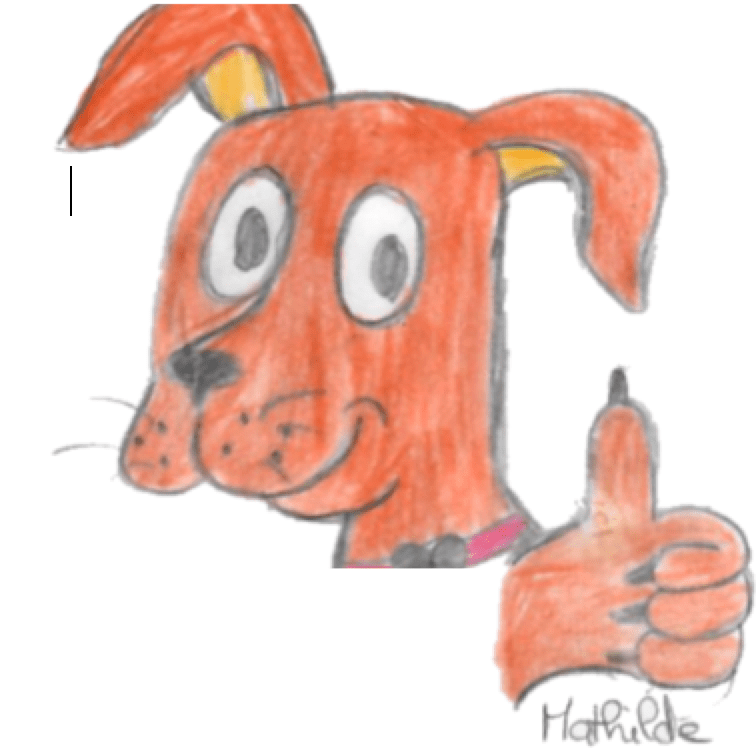
Remember… Science is man’s best friend!
(No kidding… “Darwin Forever” is actually a thing – check it out!) Image Credit: Mathilde

Stay tuned for Pt. V. Setting

On Teleology: II. Illustration

Featured Image Credit (edited) by Sweetaholic on Pixabay

Click here to read Part I. Efficiency

On Teleology: II. Illustration

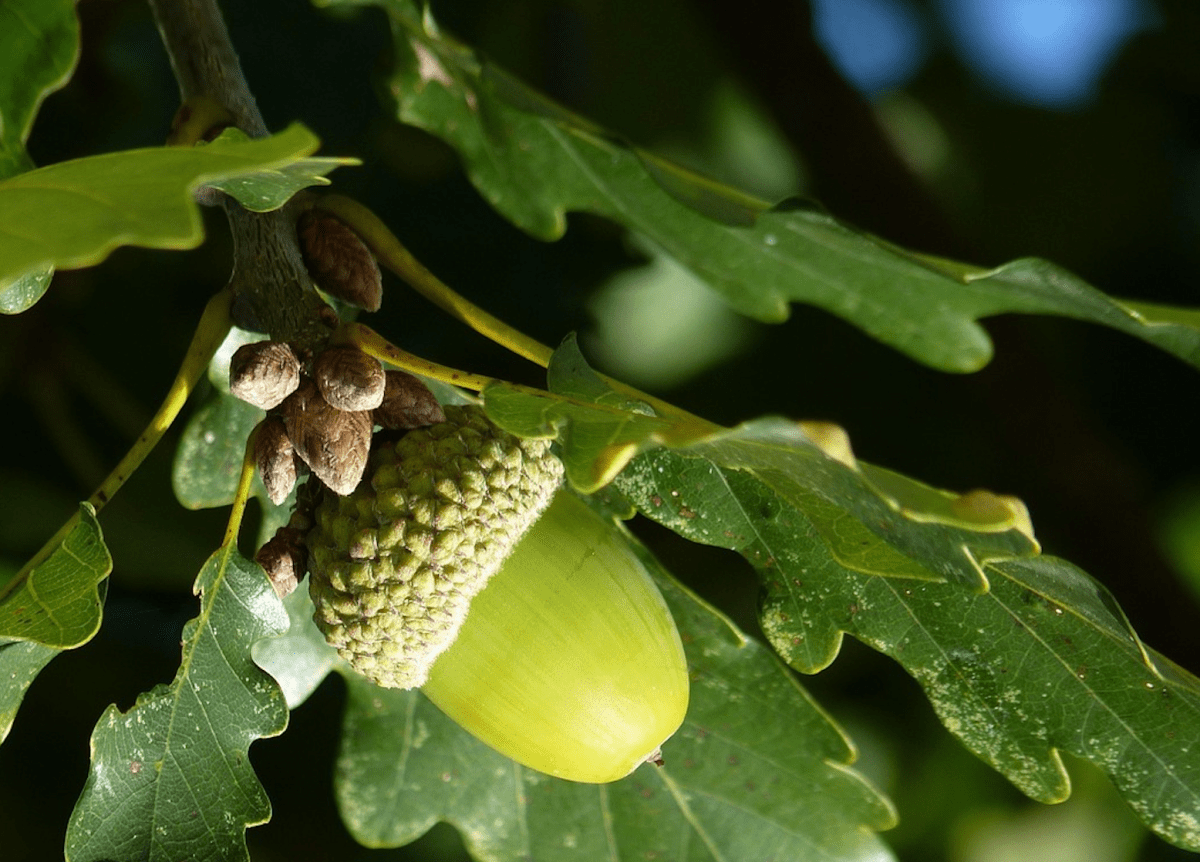
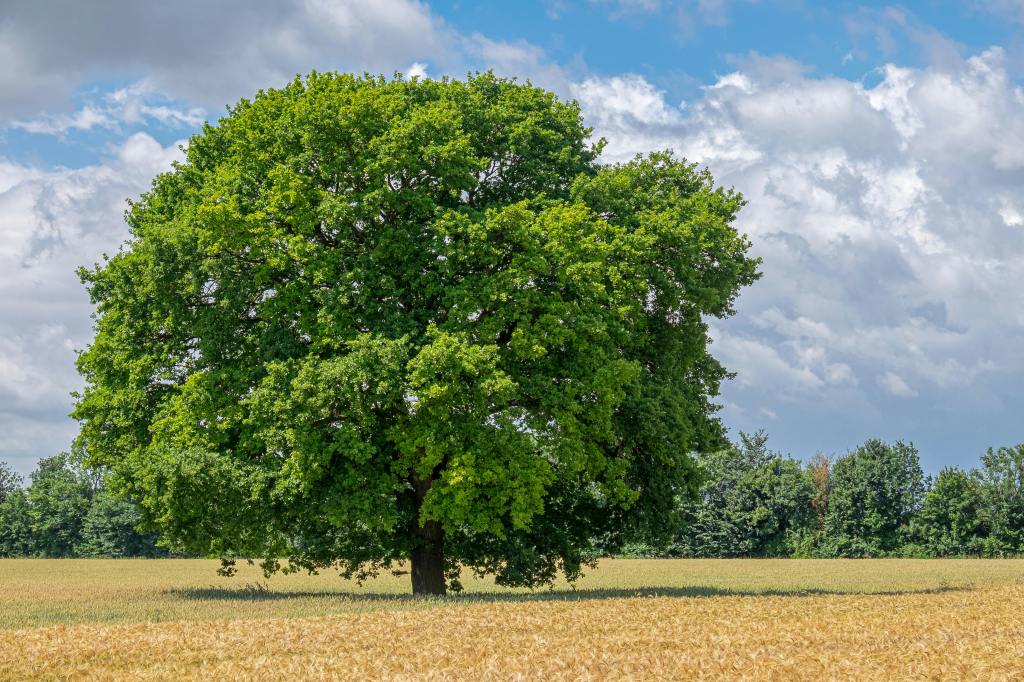
An acorn is the ‘fruit’ of the oak tree – and go ahead with your own favourite fruit-bearer, but as for me, I once lived next to an oak tree.

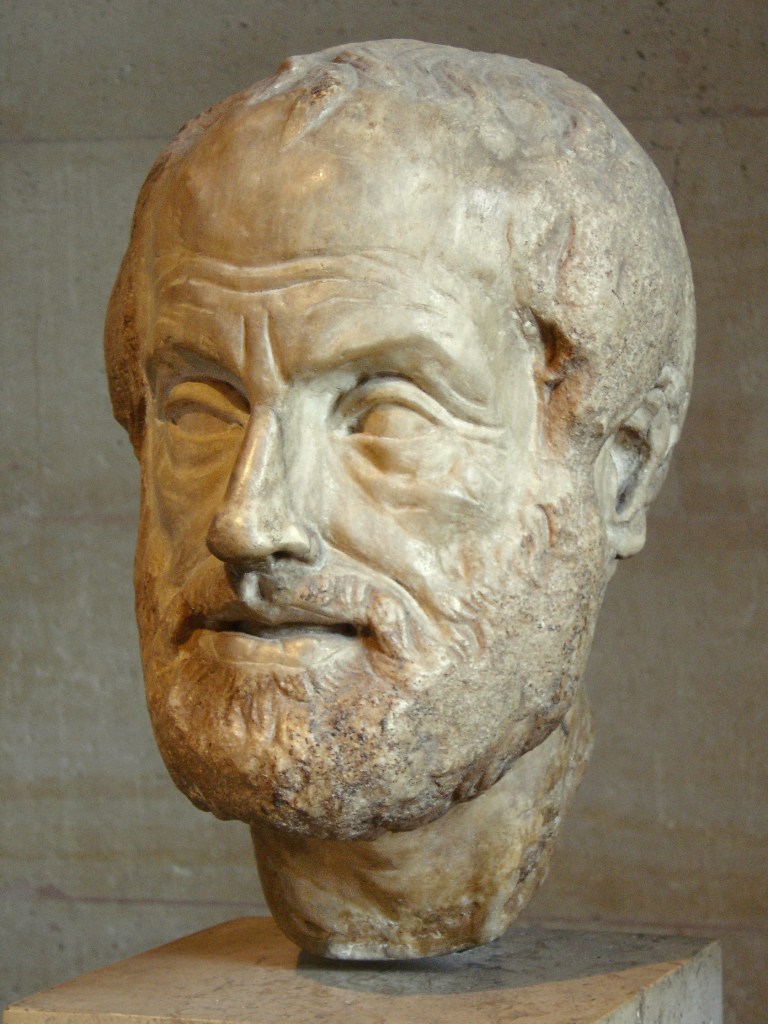
Aristoteles” Portrait bust of Aristotle
Copy of the Imperial era (1st or 2nd century) of a lost bronze sculpture made by Lysippos
(Wikipedia: Eric Gaba, User: Sting)

Aristotle used the acorn to help illustrate his understanding of teleology. He was addressing general questions like…

  • ‘What is something really for?’
  • ‘What is something’s ultimate purpose?’
  • ‘What is the mark of its fulfillment or completion?’

In not so many words, he was asking, ‘What’s an acorn’s goal, its telos?’ as though an acorn has some objective. In response to his own query, Aristotle proposed the ultimate goal of an acorn, the completion of its purpose: to be an oak tree.

That seems like a reasonable proposal to me although whether someone else might interpret it as being either an inherent or an imbued purpose – if that’s even a distinction – is another question, as noted in Part I.

Image Credit by Burkard Meyendriesch on Pexels

Besides the acorn illustration, Aristotle also noted some other distinctions about teleology, one being sub-ordinate orders of telos, each in service of the next – for example, in warfare, as the telos of a weapon is killing the enemy, so the telos of warfare itself is victory. Aristotle asked further still, “What are the right conditions to bring telos to fruition?” …so, for the acorn to become an oak tree, how much sunlight, how much rain, what kind of soil, and so forth.

The concept of teleology may now be fairly clear, so what about that earlier question – is telos something inherent or imbued, intrinsic or intentional? And how do we even attempt to reach some answer?

Maybe Science can provide some scope there, too, some sense of history, with regard to whichever ‘right conditions’ might have set in motion the telos of the acorn… way back eons ago, when the Earth was molten lava or glacial ice, and something emerged from the primordial slime that finally and ultimately became the very first oak tree-née-acorn.

Or maybe Darwin can help explain teleology as some outcome of evolutionary processes, which even now might still be underway!

Sure maybe, but even if natural selection can help describe some broader historical development, what about more precise interior workings – for instance, how does an acorn sort of just ‘know’ that it’s destined to become a tree, I mean the way a caterpillar sort of just ‘knows’ it’s destined to become a butterfly… I mean if these things even ‘know’ anything to begin with?

Psst… you didn’t happen to ‘know’, did you?

Because if that acorn doesn’t ‘know’, then how exactly did its function or purpose arise – where has its telos come from? Is a ‘source’ for telos even the right question to be asking? Is there some kind of trigger or teleological catalyst? If so, where do we even begin to find it? Insofar as such questions pertain to Science, they also maybe don’t – maybe Science can provide no scope or sense for telos since what I’m asking is profoundly more non-corporeal than the guts of some acorn dissection.

Still, it’s fun to pretend, so maybe let’s imagine thinking like an acorn, with that foresight of ‘My Future as an Oak Tree’. We could also imagine looking back as the wise old oak tree, with that ancient insight afforded by hindsight: ‘Once upon a time…’ Maybe there’s even something to be gained from imagining both perspectives at once – either as the acorn’s ‘early on’ + later on’s ‘the tree’ or else vice-versa.

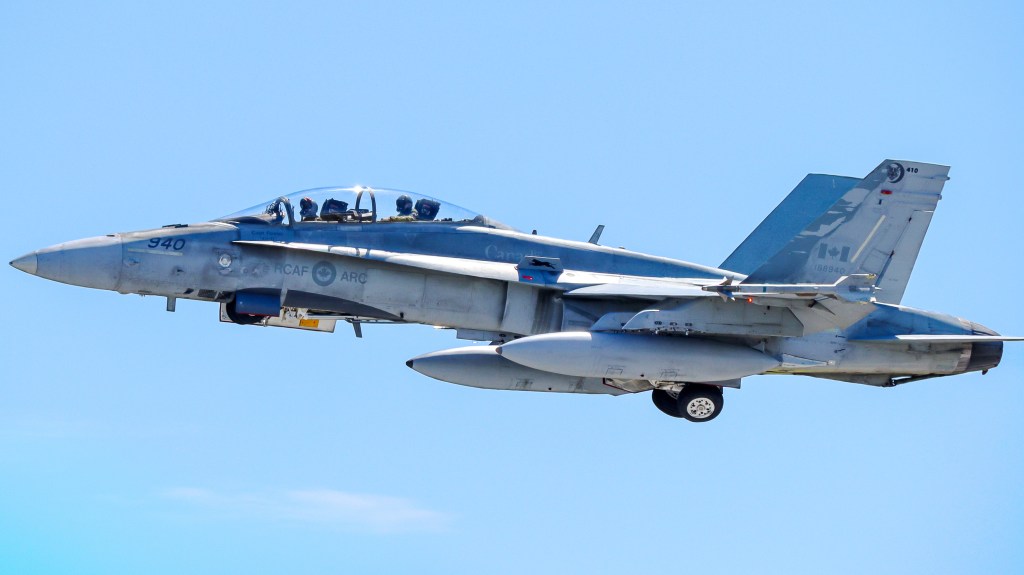
Here’s another example although quite different, with apologies in advance for shock value… earlier, I mentioned weapons and warfare, so how about a heat-seeking missile. The telos of a heat-seeking missile, we might say, is to shoot down an enemy plane. In order to function, that type of missile – by definition – relies on its target’s radiant heat. So there again is what I mean by imagining more than one perspective at a time – on one hand, the missile, on the other, the target’s heat.

CF-18 Image Credit by MarkjF31 – own work, CC BY 4.0 on Wikipedia https://commons.wikimedia.org/w/index.php?curid=180575948

But, as a missile is computerised, this is because people designed and programmed and manufactured it to be that way. That missile is a machine, a very complex contraption, given design and purpose by the people who needed heat-seeking missiles to be just so. Acorns and oak trees, however, along with caterpillars and butterflies… these are extant living creatures.

And the question remains: what intrinsic–slash–what intentional quality resides inside each one of these ‘either/or’ or ‘both at once’ pairings that drives their purpose to fulfillment?

Click here to read Part III. Purpose

The Nuisance of Nuance: IV. Will

Feature Photo Credit by Sigmund on Unsplash

Click here to read Part III. Comprehension

With all that wind and the trees falling over and stuff, we may be safer just to leave the park behind and head someplace else – disdainful crowds were never really my thing anyway.

… after the hurricane’s blown through!

Generally, where we might accept a ‘fact’ as one piece in the truth puzzle, we can only claim ‘belief’ for how those facts ought to piece together and contribute to some bigger thing, factual or non-factual: as far as I know, nobody has, or ever will have, a complete front-of-the-box picture of Truth. Besides, fact and truth, knowledge and belief… if these all meant the same thing, we’d be using the same word and not four different ones. How, then, do they differ? Well, for one thing, where belief requires facts, facts can speak for themselves.

The Original 3D Puzzle
Photo Credit by Xavi Cabrera on Unsplash

So, if I’m hiking up a hillside, I might believe another hill slopes down in opposite fashion, just out of sight over the peak – but then again, maybe not… maybe there’s an even taller hill to climb, which I’ll only spot once I’ve crested this hill. I hope not because I’m getting pretty tired, but whatever. Meanwhile, what I know for indisputable fact is that behind me right now is a hill that descends back the way I came. So there’s at least one key difference between fact and belief, and if my measure for this is temporal, that works just fine for me.

In addition to ‘what I come to know’ – a pathway up the hillside as I traverse it – there is also ‘what I come to believe’ – a different path down once I crest the peak… that is, unless I’m mistaken, and the only path down is the one I walked up. Where or how has some belief arisen that more paths down exist…?

“I heard…”
“I remember…”
“I wish…”
“I think…”
“I hope…”

…or maybe the most reliable of all…

“I learned…”

Are you spotting that temporality yet?

Even so, ‘knowledge’ per se is somehow not simply ‘knowing’ the things that I’ve learned: as I hike up that hillside, toward the crest and what lies beyond, I’m able to distinguish ‘what I know’ (which is behind me) as fact compared to ‘what I believe’ (which lies beyond) as… knowledge? opinion? wishful thinking? It’s a distinction that makes me wonder whether this thing we so glibly call “knowledge” is both fact from the past as well as belief of what’s to come, all at once. If so, that seems kind of Hegelian, where ‘kind of’ is sort of like if Hegel had taken to wearing his shirts inside-out.

Things that make you go GAH – all this pedantry! Recall, that’s where all this began, with knowledge being situated on two separate stairs or one step to the left, thereby not being exactly the ‘same’ knowledge. But in the great puzzle of truth, even pedantry has its own place in among the rest of the pieces. In fact, I believe one reason we argue so much is that we no longer allow enough for pedantry and detail. Once upon a time, I suspect we did, or else we’d have demolished ourselves long before this. This nuisance of nuance takes patience and time although neither of those seems too popular in the Twitter-world of reverent Instagram… stick that in your pipe and smoke it.

In that world, no amount of philosophizing over reality and the truth matters a jot a pixel. In that world, what seems to matter more is consensus the ‘Share’ button. After all, as we’re I’m discovering of late, disagreement on ‘facts’ is so fundamental as to be irreconcilable. Or, put another way, words only matter when it’s me who’s tweeting them.

Be that as it may… as a matter of fact, words really do matter, for precision – P – E – D – A – N – T – R – Y – and clarity – N – U – A – N – C – E. Words matter for the feelings they invoke and the memories they provoke. Every word we utter, hear, write, or read must have some basis at least in consensus print media television on-line sharing, if not in actual fact; otherwise, what’s the point of language? Hey, if no one communicated, period, then sure, problem solved. But more fundamentally… if every belief we have, prior to our words, has only some basis in consensus on-line sharing, and not in fact, then the sum total of all language is just so much scattered chaos the Internet. The reason why words matter is that people are where words erupt and evolve, which means that words are what people – and not just any sole person, but all of us, people – words are what we’re all about. Luckily, some of us know a few extra words, or even several extra languages.

But without any basis to know anything beyond our selves, all we can do – maybe what each one of us must do – is trust that we share a similar comprehension of facts.

Photo Credit by Guillaume QL on Unsplash

And if knowledge really is situated – whether up that flight of stairs or a split second later or a step to the left from where you now stand – if that is really accurate, is it any wonder we’re all at a loss, or destined to endless dispute? We may all apprehend the same event, but pedantically speaking, we can’t all comprehend literally the exact same facts. We may share the same event, but we cannot share the same experience: each of us has an experience all their own, and when we share that experience – if knowledge really is situated – then we can only believe and trust how closely your experience corresponds to mine, or anyone else’s.

If knowledge really is situated, what we need within ourselves is an ability to reach beyond our selves: beyond anything shared, what we need is the will to believe and trust each other.

[p.s. if you’ve missed the imagery, it’s a reversal: beyond our selves extends outward, like what we believe might be over the cresting hill, whereas beyond anything shared is back the way we came, inward unto ourselves, reliably back the way we came.]

And if that’s feeling a little anti-climactic, here as a closing, you can’t say I didn’t warn you about that next hill to climb.

Photo Credit by Murat Gün on Unsplash