Is Something Wrong with Bloom’s Taxonomy?

Feature Image Credit by John Manuel Kennedy Traverso on Wikipedia

Some thoughts prompted by this article by Ron Berger in EdWeek.


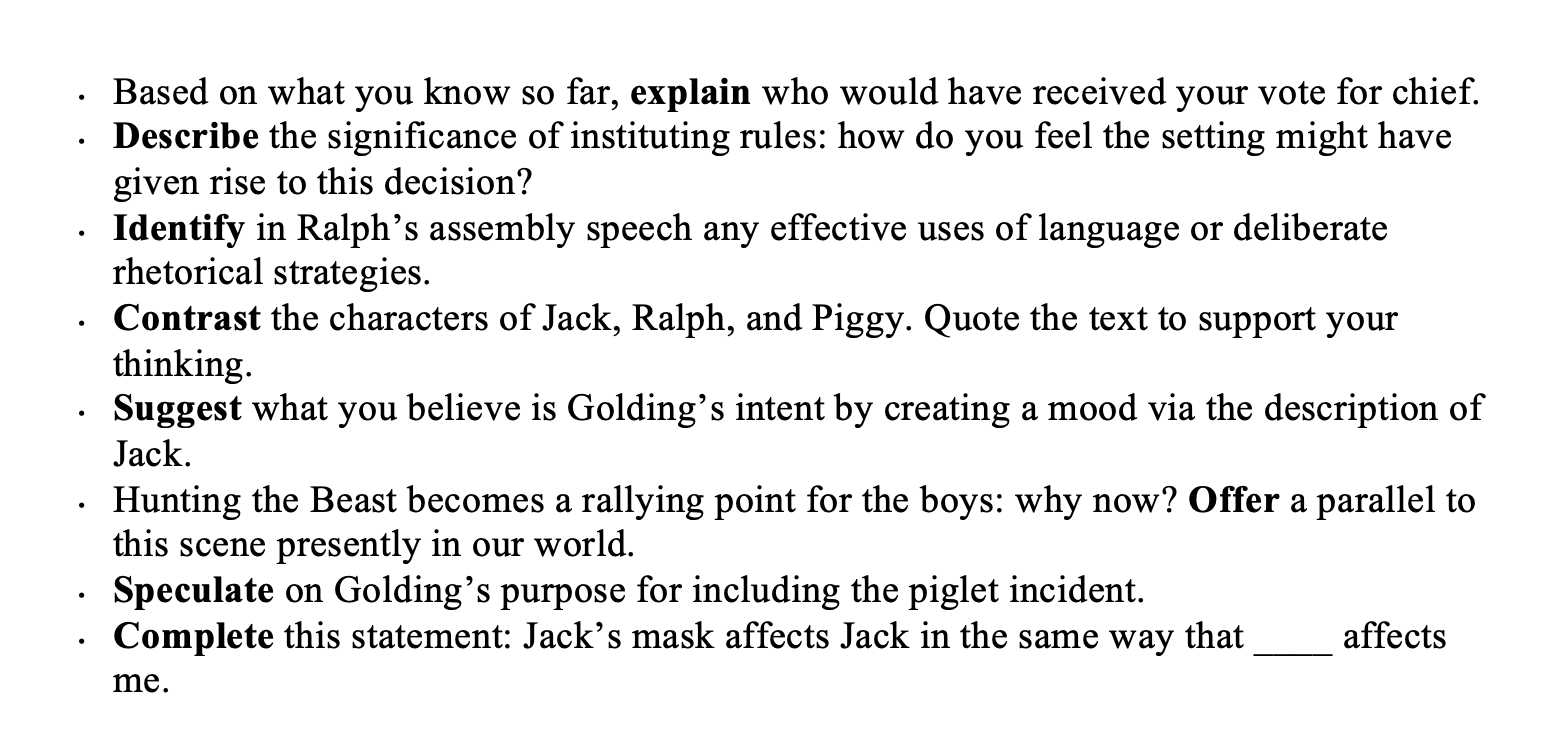
Early in my teaching, I decided to write prompts instead of questions. In fact, what I wrote were called imperatives or commands, a type of sentence that drops the second-person singular subject, “You,” and opens with the predicate verb:

“(You) Explain the irony of the outdoor scene from Chapter 3.”
“(You) Organise your ideas into three categories and (you) list 3–5 details beneath each one.”
“(You) Provide at least two explanations that support your conclusion.”

I decided to write prompts for two reasons. Teaching English, I wanted to practice what I preached: the verb is the most important word in a sentence. And, as a new teacher, I wanted to use Bloom’s Taxonomy because I bought into its gradual climb up the higher-order ladder, which at the time seemed to me correct.

As time went on, though, the ‘higher-order’ interpretation seemed mistaken, and was maybe fostering poorer teaching than otherwise. But I knew the importance of verbs and the power a word could have, so I started mixing so-called ‘lower-order’ commands, e.g. list, describe, explain, into ‘higher-order’ tasks and thinking, e.g. analyse, evaluate, justify. For one class, I adapted an old novel study quiz comprising uncomplicated interrogative sentences.

An inherent message to such a quiz, I felt, was essentially a teacher saying to students, “Prove that you actually read the book,” which opened up somewhat dubious questions about trust and earning grades. By rewording the quiz questions into imperatives, I wanted students to write something beyond the one-and-done sentence response.
Revising interrogative questions into imperative prompts eventually contributed to my questioning one of the structural premises behind our revised Government Curriculum, which currently emphasises skill over content. Where this Curriculum does prescribe some limited content knowledge, called “Big Ideas,” its inquiry pedagogy and student-centred approach are inherently individualised and thereby prone to opinion, which for me alters the common curricular debate over what knowledge is of most worth into a debate over whose knowledge is of most worth. Of itself, I’d say this is a worthwhile development although, in context, I think things tend to get a lot more nuanced.

So-called ‘lower-level’ skills seem no less important to me than so-called ‘higher-level’ (or the more snobbish ‘higher-order’) skills; in fact, so-called higher-order critical thinking skills depend not only on what we immediately read or hear but on what we can remember and recall from longer-term memory. And I tend to see content and skill not as discrete but integrated. To emphasise either one over the other is something akin to affixing ‘knowing’ to the bottom and ‘doing’ to the top of Bloom’s Taxonomy.

In teachers and in students, we find both the reflection of thinking and the action of doing – content as well as skill – in simultaneous tandem dynamic. To ignore their inseparability risks a curricular blunder: as skill without content is aimless, so content without skill is inert. We’re wise to conclude the same about teachers and students, who study content and skill: to each, the other is indispensible.

As to those prompts I revised, students’ submissions let me know pretty quickly that they were provoking a lot more careful, imaginative thinking. Responses were detailed, thoughtful, far more personal – I knew they couldn’t be searching Google. Students often told me, “These questions are so hard,” which was honestly what I wanted to hear. I also took note that students still called them questions.

And I soon realised how much longer these responses took to read… 30min per student, 15hrs per class. I came to assigning only two prompts per chapter, and later only one, which later became “five throughout the book that you trace and develop into questions of your own.” By the time I read Ron Berger’s article, critiquing the ‘higher-order’ interpretation, my own experience was enough to confirm his assessment:

“… the root problem with [Bloom’s] framework is that it does not accurately represent the way that we learn things. We don’t start by remembering things, then understand them, then apply them, and move up the pyramid in steps as our capacity grows. Instead, much of the time we build understanding by applying knowledge and by creating things.”

Bloom’s original taxonomy has ‘knowing’ at the bottom and ‘doing’ at the top, as if to suggest that doing is contingent upon knowing. But I agree with Berger: “Every part of the framework matters, [and] teachers should instead strive for balance and integration.” Learning is neither hierarchical nor linear. If anything, as Berger mentions, we tend to create and analyse by applying what we remember in an ongoing simultaneous process. For example, consider the old adage…

I read, and I forget. I see, and I remember. I do, and I understand.

This adage is an analogy, and analogies aren’t meant to be perfect, which makes them just as instructive where their comparisons break down, showing us both what something is as well as what something is not. Ambiguity falls to context, which in turn falls at the feet of a teacher’s professional judgment: decisions really are the core of teaching.

This adage is also a simple taxonomy, one that no academic is likely to endorse – what is meant by “reading,” for example, and how is this distinguished from “seeing,” and aren’t both unique kinds of “doing”? Still, it does seem to express a bit of wisdom.
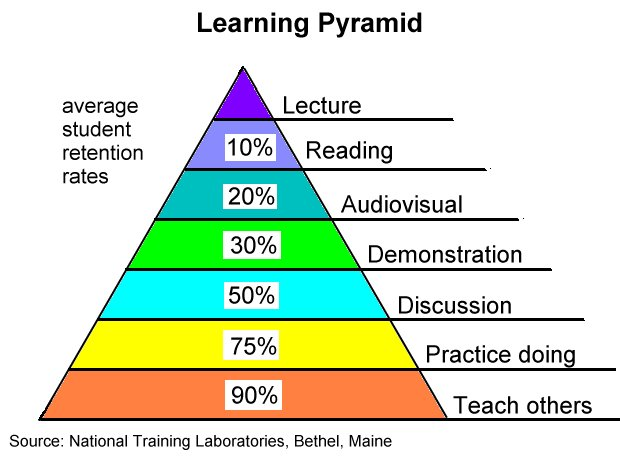
Who believes what you see? Edgar Dale’s Pyramid has been granted some pride of place in Education… looks like he must have sat through some boring lectures or something

What you may have seen from academics is something similar called the Learning Pyramid or the Cone of Experience, attributed to Edgar Dale. But don’t think that simply adding someone’s name underscores its validity or contends with other wrinkles called e-learning and machine learning.

Anyway, as an attempt to describe learning, the adage is an analogy, like Bloom’s taxonomy or any framework: fixed and rigid and literally contrived. Such things hardly represent our lived experiences although, in fairness, every perspective carries a unique set of assumptions inside its luggage.

The Nuisance of Nuance: IV. Will

Feature Photo Credit by Sigmund on Unsplash

Click here to read Part III. Comprehension

With all that wind and the trees falling over and stuff, we may be safer just to leave the park behind and head someplace else – disdainful crowds were never really my thing anyway.

… after the hurricane’s blown through!

Generally, where we might accept a ‘fact’ as one piece in the truth puzzle, we can only claim ‘belief’ for how those facts ought to piece together and contribute to some bigger thing, factual or non-factual: as far as I know, nobody has, or ever will have, a complete front-of-the-box picture of Truth. Besides, fact and truth, knowledge and belief… if these all meant the same thing, we’d be using the same word and not four different ones. How, then, do they differ? Well, for one thing, where belief requires facts, facts can speak for themselves.

The Original 3D Puzzle
Photo Credit by Xavi Cabrera on Unsplash

So, if I’m hiking up a hillside, I might believe another hill slopes down in opposite fashion, just out of sight over the peak – but then again, maybe not… maybe there’s an even taller hill to climb, which I’ll only spot once I’ve crested this hill. I hope not because I’m getting pretty tired, but whatever. Meanwhile, what I know for indisputable fact is that behind me right now is a hill that descends back the way I came. So there’s at least one key difference between fact and belief, and if my measure for this is temporal, that works just fine for me.

In addition to ‘what I come to know’ – a pathway up the hillside as I traverse it – there is also ‘what I come to believe’ – a different path down once I crest the peak… that is, unless I’m mistaken, and the only path down is the one I walked up. Where or how has some belief arisen that more paths down exist…?

“I heard…”
“I remember…”
“I wish…”
“I think…”
“I hope…”

…or maybe the most reliable of all…

“I learned…”

Are you spotting that temporality yet?

Even so, ‘knowledge’ per se is somehow not simply ‘knowing’ the things that I’ve learned: as I hike up that hillside, toward the crest and what lies beyond, I’m able to distinguish ‘what I know’ (which is behind me) as fact compared to ‘what I believe’ (which lies beyond) as… knowledge? opinion? wishful thinking? It’s a distinction that makes me wonder whether this thing we so glibly call “knowledge” is both fact from the past as well as belief of what’s to come, all at once. If so, that seems kind of Hegelian, where ‘kind of’ is sort of like if Hegel had taken to wearing his shirts inside-out.

Things that make you go GAH – all this pedantry! Recall, that’s where all this began, with knowledge being situated on two separate stairs or one step to the left, thereby not being exactly the ‘same’ knowledge. But in the great puzzle of truth, even pedantry has its own place in among the rest of the pieces. In fact, I believe one reason we argue so much is that we no longer allow enough for pedantry and detail. Once upon a time, I suspect we did, or else we’d have demolished ourselves long before this. This nuisance of nuance takes patience and time although neither of those seems too popular in the Twitter-world of reverent Instagram… stick that in your pipe and smoke it.

In that world, no amount of philosophizing over reality and the truth matters a jot a pixel. In that world, what seems to matter more is consensus the ‘Share’ button. After all, as we’re I’m discovering of late, disagreement on ‘facts’ is so fundamental as to be irreconcilable. Or, put another way, words only matter when it’s me who’s tweeting them.

Be that as it may… as a matter of fact, words really do matter, for precision – P – E – D – A – N – T – R – Y – and clarity – N – U – A – N – C – E. Words matter for the feelings they invoke and the memories they provoke. Every word we utter, hear, write, or read must have some basis at least in consensus print media television on-line sharing, if not in actual fact; otherwise, what’s the point of language? Hey, if no one communicated, period, then sure, problem solved. But more fundamentally… if every belief we have, prior to our words, has only some basis in consensus on-line sharing, and not in fact, then the sum total of all language is just so much scattered chaos the Internet. The reason why words matter is that people are where words erupt and evolve, which means that words are what people – and not just any sole person, but all of us, people – words are what we’re all about. Luckily, some of us know a few extra words, or even several extra languages.

But without any basis to know anything beyond our selves, all we can do – maybe what each one of us must do – is trust that we share a similar comprehension of facts.

Photo Credit by Guillaume QL on Unsplash

And if knowledge really is situated – whether up that flight of stairs or a split second later or a step to the left from where you now stand – if that is really accurate, is it any wonder we’re all at a loss, or destined to endless dispute? We may all apprehend the same event, but pedantically speaking, we can’t all comprehend literally the exact same facts. We may share the same event, but we cannot share the same experience: each of us has an experience all their own, and when we share that experience – if knowledge really is situated – then we can only believe and trust how closely your experience corresponds to mine, or anyone else’s.

If knowledge really is situated, what we need within ourselves is an ability to reach beyond our selves: beyond anything shared, what we need is the will to believe and trust each other.

[p.s. if you’ve missed the imagery, it’s a reversal: beyond our selves extends outward, like what we believe might be over the cresting hill, whereas beyond anything shared is back the way we came, inward unto ourselves, reliably back the way we came.]

And if that’s feeling a little anti-climactic, here as a closing, you can’t say I didn’t warn you about that next hill to climb.

Photo Credit by Murat Gün on Unsplash

The Nuisance of Nuance: III. Comprehension

Click here to read Part II. Belief

After a storm, a tree has indeed fallen in the park.

How exactly have we reached some shared understanding of this? On what basis do we actually claim to know that the catalyst for the tree falling down was a powerful gust of wind? Well, we have no video to watch because, while it all transpired, Holmes was busy polishing his magnifying glass, and you were scrolling Reels on your cell phone. And it’s not like we can just flip a switch and reverse time…

But just for kicks, suppose we could. Suppose we could summon the wind by some magical twirl of the fingers, which would mean we could stand the tree back up in order to see it blown down again. Except for… by re-standing the tree and re-summoning the wind, wouldn’t we now be performing an experiment? Wouldn’t we now be responsible for the tree falling down?

Maybe we’d better leave aside fanciful control of natural forces and simply return to the park, where one is apparently able to find these powerful gusts of wind on a semi-regular basis. Who knows, maybe we’ll see a second tree fall down in a second wind storm… although, granted, that would be different and not, according to Hoyle, the ‘same’ exact experience. On the other hand, two trees falling in the same park is not exactly incomparable either. Anyway, supposing we did feel another powerful gust, and hear that ominous crack, and see a second tree fall down… supposing all that, what conclusions might we reach about any fallen tree?

OK, but for anyone to say, “Wow, the wind just blew down that tree!” seems awfully presumptuous for leaving out a pile of background info: roots, trunk, soil. Wind is just one of many factors that might account for a fallen tree… assuming it’s understood well enough, to begin with – remember that ‘arborist’ who stopped by to investigate? Or how about insects or disease, or even the previous six months of weather?

Meteorologist: “… you can see this big system of low pressure just hovering offshore, and that’ll bring a lot of moisture over the next twelve hours. Small craft advisory, and – yikes! – watch out for those gale force winds gusting from the northwest…”
Disdainful Crowd: “I mean, it’s probably all green screen.”

Evidently, when you’re left trusting two self-important college grads – some know-it-all ‘arborist’ and this MSM MeteorMan – hey, it might be ‘this’ scientist or ‘that’ one, but it’s all still just ‘same scio, different pile’, if you know what I mean. Besides, who trusts some self-important college grad? Aren’t they all just approved by self-important college profs? Plus, how can anyone know a correct or incorrect fact anyway? I think that second kind is even an oxymoron.

Beyond some wide consensus, what’s correct about ‘truth’? Well, how do we live as a collective if beholden to the venerate individual? Surely the answer to such questions implicates what we’d consider to be knowledge. Except for… I keep having to remember that knowledge is situated. Yeah, well, if knowledge really is situated, then knowledge is reliant not upon fact but upon perspective and belief – and memory – or at least that’s the way it seems to me. If ‘knowledge’ is internal and inherent then, by definition, ‘fact’ is something we only agree via shared knowledge because how else could I know what you experienced? So as you can only lead a horse to water, and all, if we’re really set to agree upon ‘truth’, it might just be simpler if we changed the definition of ‘fact’.

Then again… agree on ‘truth’ – why? Surely this is why Science has its theories because theories are a way toward explaining what is inferred about ‘truth’ in light of what’s apparent – in light of fact – and if deduction is the chicken, let induction be the egg. What’s more, theories are meant to be not only incomplete but tested: deliberate collections of a priori knowledge assembled and measured by a posteriori knowledge. And now I have in mind deduction, not induction, so put away those magnifying glasses and save your best tweed. But hat-tip for the distinction between apprehension and comprehension: the former is more immediate and discrete, at my fingertips, a sense that something is the case; the latter transcends and perdures by contemplation, some fuller knowledge about whatever it is we’re sensing.

So as we all stand here in the park, apprehending the fallen tree: for goodness sake, here lies the tree! You can touch it, kick it, sit on it, chop it up for firewood. And we all felt the gust of wind, all heard the roots crack, all saw the tree tilt and crash to the ground – well, surely someone did because we finally turned up some cell phone footage – all of which starts to mean that anyone who denies the fact of this fallen tree is plainly a lunatic.

… which starts to mean, upon further contemplation, that someone among us can, in fact, be wrong –   W – R – O – N – G   – when they proclaim some belief that is factually incorrect:

Fallen Tree Denier: “Here stands a tree.”
Disdainful Crowd: “… er, CGI?”

Standing next to the fallen tree, any denial is obvious nonsense, apprehending the infamous “alternative fact.” However, as someone might comprehend the fallen tree, well… that could pose a reasonable dispute and deserve a hearing, particularly as it might rest upon some theory warranted by knowledge of the apprehended facts… or no, wait, that should be “… warranted by any belief about apprehended facts.”

But, as to when those beliefs were determined to be correct or incorrect, well… yes, it is possible for someone’s beliefs to be factually correct, after the fact, and that is one thing. But before the fact, no belief whatsoever can either proclaim or preclude ‘truth’, not even a popular belief, and that is entirely something else.

Click here for Part IV. Will