The Nuisance of Nuance: II. Belief

Featured Still Image: Herbert Lom and Peter Sellers in Blake Edward’s The Pink Panther Strikes Again (1976)

Click here to read Part I. Pedantry

You’re at the park with Sherlock Holmes when a powerful gust of wind blows a tree down. There at your feet now exists the very real consequence of a fallen tree.

Another real consequence is what you and Holmes remember from the experience, and still another is what you now detect in the aftermath… you felt the gust, you heard the crack, you witnessed the fall, and now you puzzle over the remains – well, Holmes puzzles. You’ve been busy with your cell phone, posting pics to Instagram.
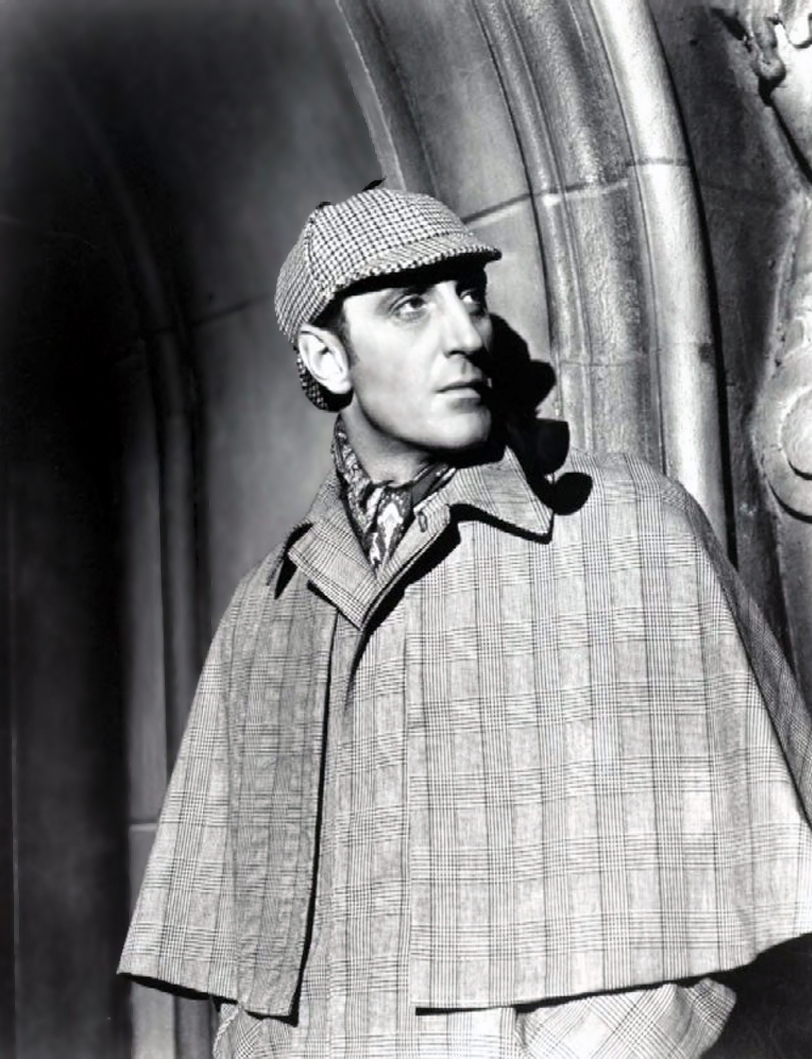
Basil Rathbone as Sherlock Holmes (Wikipedia) Photo Credit: Employee(s) of Universal Studios – Photograph in possession of SchroCat, https://commons.wikimedia.org/w/index.php?curid=27846748, Public Domain

By now some people are gathering, bemoaning how this could ever have happened to such a lovely tree. The local constabulary arrives to interview witnesses and start piecing things together. Holmes urges you to shoo all these aside: this fallen tree is now the best available evidence to investigate, in order to understand the powerful gust of wind. And while there appears to be no crime – as of yet! – in the Case of the Fallen Conifer, even so Holmes is convinced that this fallen conifer and any further consequences must surely add up to something, and he will stop at nothing to reconstruct a composite picture of everything at hand: the event-facts… the ‘clues’, as he calls them.
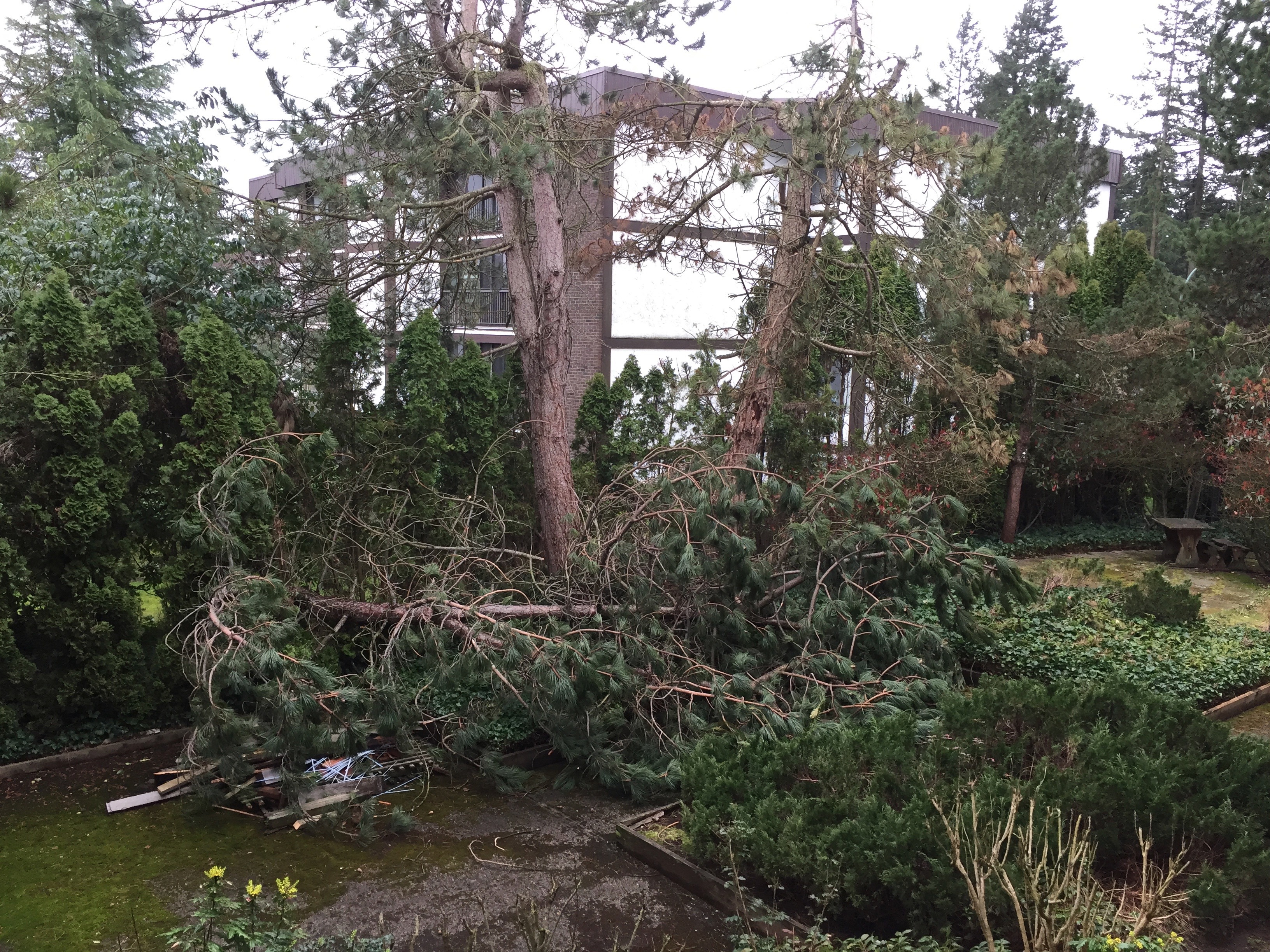
The tree, for instance… there it lies. As well, there are the various recountings from the gathering crowd who, like you and Holmes, were around to feel the gust and hear the crack, if not actually witness the dreadful fall.

p.s. all this seems like inductive work to me, so if we’re going to venerate Sherlock Holmes for anything, how about the magnanimous ‘A’ that finally got added to ‘STEM’.

As to knowledge being situated, yours being yours and mine being mine – which is what got all this started, you may recall – well, there’s plenty to dispute as belief comes to rest upon trust or faith:

Gathering Crowd: “… ‘wind’? ‘Wind’? Anon shall you be telling us you can see this ‘wind’ with your magnifying glass.”
Holmes: “Deny the wind, or deny yourselves. Gormless chunter avails us none – see you not see the swaying branches?”
Gathering Crowd: “Neither swaying, but waving – these are friendly trees. Look, maybe you should just step back and wait for the arborist.”

Alas, that some consequences are plainly apprehended – here lies a fallen tree – while others remain more incomprehensible – who can read the mind of a lunatic?

Thus does Holmes pore over the scene whilst to the constabulary do witnesses report, as well as to the park ranger and a rather concerned arborist in his accompaniment. Eventually, greatly persuaded – arborist or no – and to the great relief of the cynical crowd of gathering cell phones, Holmes deduces induces decides that any effect of wind must be such that ‘wind’ can only be inferred. Having apparently polished his magnifying glass for nothing, ruefully he sets it aplace while drawing intently upon his Calabash. The arborist, meanwhile, has urgently been attempting, if failing, to assure the disdainful crowd that any perceived waving of trees has little to do with friendliness but plenty to do with wind. Evidently, this crowd shares no mood for ‘truth’ in that more factual sense.

Some ‘arborist’: “… this tree was vulnerable to a powerful gust of wind–”
Disdainful Crowd: “You and your fancy credentials, your ‘university education’… and the best you’ve got is some invisible force called ‘wind’?”
Somewhere on the Fringes of the Crowd: “Holmes said ‘wind’, too… It’s collusion!”

Facing such assurance, let’s wrap Example #1 by concluding that ‘truth’, as an entirety, may simply be hard to come by.

Belief in action! (Wikipedia) Photo Credit: Sidney Paget (1860-1908) in The Strand Magazine – http://www.sshf.com/encyclopedia/index.php/The_Adventure_of_the_Solitary_Cyclist, Public Domain

And if knowledge really is situated, then anything anyone claims to know is unique, which is really to say partial. But if ‘unique’ makes someone feel special – well, gosh… maybe that’s what’s most important, after all. Except for… if not everyone’s partiality is to be believed to the same degree – which does seem reasonable, mind you, when you’ve got a disdainful crowd apparently backing it up – in that case, we appear destined only to know unique pieces of what is fully true, on account of having to infer and trust what others claim as fact.

Indeed, facts are facts.

And let’s consider ourselves fortunate that this is not ironic. Evidently, though, ‘facts’ of any stripe – genuine or alternative – can still only take us so far… because what really matters is not whether people are factual or, for that matter, even honest… and what really matters is not even someone’s experience. You might infer and report and share facts every day. Meanwhile, what really matters, as a matter of fact, is whether or not the rest of the people believe you.

Click here to read Part III. Comprehension

The Nuisance of Nuance: I. Pedantry

Here’s one I know:

Knowledge is personally constructed, socially mediated, and inherently situated.

I’ve quoted this before – it was coined years ago by my doctoral advisor and has remained a real foundational statement for him. More recently, I found another one, kind of similar:

… knowledge [is] always ‘situated’ – in other words, produced by and for particular interests, in particular circumstances, at particular times.

This one I found in a dissertation (p. 45, footnote 19), cited as MacLure (2013, p. 167).[1] I wanted more context, so I read the MacLure article, every word, and failed to find this quotation at all – plus the page numbers were off. This is not unusual – in the hustle-and-bustle of research writing, sources get mixed up, or even accidentally forgotten. Okay, so… a little more searching and – whaddya know – another dissertation (p. 137, footnote 71) with the same quotation, cited as MacLure (2013, p. 167). Now, this is a bit unusual – two dissertations, same year, half a world apart, citing the same page from the same source for a quotation that isn’t there. Search for yourself… or try this alternative MacLure link, which is open access. Who knows, must have been a recall or something… salmonella academia.

But once I got to thinking about the whole thing… it seemed almost too perfect: always ‘situated’ for particular interests, in particular circumstances, at particular times. Could it really be that this disembodied quotation had somehow actually found a way to live out its own truth? That’s what the kids say these days, isn’t it… live your own truth?

What could that mean… ‘live your own truth’ – I mean if it’s true. Well, for one thing, it could mean all knowledge is partial and prone to dispute, what you know and what I know simply being portions of what can be known. That’s nothing new, but now even the quote-unquote “same” knowledge must necessarily be air quotes ‘different’ knowledge. So, say you came to know ‘X’ just a split second before me, or say I came to know ‘X’ while standing just a step to your left… I know, it sounds silly but remember, so did disembodied quotation recall… anyway, this isn’t fantasy, it’s academics.

Test on Thursday…
Photo Credit (edited): Kaja Sariwating on Unsplash

Okay, so… let’s say I come to know ‘X’ while descending a flight of stairs, or while standing at the bottom. In each case – however painstaking the difference – I come to know ‘X’ in a way that I literally could not from the other perspective. Even one step above or one step below is not the ‘same’ step on a flight of stairs. Plus, upon any shift of ground, some time will pass – barely a split second from one spot to the next – and since nobody outside Star Trek can be in two places at one time, well… painstaking pedantry over space and time seems ridiculous, but remember… this ain’t SciFi, it’s academics.

Okay, so for example… take the difference between what you come to know and what I come to know.

Let’s say you and I witness some incident together… some movie, some moment, whatever.

And let’s suppose this occurs for each of us simultaneously because we’re standing side-by-side. Wouldn’t anyone just say we’re experiencing “the same thing”? By thing, of course, what they’d mean is an ambiguous pronoun that points at the event. Except for… thing can also point to the experiencing of the event, the distinction being that from either perspective, yours or mine, thing 1 points outward at the event, and thing 2 inward to the experiencing.

And who’s going for beers with someone this pedantic, he asked in a blog post. Anyway, if someone said we’re experiencing “the same thing,” even this would still depend on who said it and when they said it. By the way, if “Who cares?” actually bothered anyone, we wouldn’t even have pedantry. And since we’ve now found out how knowledge is always ‘situated’ for particular interests, in particular circumstances, at particular times, well… you might dare to imagine the situation that compels you to care… and now imagine all the kids wearing Get Pedantic t-shirts.

Okay… you and I experience the same “thing” together, but we each experience it exclusively: you as you, and I as me. As for differing upbringings, educations, biases… as far as coming to any consensus about this ‘same’ event, well… you and I haven’t actually experienced “the same thing” at all, have we? Experience, for want of a better word, must be owned: yours as yours, and mine as mine. And now someone will be disputing all this with something like, “Yeah, but knowledge and experience are different things!” to which I would reply, “You’re buying the first round.” By experience, how about five senses? No, in all fairness, if experience and knowledge were the same thing, we’d use the same word.

So, if knowledge really is situated, then neither you nor I can claim to have the same knowledge – not about that event, and not about anything, ever: at best, we’ll take each other at our word… one read-through of Hamlet should be all anyone needs to grasp this, and if that can’t put the whole ChatGPT fuss in perspective, I don’t know what can.

Okay, how about… you and I have “extremely similar” knowledge. Yeah, except for… if similarity reflects how closely we share background-and-belief, couldn’t it also reflect how closely we stood side-by-side? In fact, couldn’t it reflect both… or maybe that’s ‘either’ – or actually, ‘each’. Hmm…

On the trains, ‘side-by-side’ can even be ‘cheek by jowl’
Photo Credit (edited): Anna Dziukinska on Unsplash

And, of course, whether extremely similar or vastly different, neither your individual knowledge nor mine negates the event itself: something actually happened, and we were each there experiencing it. And neither your individual knowledge nor mine can preclude some fact from the event – not unless we simply didn’t detect it, or unless we simply deny it. But let’s not deny how partially we understand the things that we do detect since – knowledge being situated, and all – we can simply preclude Fact ‘X’ with Alternative Fact ‘Y’. It is, after all, my knowledge. Isn’t it.

Now, I will say… for me, what “alternative facts” means is some people interpret the same thing differently from other people, which is really a short summation of this entire post. But rather than make academic claims when someone declares my fantasy vastly removed from their reality, I prefer to accept that (a) not everybody agrees on everything, and (b) the idiocy to motivate a couched phrase like ‘alternative facts’ doesn’t change what got experienced; it only describes someone’s interpretation of that experience.

Here’s one thing I know: when a tree falls down, that tree is down, and no amount of fantasy will be standing it back up again.

Click here for Part II. Belief


[1] Maggie MacLure is an Education professor in Manchester, UK.

Home At Last

Featured Photo Credit by Esther Merbt from Pixabay [edited]

Have you ever had this sensation?

You’re about to walk someplace, maybe as a young child, maybe with a parent or sibling, feeling absolutely glum, maybe even dismal, because “… it’s so far away!… we’ll have to walk so long!… it’s going to take forever!” The whole way there, it takes ages, like one long walking wait.

But once you finally get there and do your thing, and leave again for home, the walk back feels nowhere near as long, or daunting. I remember one explanation was that we encounter all the same things on the way home in reverse order – a fence, a tree, a crack in the sidewalk. Obviously, we reach them sooner in reverse, but they seem to arrive more quickly because they’re fresher memories. Then, before you know it, there we are again, home at last.

Image by Dimitris Vetsikas from Pixabay

… yeah, who knows. But I do know I’ve had that sensation plenty of times where the journey back felt way faster, and home nowhere near so forever-far away, than when we first set out.

Another explanation is that, when we first set out, a whole adventure lies ahead, and our imaginations have room to breathe and explore the unknown. This one rings true both directions, there and back, which is actually why I don’t buy it… if it’s such an adventure, then why all the dread and pre-walk fatigue and wishing we’re already finally finally there? Why do things one way feel like forever, but the other way seem so quick?

I got to wondering all this after another idea… how looking forward to the future can seem so far away, compared to looking back at the past, which can feel like just yesterday.

Photo Credit by Nati from Pexels

I know what you’re thinking, and you’re right: the past really is just yesterday. But I mean the distant past, which can feel so recent, particularly as we get older. There we are one day, when suddenly – whoosh – it’s all behind us. All sorts of thoughts arise, looking back… ‘it just goes so quickly’… ‘if I could do it all over again’… ‘I wish I knew then what I know now’… all those thoughts, and emotions too, which we sometimes call ‘regret’ or sometimes we call ‘wisdom’, and which only arrive as we look back from where we came.

As we look forward, “…ages from now” or “…in a few thousand years,” the future just seems so forever-far away, though there’s also a reverse effect… say, when some local business tries to invent tradition by leaning on – wow – a whole “quarter century.” No question, time scales in the hundreds and thousands consume lifetimes. Yet I’ve also had days as an adult when even “… next month” felt like the distant future. Days like that, looking back at fleeting life, I might happily wish I really was back walking to some faraway place with a parent or sibling – then, at least, I’d be looking forward not to the weight of ages but only to the walk back home.