On Teleology: V. Setting

Click here to read Pt. IV. Source?

On Teleology: V. Setting

Pretty recently, Science helped us understand two separate but related things in a more holistic way, and I think you’ll see what Science means once we dub the two things as ‘space’ and ‘time’.

Science merged these two fundamentals into one singular mind-bending concept, then imaginatively called it spacetime. Think Einstein and gravity and General Relativity although don’t think Newton and gravity and the falling apple… except of course, in our case, do think a falling acorn.

Don’t trust me… trust Science!

Let’s fall back down to Earth, ourselves, to swirl about in the gravity well as we revisit Part I’s analogies of schools and shipbuilding and students K-12, and our culture’s hankering obsession with Science and efficiency.

Being a teacher, I think a lot about efficiency, particularly for things like lessons and planning and short- & long-term objectives. Of course, in the Scientific here-and-now of the 21st century – ours being that hard core Sciencey culture of efficiency: a purpose for everything, nothing wasted – whenever I think about lessons and planning and short- & long-term objectives, naturally I think of spacetime… although maybe not quite the way you’d expect, with sole respect to ‘time’. I think of spacetime with sole respect to ‘spacetime’.

Try it, yourself, by swapping out temporal ‘short-term’ & ‘long-term’ objectives for physical ones, such as ‘nearby’ & ‘further afield’. I also swap out the emptiness of ‘space’ with the tangibility of ‘place’ although, no, I’m not trying to make placetime a thing.

And this then, finally, is what I’ve been wondering about teleology: as time and place sometimes combine into one thing that we call setting, I wonder how we’re teleologically set for some kind of fulfilment or completion by our passage not simply in time but across space through time: what is our purpose as we find ourselves set within some place and time? Naturally, this includes all those with whom we’re set alongside – as I pointed out once before, we can’t all be Thoreau.

To explore all this, I’ve been using analogies. For instance, inasmuch as we might consider any teacher a so-called ‘shipbuilder’, we might ask by analogy, within the geography and economy of the setting, what kind of ship a teacher intends to ‘build’ of each student. As we would never build a ship apart from its filling some function or purpose, we might ask by analogy what function or purpose teachers envisage or intend for K-12 graduates – what kind(s) of people do we want K-12 graduates to become? And what kinds of people do teachers actually end up ‘building’, and how much are the students involved? What kinds of people finally cross that diploma stage? What is their telos, and who gets a say?

To consider telos further, I compared people to acorns that fall from trees, themselves born of acorns. By analogy, someone might suggest our broader telos as something similar – a kind of cyclical propagation as we hang and ripen from so-called trees and eventually fall to rest upon some unique spot of ground, there to grow roots of our own.
Nothing’s carved in stone

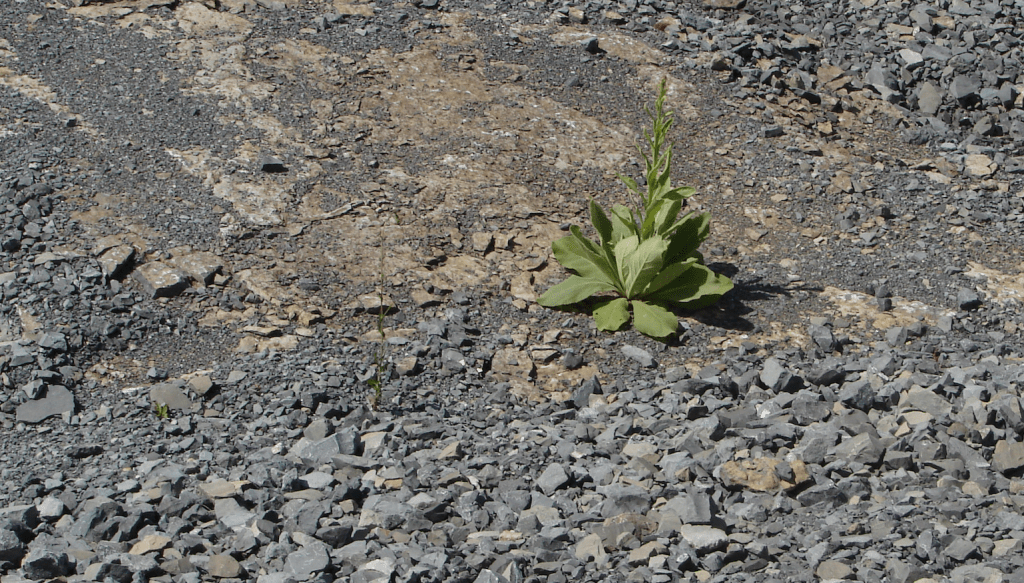
Falling to land and coming to rest as each of us does, each in place at some moment in time, what is our purpose not only there but then? And how do we assess our surroundings as capable of providing suitable conditions for root and growth? And, in whichever conditions we actually find ourselves placed, how do we know what we are or aren’t supposed to do next? How are we even brought to know – much less to ask – anything more specific than this cyclical continuance of reproduction and propagation before we die? I ask only because… well, only because I asked.

And, amidst all this, all around alongside us, as mentioned, are our neighbours… every other acorn, landed in place across time, the same as we are – a homogenous lineage of heterogeneity, all of us together, if not all at once: each as different, and unique, and persistent, and curious, and as full of intention as you and me. For every one of these, what is their source of telos?

Or maybe better to ask, who is their source?

Who is yours?

Click here to return to Pt. I. Efficiency

On Teleology: IV. Source?

Featured Image Credit (edited) by Juncala on Pixabay

Click here to read Part III. Purpose

On Teleology: IV. Source?

Lately – for those who haven’t been following along – I’ve been pondering teleology, using illustrations like students and missiles and acorns, and frames like Science and spirituality.

A missile, seeking its target’s latent heat across miles of airspace, flies at supersonic speed, following a process from launch to strike that takes place in seconds. Highly valued efficiency, very Sciencey: nothing wasted. If anything, that missile seems impatient, even hurried, even hot-tempered. It definitely seems persistent.

But an acorn spends all summer growing on a branch, and the only thing in its life that takes place in seconds is the fall it makes 20–30 feet into the grass below. There it rests, to spend the next… what, century? gradually rooting to the spot, eventually to become the next oak tree. That seems really patient and enduring, almost unflappable and, somehow, just as persistent as the missile.

So here is a heat-seeking missile that crosses wide-open space in split-second time, and there is an acorn that endures in one precise spot for eons of time… depending how you value things, like space or time, each in its own way might seem very efficient, not a thing is wasted. And each in its own way definitely seems ready-made for purpose.

And even though a missile is built and programmed while an acorn is an extant living thing, if I fire the missile at a suitable target, it should do as expected and destroy the enemy – what it’s designed to do – just as, if I bury it in suitable ground, an acorn should do as expected and grow on its own – what it’s designed to do? evolved to do? …it should do what it does – or at the least, by any reasonable expectation, we can presume it has a fair chance of doing so.

Yet how does an acorn ‘know’ any suitable conditions if I’m the one who chooses where to bury it? Indeed, how does an acorn ‘know’ it can or cannot grow the way it’s supposed to, in any conditions whichever?

During all its time hanging from the branch of a tree, what does an acorn ‘learn’, as it were, about being an acorn and being an oak tree? By analogy, looking back to Part I, imagine a teacher who imparts lessons to students about the adults we envision them to become. From there, whichever adult role a student might come to fill, someone could reasonably suggest the broader or primary telos of students is to become adults who, likewise, take up the mantle of responsibility down the road to ‘build’ students anew… and on it goes, a cyclical telos of growing up: education and adulthood, reproduction and propagation, a kind of recycling source of teleology.

By the same turn, then, what has an acorn had impressed upon it about the right conditions for becoming a tree? In a manner of speaking, we might say every little acorn that falls from every mighty oak belongs to some larger community cycle, some wider-spread lineage, some… ? Well, I was about to say ‘master plan’ but let’s have a care: yes, I’ll grant, back in Part III I did mention ‘spirituality’, but surely ‘master plan’ cannot-slash-must never-slash-won’t ever designate Intelligent Design… not in the Scientific here-and-now of the 21st century.

Would folks feel better if I said ‘grand narrative’?

… or maybe I’m just barking up the wrong tree. Better not even to waste a breath on some “master plan,” some mighty Voice from Above, not when all it has to breathe is “Let slip the Dogs of War upon the innocent purity of Science.” I appreciate you, Science, being unable to prove ‘what is’ but only test ‘what isn’t’, and I’m convinced we can still be friends.

So, in closing, let’s throw Science a bone.

Remember… Science is man’s best friend!
(No kidding… “Darwin Forever” is actually a thing – check it out!) Image Credit: Mathilde

Click here to read Pt. V. Setting

On Teleology: III. Purpose

Featured Image Credit (edited) by Hans on Pixabay

Click here to read Part II. Illustration

On Teleology: III. Purpose

Inside a missile is a computer, programmed for action, but what do we find inside an acorn? Where inside its shell do we find its driving function, its purpose?

Is an acorn like the cells in our body, which seem to function toward some consequence? Is there some kind of dormant determination slumbering inside its organic innards – this, again, being neither human awareness nor living sentience per se yet, if it be anything at all, then perhaps akin to intention?

One suggestion in Part II was look to Science. After all, the forever-task of Science, as we all know – its telos, you might say – is to study and inform and science the shit out of things. Science might try an answer by lifting that acorn from whence it lies and working it over with responsible Scientific hands in pure Scientific investigation: lab coats, microscopes, dissection tools, the works: take no prisoners and cut to the core – our efficient pursuit of cold hard fact.

John C. Lennox thinks, yes, maybe science can… although maybe not exactly how you’d think

Yet the task of Science is disproof, refutation, a reliable rebuttal to hypothesis. We look to Science for what isn’t, leaving whatever remains – however outrageous or unlikely – as putative fact.

Alas, though, the remains of that poor little acorn… sliced and diced and cloven in twain, its natural telos nullified in an instant – can we even live with ourselves? The answer to that, of course, is hard core “Yes” and anyway, now denied its soil, denied its rain, denied its life, what natural purpose is left to that specimen under glass apart from subjection? That little acorn may as well be lying on the surface of Mars: this merely the price of Science… or is it the cost – I’m never sure which.

p.s. while we Scientifically shed no tears for that poor little acorn, let’s also see things just as clearly another way… upon each mighty tree, each little acorn is really just a free-loading itinerant, passively riding energy that arrives through some branch from up the trunk by roots sunk deep inside the earth, thanks to some previously far more successful acorn whose search for nourishment and stability plainly went closer to plan.

Still, someone says, that poor little acorn… a free-loader? Go ahead and don’t believe it, but one thing you don’t ever see – one thing you will never see – is an acorn refusing or resisting the energy that arrives through the branch up the trunk from roots sunk deep in the earth. Trust me, no acorn isn’t glad its attached to the branch of a tree. And as far as that goes, leeching off an oak tree, maybe what we ought to say is no acorn attached to a branch has any telos of its own, at least not until it falls to the ground below… which somehow awakens its purpose, and here we go again, ‘awakens’, yet another anthropomorphization alongside images like ‘gladness’, ‘intention’, and ‘sentience’.

For some, all these investigative attempts and theories transcend natural scope and approach something more spiritual. And fair play, I suppose, if Science can provide no satisfactory answers in that regard. Then again, fair play even if Science can – ‘Science’ being merely that latest movement of faith to grab our rapt attention.

Whichever perspective we take – be it Science, spirituality, or something else again – it’s still worth asking one question: when’s the last time you saw an acorn, lying on the ground, really striving to ripen and root and really just exert itself from that spot on the ground to “Be the tree!” Behold! in its stillness such determination, in its peace such persistence and passion.

The Fires of Passion!

Meanwhile, in clouds of thought, that same question remains, hovering above our heads: whether upon the tree or once it falls, from whence its purpose? How does an acorn ‘know’? What is its source of telos?

Click here to read Pt. IV. Source?